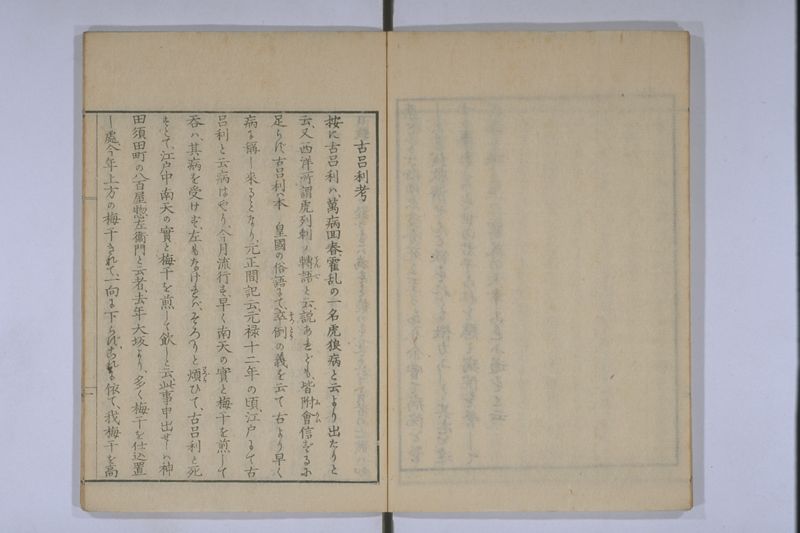
翻刻
【右文字なし】
【左】
古呂利考
按に古呂利は、萬病回春、攪乱の一名虎狼病と云より出たりと
云、西洋所謂虎列刺の轉語(てんご)と云、説あれども、皆附會(ふかい)信ずるに
足らず古呂利の本 皇国の俗語にて、卒倒(そつとう)の義を云て古より早く
病に稱し來ることなり、元生間記録云、元禄十二年の頃、江戸にて古
呂利と云病はやり、今月流行す、早く南天の實と梅干を煎して
呑は、其病を受けず、左もなければ、そろりと煩(わづら)ひて、古呂利と死
すとて、江戸中南天の實と梅干を煎して飲しと云、此事申し出せしは神
田須田町の八百屋惣左衛門と云者、去年大阪より、多く梅干を仕込置
し處、今年上方の梅干きれて、一向に下らず、これに依て、我梅干を高
現代語訳
【右文字なし】
【左】
コレラ考
考察するに「古呂利」は、『万病回春』の「攪乱」の別名である「虎狼病」から出たという説、西洋でいう「コレラ」の転訛(てんか)であるという説があるが、皆こじつけであり信用するに足りない。「古呂利」の本来の意味は我が国の俗語で、卒倒の意味を言い、古くからこの病気の名称として使われてきたのである。『元禄間記録』によれば、元禄十二年(1699年)の頃、江戸で「古呂利」という病気が流行し、今月流行している。早めに南天の実と梅干を煎じて飲めば、その病気にかからない。そうしなければ、そろりと患って、古呂利で死ぬといって、江戸中で南天の実と梅干を煎じて飲んだという。このことを申し出たのは神田須田町の八百屋総左衛門という者で、去年大阪から多くの梅干を仕込んでおいたところ、今年上方の梅干が品切れとなって、まったく出回らず、これによって、自分の梅干を高値で
英語訳
【Right: no text】
【Left】
Considerations on Korori (Cholera)
Upon examination, there are theories that "korori" derives from "korou-byou" (tiger-wolf disease), which is another name for "kōran" (disorder) in the Manbyō Kaishun medical text, or that it is a corruption of the Western word "cholera." However, these are all forced interpretations and not worthy of belief. The original meaning of "korori" is a colloquial term in our country meaning "sudden collapse," and it has been used as the name for this disease since ancient times. According to the "Genroku-kan Kiroku" (Records of the Genroku Period), around Genroku 12 (1699), a disease called "korori" spread in Edo and was prevalent that month. If one quickly decocts and drinks nanten berries and pickled plums, one will not contract the disease. Otherwise, one will gradually fall ill and die of korori, so throughout Edo people decocted and drank nanten berries and pickled plums. The person who reported this was a greengrocer named Sōzaemon from Kanda Suda-chō, who had prepared many pickled plums from Osaka the previous year. This year, pickled plums from the Kamigata region were sold out and not available at all, so he was able to sell his pickled plums at high prices.