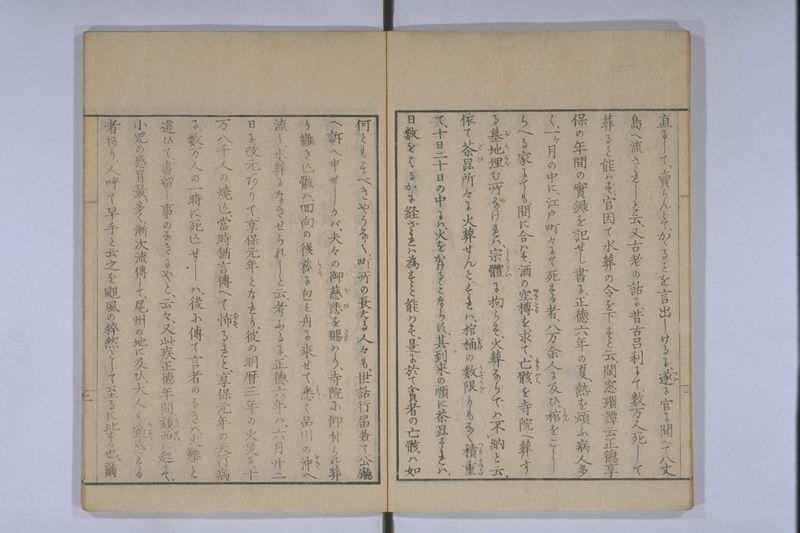
翻刻
【右】
直にして、売らんとて、かゝることを言出しけるに、遂(つい)に聞へて八丈
島へ流されしと云、又古老の話に、昔古呂利にて、数万人死して
葬ること能はず、官因て水葬の令を下すと伝、閑窓瑣譚伝正徳享
保の年間の実録を記せし書に、正徳六年の夏、熱を煩ふ病人多
く、一ヶ月の中に、江戸町々にて死する者、八万余人に及ひ、棺(くわん)をこし
らへる家にても、間に合はす、酒の空樽(あきたる)を、亡骸(なきがら)を寺院へ葬す
る墓地(ぼち)埋(うづ)む所なければ、宗體(すうたい)に拘らす、火葬ならでは不_レ納と伝、
依て荼毘(だひ)所々に火葬せんとすれは、棺/桶(をけ)の数限(かずかぎ)りもなく積重(つみかさね)
て、十日二十日の中には、火をかけることならす、其到来の順に荼毘すれは、
日数をはるかに経ざれは為すこと能はす、是に於て貧者の亡骸は如
【左】
何ともすべきやうなく、町所の長たる人々も、世話行届兼て、公廳
へ訴申せしかば、夫々の御慈悲(ぢひ)を賜(たま)はり、寺院に仰付られ葬
り難き兦骸は、回向の後菰(くら)に包み舟に乗せて、悉(こと〴〵)く品川の沖(をき)へ
流し、水葬になさせらてしと伝、考ふるに、正徳六年は、六月廿二
日に改元ありて、享保元年となれり、彼の明暦三年の火災に、十
万八千人の焼兦、当時猶言傳へて怖(をそ)るれと、享保元年の天行病
に、数万人の一時に死兦せしは、後に傳て言者のなきは、火難と
違ひて、書留し事のなきにやと、伝々、又此疾正徳年間、鎮西(ちんせい)に起りて、
小児の感冒最も多く、暫次流傳して、尾州の地に及ひ、大人も適(たま〳〵)感する
者あり、人呼て早手と伝之を𩗗風の猝然として至るに比する也、爾
現代語訳
【右】
直に売ろうとして、このようなことを言い出したところ、ついに知れ渡って八丈島へ流されたという。また古老の話によると、昔コレラで数万人が死んで葬ることができず、官がそれで水葬の令を下したと伝えられている。『閑窓瑣談』は正徳・享保年間の実録を記した書であるが、正徳六年の夏、熱病を患う病人が多く、一ヶ月の間に江戸の町々で死ぬ者が八万余人に及び、棺を作る家でも間に合わず、酒の空樽を使い、遺体を寺院へ葬送する墓地に埋める場所がないので、宗派にこだわらず、火葬でなければ収容できないと伝えられている。そこで荼毘所々で火葬しようとすると、棺桶の数が限りもなく積み重なって、十日二十日の間には火をかけることができず、その到着の順に荼毘すると、日数をはるかに経なければすることができない。ここにおいて貧者の遺体はどう
【左】
ともしようがなく、町所の長である人々も、世話が行き届かず、公庁へ訴え申したので、それぞれの御慈悲を賜り、寺院に仰せ付けられ葬り難い遺体は、回向の後菰に包み舟に乗せて、ことごとく品川の沖へ流し、水葬にさせられたと伝えられている。考えてみると、正徳六年は六月二十二日に改元があって享保元年となった。あの明暦三年の火災で十万八千人の焼死者があったことは、今でも語り継がれて恐れられているが、享保元年の流行病で数万人が一時に死亡したことは、後に伝えて言う者がないのは、火災と違って、書き留めたことがないからであろうかと、伝え伝えられている。またこの疾病は正徳年間、九州に起こって、小児の感冒が最も多く、次第に流れ伝わって尾張の地に及び、大人もたまたま感染する者があった。人はこれを呼んで「早手」と伝え、これを颯風が突然として至るのに例えるのである。そうして
英語訳
【Right】
immediately, and when he tried to sell them by spreading such stories, it eventually became known and he was exiled to Hachijō Island. Also, according to the tales of elderly people, in ancient times tens of thousands died from korori and could not be buried, so the government issued an order for water burial. "Kansō Sadan" is a book recording the actual events of the Shōtoku and Kyōhō periods, and it states that in the summer of Shōtoku 6, there were many patients suffering from fever, and within one month, those who died in the towns of Edo numbered over 80,000. Even the houses that made coffins could not keep up, so they used empty sake barrels, and since there was no place to bury the corpses in the burial grounds of temples, regardless of sect, it was reported that only cremation could accommodate them. Therefore, when they tried to cremate at various cremation sites, coffins accumulated in limitless numbers, and within ten to twenty days they could not set fire to them. If they cremated in order of arrival, it could not be done without many days passing. At this point, the corpses of the poor had no
【Left】
way to be handled, and even the leaders of the town districts could not manage the care properly, so they petitioned the government office. They received respective compassion, and corpses that were difficult for temples to bury were wrapped in straw mats after memorial services, placed on boats, and all sent to drift off the coast of Shinagawa for water burial, it is reported. Considering this, Shōtoku 6 had a change of era name on the 22nd day of the 6th month, becoming Kyōhō 1. The fire disaster of Meireki 3, with 108,000 burn victims, is still talked about and feared today, but the fact that tens of thousands died at once from the epidemic disease of Kyōhō 1 has no one to speak of it later, perhaps because unlike fire disasters, there was nothing recorded about it, so it is passed down through oral tradition. Also, this disease arose in Kyushu during the Shōtoku period, with childhood colds being most numerous, gradually spreading and reaching the Owari region, with adults also occasionally being infected. People called this "hayate" (swift hand) and compared it to a sudden gust of wind. Thus