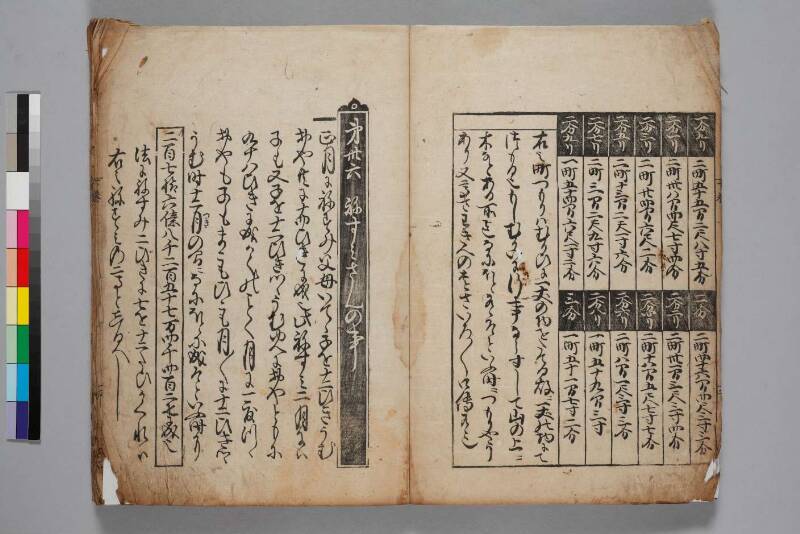
翻刻
【下巻五丁裏】
一分九り 二町五十五間二尺八寸五分 二分 二町四十六間四尺三寸三分
二分一り 二町卅八間四尺七寸四分 二分二り 二町卅一間三尺三寸四分
二分三り 二町廿四間六尺二分 二分四り 二町十八間五尺七寸七分
二分五り 二町十三間二尺一寸六分 二分六り 二町八間一尺三寸三分
二分七り 二町三間二尺九寸六分 二分八り 一町五十九間三寸
二分九り 一町五十四間六尺一寸二分 三分 一町五十一間七寸二分
右の町つもりはむかひに一丈の物をたてる故 ̄ニ一丈の物にて
つもる也もしむかいに行事ならすして山の上 ̄ニ
木なとある所迄なにほと有そといふ時 ̄ニつもりやう
あり又高さわきへのとをさいろいろ口伝有也
【下巻六丁表】
《題:第卅六 ねすみさんの事》
┃正月にねすみ父母いてて子を十二ひきうむ
おや共に十四ひきに成也此ねすみ二月には
子も又子を十二ひきつつうむゆへにおやともに
九十八ひきに成かくのことく月に一度つつ
おやも子もまこもひこも月〳〵に十二ひきつつ
うむ時十二/月(つき)の間 ̄ニなにほとに成そといふ時に
[二百七拾六億八千二百五十七万四千四百二疋に成也]
法にねすみ二ひきに七を十二かひかくれは
右のねすみの高としるへし
現代語訳
【下巻五丁裏】
一分九厘 二町五十五間二尺八寸五分 二分 二町四十六間四尺三寸三分
二分一厘 二町三十八間四尺七寸四分 二分二厘 二町三十一間三尺三寸四分
二分三厘 二町二十四間六尺二分 二分四厘 二町十八間五尺七寸七分
二分五厘 二町十三間二尺一寸六分 二分六厘 二町八間一尺三寸三分
二分七厘 二町三間二尺九寸六分 二分八厘 一町五十九間三寸
二分九厘 一町五十四間六尺一寸二分 三分 一町五十一間七寸二分
右の町積もりは向かいに一丈の物を立てる故に、一丈の物にて
積もるのである。もし向かいに行くことならずして、山の上に
木などある所まで、どれほど有るかと言う時に積もりよう
あり。また、高さ・脇へのとおさ、いろいろ口伝あり。
【下巻六丁表】
《第三十六 鼠算のこと》
正月に鼠が父母いでて子を十二匹産む。
親共に十四匹になるのである。この鼠が二月には
子もまた子を十二匹ずつ産む故に、親共に
九十八匹になる。かくのごとく月に一度ずつ
親も子も孫も曾孫も、月々に十二匹ずつ
産む時、十二か月の間にどれほどになるかというとき、
〔二百七十六億八千二百五十七万四千四百二匹になるのである〕
法として、鼠二匹に七を十二回かければ、
右の鼠の数と知るべし。
英語訳
[Volume 2, Folio 5 Verso]
One bu nine rin: 2 chō, 55 ken, 2 shaku, 8 sun, 5 bu Two bu: 2 chō, 46 ken, 4 shaku, 3 sun, 3 bu
Two bu one rin: 2 chō, 38 ken, 4 shaku, 7 sun, 4 bu Two bu two rin: 2 chō, 31 ken, 3 shaku, 3 sun, 4 bu
Two bu three rin: 2 chō, 24 ken, 6 shaku, 2 bu Two bu four rin: 2 chō, 18 ken, 5 shaku, 7 sun, 7 bu
Two bu five rin: 2 chō, 13 ken, 2 shaku, 1 sun, 6 bu Two bu six rin: 2 chō, 8 ken, 1 shaku, 3 sun, 3 bu
Two bu seven rin: 2 chō, 3 ken, 2 shaku, 9 sun, 6 bu Two bu eight rin: 1 chō, 59 ken, 3 sun
Two bu nine rin: 1 chō, 54 ken, 6 shaku, 1 sun, 2 bu Three bu: 1 chō, 51 ken, 7 sun, 2 bu
The above town measurements are based on placing a one-jō object across the way, and so measurements are taken using a one-jō object. If one cannot go across to the other side and wishes to know the distance to a place such as a hilltop with trees, there is a method for measuring that as well. Furthermore, there are various oral traditions for measuring height and lateral distances.
[Volume 2, Folio 6 Recto]
《Section 36: On the Rat Multiplication Problem》
In the first month, a pair of parent rats produces twelve offspring, making fourteen rats in total including the parents. In the second month, the offspring also each produce twelve young, so together with the parents, they become ninety-eight. In this manner, every month, the parents, children, grandchildren, and great-grandchildren all produce twelve offspring each month. How many rats will there be over the course of twelve months?
〔The answer is 276,825,574,402 rats.〕
The method: Multiply two rats by seven, twelve times, and you will know the number of rats as given above.