翻刻
【右丁】
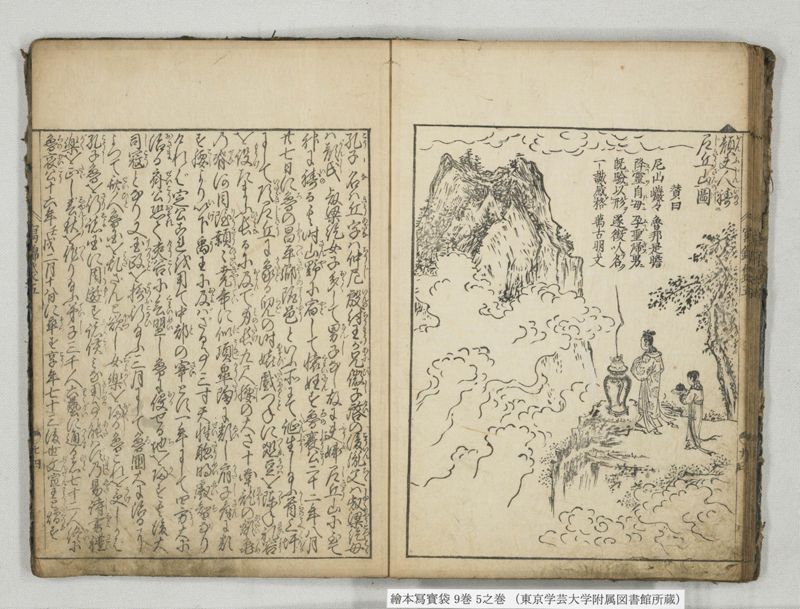
顔夫人(がんふじん)祷(いのる)_二
尼丘山(じきうざん) ̄ニ_一図(のづ)
賛曰
尼-山巌-々 魯-邦是-胆
降 ̄スコト_レ霊 ̄ヲ自 ̄ル_レ母 ̄ニ 孕 ̄ムコトハ聖 帰(キ) ̄ス_レ男 ̄ニ
既 ̄ニ験 ̄ニ以 ̄シ_レ形 ̄ヲ 遂 ̄ニ徴以 ̄テ名 ̄ク
一-誠感 ̄シテ-格 万-古明-文
【左丁】
孔子(こうし)名(な)は丘(きう)字(あざな)は仲尼(ちうじ)殷(いんの)紂王(ちうわう)が兄(あに)微子啓(びしけい)の後胤(こういん)父(ちゝ)は叔梁紇(しゆくりやうこつ)母(はゝ)
は顔氏(がんし) 叔梁紇女子 多(おゝく)して男子(なんし)なし故に夫婦(ふうふ)尼丘(じきう)山に至て
神に祷(いの)る其時 山野(さんや)に宿(やど)して懐妊(くわいにん)す魯(ろの)襄公(じやうこう)二十二年八月
廿七日に魯(ろ)の昌平郷(しやうへいきやうの)陬邑(すうゆう)といふ所にて誕生(たんじやう)し給ふ首上(かしらのうへ)圩(くぼる)
にして頂(いたゞき)尼丘(じきう)に象(かたど)る児(ちご)の時 嬉戯(あそびたはふること)つねに俎豆(つくゑうつは)を陳(つら)ね礼容(れいよう)
を設(もうけ)たまふ長(ひとゝな)るに及(およん)で身長(みのたけ)九尺 腰(こし)の大さ十囲 竜(りやう)の額(ひたい)亀(かめ)
の脊(せな)河目 隆顙(りうさう)々(ひたい)尭帝(ぎやうてい)に似(に)項(うなじ)皐陶(かうたう)に類(るい)し肩(かた)子産(しさん)に類
す腰(こし)より以下(いげ)禹(う)王に及(およ)ばざる事三寸天 性(せい)聡明(さうめい)叡智(ゑいち)なり
ければ定公これを用て中 都(と)の宰(さい)とす一年にて四 方(はう)大に
治(おさま)る斉公(せいこう)恐(おそれ)て夾谷(けうこく)に会盟(くわいめい)し魯に侵(おか)せる地(ち)を帰(かへ)す其後大
司寇(しこう)となり又 国政(まつりごと)を摂行(とりおこなひ)給ふ三月にして魯(ろ)国大に治るに
よつて斉人(せいひと)魯国を乱(みだ)さんと欲(ほつ)し女楽(ぢよがく)を帰(おく)る魯これを受(うけ)しかば
孔子(こうし)魯を行(さり)諸(しよ)国に周遊(しうゆう)す諸侯(しよこう)みな用(もちゆる)事 能(あた)はず乃(いまし)易詩書(ゑきししよ)礼(れい)
楽(がく)を正(たゞ)し春秋(しゆんじう)を作(つく)り給ふ弟子(ていし)三千人 六芸(りくげい)に通(つうす)る者(ひと)七十二人 終(つい)に
魯(ろの)哀公(あいこう)十六年壬戌二月十八日に卒(そつ)す享(こう)年七十三後世 文宣王(ぶんせんわう)と贈(おくりな)す
現代語訳
【右丁】
顔夫人が尼丘山に祈る図
賛に曰く
尼山は巌々として 魯邦はこれを誇りとする
母に霊を降し 聖を孕んで男児を産む
既に形によって験し 遂に名によって徴す
一誠が感格して 万古に明文となる
【左丁】
孔子の名は丘、字は仲尼。殷の紂王の兄である微子啓の後裔。父は叔梁紇、母は顔氏。叔梁紇には女子は多くいたが男子がいなかったので、夫婦は尼丘山に至って神に祈った。その時、山野に宿泊して懐妊した。魯の襄公二十二年八月二十七日に魯の昌平郷の陬邑という所で誕生された。頭上が窪んでいて、頂が尼丘山に似ていた。幼児の時の遊びは、いつも俎豆(祭具)を並べて礼容を整えられた。成長すると身長九尺、腰の大きさ十囲、竜の額に亀の背中、河のような目に隆起した額で、堯帝に似て、項は皐陶に類し、肩は子産に類していた。腰より下は禹王に及ばないこと三寸。天性聡明叡智であったので、定公はこれを用いて中都の宰とした。一年で四方が大いに治まった。斉公は恐れて夾谷で会盟し、魯に侵していた地を返した。その後大司寇となり、また国政を摂行された。三月で魯国が大いに治まったので、斉人は魯国を乱そうと欲して女楽を贈った。魯がこれを受けたので、孔子は魯を去り諸国を周遊した。諸侯は皆用いることができず、そこで易・詩・書・礼・楽を正し、春秋を作られた。弟子は三千人、六芸に通じる者は七十二人。ついに魯の哀公十六年壬戌二月十八日に卒去された。享年七十三。後世、文宣王と贈り名された。
英語訳
【Right Page】
Picture of Lady Yan Praying at Mount Niqiu
The eulogy says:
Mount Ni stands majestically, the pride of the state of Lu
A spirit descended to the mother, who conceived a sage and bore a male child
Already proven by his form, his name was prophetic
One sincere prayer moved Heaven, becoming enlightenment for all ages
【Left Page】
Confucius's name was Qiu, his courtesy name was Zhongni. He was a descendant of Weizi Qi, the elder brother of King Zhou of Yin. His father was Shu Liang He, his mother was of the Yan clan. Shu Liang He had many daughters but no sons, so the couple went to Mount Niqiu to pray to the gods. At that time, they lodged in the mountains and she conceived. On the twenty-seventh day of the eighth month in the twenty-second year of Duke Xiang of Lu, he was born in Zou village of Changping district in Lu. The top of his head was concave, resembling Mount Niqiu at the crown. As a child, his play always involved arranging ritual vessels and performing ceremonies. When he grew up, he was nine feet tall with a waist of ten围 in circumference, having a dragon's forehead and turtle's back, river-like eyes and a prominent brow, resembling Emperor Yao. His neck was like Gaotao's, his shoulders like Zichan's. From the waist down, he was three inches shorter than King Yu. Being naturally intelligent and wise, Duke Ding appointed him as magistrate of Zhongdu. Within one year, all directions were well governed. The Duke of Qi, fearing this, made a covenant at Jiagu and returned the territory that had been taken from Lu. Later he became Grand Minister of Justice and also administered state affairs. Within three months, the state of Lu was greatly well-ordered. Therefore, the people of Qi, wanting to disturb Lu, sent female musicians. When Lu accepted them, Confucius left Lu and traveled among various states. None of the feudal lords could employ him properly, so he corrected the Yi, Shi, Shu, Li, and Yue classics and composed the Spring and Autumn Annals. He had three thousand disciples, with seventy-two mastering the six arts. Finally, he died on the eighteenth day of the second month in the sixteenth year of Duke Ai of Lu, in the year Renxu, at the age of seventy-three. He was posthumously honored with the title King Wenxuan.