翻刻
【右丁】
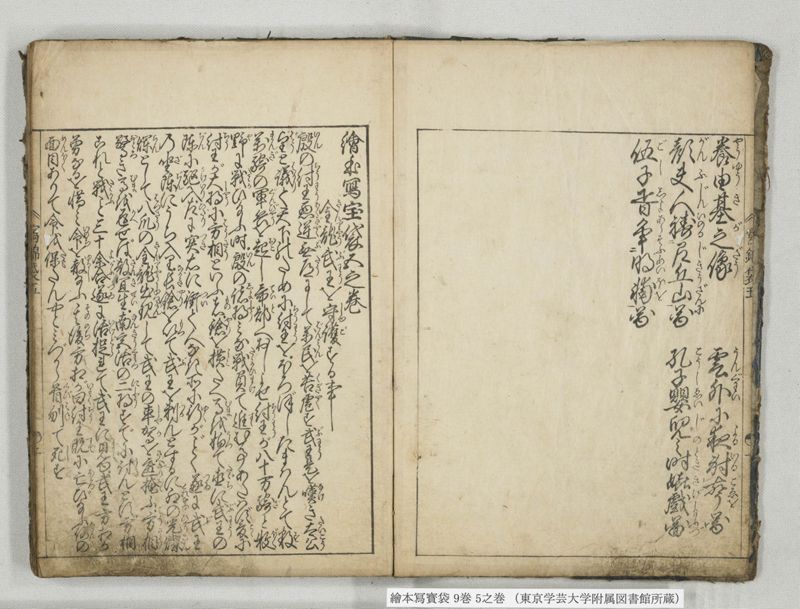
養由基(やうゆうき)之(が)像(ざう) 雲外(うんぐわい)に夜(よる)射(いる)_レ声(こゑを)図
顔夫人(がんふじん)祷(いのる)_二尼丘山(じきうざんに)_一図 孔子(こうし) 嬰児(ゑいじ)之(の)時(とき)嬉戯(きげし給ふ)図(づ)
伍子胥(ごししよ)争(あらそふ)_二明輔(めいほを)_一図
【左丁】
【句点と思われる「・」は「。」に置き替える】
絵本写宝袋五之巻
金竜(きんりやう)武王(ぶわう)を守護(しゆご)する事
殷(いん)の紂王(ちうわう)悪逆(あくぎやく)無道(ぶたう)にして万民(ばんみん)を苦虐(くぎやく)す武王(ぶわう)是を嘆(なけ)き太公(たいこう)
望(ばう)と儀(はかり)て天下のために紂王(ちうわう)を。ほろぼしたまはんとて数(す)
万騎(まんぎ)の軍兵(ぐんびやう)を起(おこ)し帝都(ていと)へおしよせ紂王(ちうわう)が八十万 騎(ぎ)と牧(ぼく)
野(や)に戦(たゝか)ひ給ふ時。殷(いん)の諸将(しよしやう)みな戦(たゝかひ)負(まけ)て進(すゝ)む事あたはず爰(こゝ)に
紂(ちう)王が大 将(しやう)に方相(はうさう)といふ者(もの)。鎗(やり)を横(よこ)たへ馬(むま)を拍(うつ)て直(たゞち)に武王(ぶわう)の
陣(ぢん)に駆入(かけいり)。左(ひだり)に突(つき)右に衝(つい)て人なき所に行(ゆく)がごとく遂(つゐ)に武(ぶ)王
の坐陣(ざぢん)にうち入り。長槍(ながきやり)を以(もつ)て武(ぶ)王を刺(つか)んとするに紅(くれなゐ)の光(ひかり)燦(さん)
爛(らん)として八爪(はつさう)の金竜(きんりやう)出現(しゆつげん)して武王の車駕(しやか)を遮(さへぎり)掩(おゝ)ふ。方相(はうさう)
驚(おとろ)き馬(むま)を返(かへ)せば散宜生(さんぎせい)。南宮活(なんきうくわつ)の二将(にしやう)すでに討(うた)んとす。方相
これと戦(たゝかふ)こと三十 余合(よがふ)遂(つゐ)に活捉(いけどら)れて武王に見(まみ)ゆ武王方相か
勇なるを惜み命(いのち)を赦(ゆるし)給ふ其後(そののち)方相が曰(いわく)紂(ちう)王 既(すで)に亡(ほろ)び給ふ何(なん)の
面目(めんほく)ありて命を保(たも)たんやとみづから首(くび)刎(はね)て死(し)す
現代語訳
【右丁】
養由基の像 雲外に夜声を射る図
顔夫人が尼丘山に祷る図 孔子が嬰児の時に遊戯される図
伍子胥が明輔を争う図
【左丁】
絵本写宝袋五之巻
金竜が武王を守護する事
殷の紂王は悪逆無道であって万民を苦しめ虐げていた。武王はこれを嘆き、太公望と相談して天下のために紂王を滅ぼそうとして、数万騎の軍兵を起こし帝都へ押し寄せた。紂王の八十万騎と牧野で戦われた時、殷の諸将はみな戦いに負けて進むことができなかった。ここに紂王の大将で方相という者が、槍を横にして馬を打ち、直ちに武王の陣に駆け入り、左に突き右に衝いて人のいない所を行くように、ついに武王の本陣に打ち入り、長槍をもって武王を刺そうとした。すると紅の光が燦爛として、八爪の金竜が出現して武王の車駕を遮り覆った。方相は驚いて馬を返すと、散宜生と南宮活の二将がすでに討とうとした。方相はこれと戦うこと三十余合、ついに生け捕られて武王に謁見した。武王は方相の勇敢さを惜しんで命を赦された。その後、方相が言うには「紂王がすでに滅びてしまわれたのに、何の面目があって命を保とうか」と、みずから首を刎ねて死んだ。
英語訳
【Right Page】
Portrait of Yang Youji Picture of Shooting at a Voice in the Night Beyond the Clouds
Picture of Lady Yan Praying at Mount Niqiu Picture of Confucius Playing as an Infant
Picture of Wu Zixu Contending for Mingfu
【Left Page】
Picture Book Treasure Bag, Volume 5
The Golden Dragon Protecting King Wu
The tyrant King Zhou of Yin was wicked and immoral, causing suffering to all the people. King Wu lamented this and consulted with Duke Tai Gong Wang to destroy King Zhou for the sake of the realm. He raised an army of several tens of thousands of cavalry and advanced toward the imperial capital. When they fought against King Zhou's 800,000 cavalry at Muye, all of Yin's generals were defeated and could not advance. At this point, King Zhou's general named Fangxiang took up his spear horizontally, spurred his horse, and charged directly into King Wu's formation. Thrusting left and striking right as if moving through an empty field, he finally broke into King Wu's main camp and tried to stab King Wu with his long spear. Then a crimson light shone brilliantly, and an eight-clawed golden dragon appeared, blocking and covering King Wu's royal carriage. Fangxiang was startled and turned his horse back, but the two generals San Yisheng and Nangong Huo were already ready to strike him down. Fangxiang fought them for more than thirty rounds before finally being captured alive and brought before King Wu. King Wu, admiring Fangxiang's courage, pardoned his life. Afterward, Fangxiang said, "Now that King Zhou has already perished, what honor do I have to preserve my life?" and cut off his own head and died.