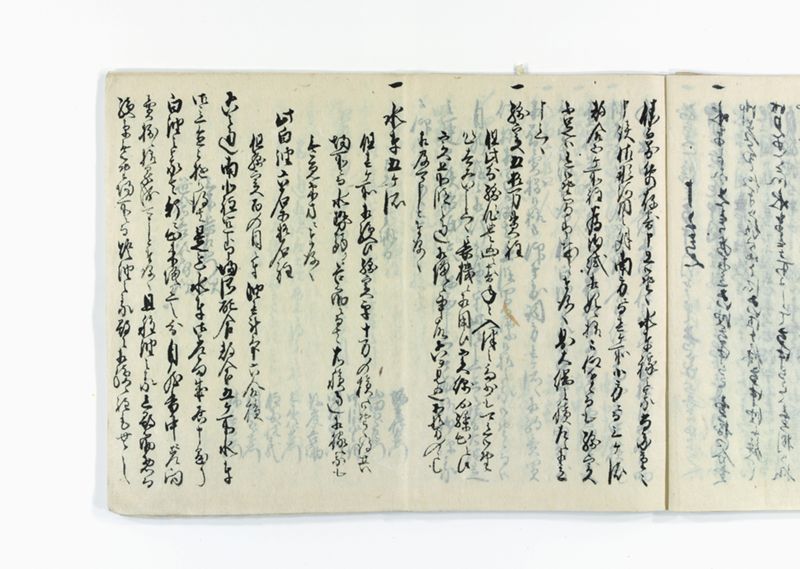
翻刻
依而別帋存寄申上御坐候水車稼之義尚亦重々
申談佐那河内之外南方に而壱ケ所北方に而三ケ所
都合五ケ所程為御試相始候様被仰付候而も綿実
不足は有御坐間布事に奉存候則大綱之積左に相立
申上候
一綿実五拾万貫程
但此分綿作豊凶に寄年々入津之多少も可有御坐
乍去右申上候長機に相用候実綿ゟ繰出に候
実前段之通相増候事故右を見込五拾万〆にも
相及可申と奉存候
一水車五ケ所
但壱ケ所相絞候綿実平十万〆積に御坐候得共
場所に而水勢弱り谷筋に而者右積通相稼候義も
無覚束方に奉存候
此白油六百五拾石程
但綿実百〆目に付油壱斗三升六合積
右之通南北程宜布場所配合都合五ケ所水車
御立置被遊得者是迄水車御差留成居申懸り
白油之義者新に出来増有之分自然市中に差向
売捌候様罷成可申と奉存候且種油之義三郡筋惣而
絞草無御坐場所に而燈油之義郡々相絞候程も無之
現代語訳
よって別紙に存じ寄り申し上げ御座候水車稼ぎの義、なお又重々
申し談じ、佐那河内の外、南方にて一ヶ所、北方にて三ヶ所、
都合五ヶ所程を御試しのため相始め候様仰せ付けられ候ても、綿実
不足は御座間敷事と存じ奉り候。則ち大綱の積もり左に相立て
申し上げ候。
一、綿実五十万貫程
但し此の分、綿作豊凶により年々入津の多少も御座るべく、
去りながら右申し上げ候長機に相用い候実綿より繰り出しに候
実、前段の通り相増し候事故、右を見込み五十万〆にも
相及び可申と存じ奉り候。
一、水車五ヶ所
但し一ヶ所相絞り候綿実平均十万〆積もりに御座候得ども、
場所にて水勢弱く、谷筋にては右積もり通り相稼ぎ候義も
覚束なき方と存じ奉り候。
此の白油六百五十石程
但し綿実百〆目に付き油一斗三升六合積もり
右の通り南北程よき場所配合、都合五ヶ所水車を
御立て置き遊ばされ候えば、是まで水車御差し留め成り居り申す懸り、
白油の義は新に出来増し有り候分、自然市中に差し向け
売り捌き候様罷り成り可申と存じ奉り候。且つ種油の義、三郡筋総て
絞り草無く御座候場所にて、燈油の義、郡々相絞り候程も無之候。
英語訳
Therefore, regarding the water mill operations mentioned in the separate document we respectfully submitted, we have discussed this matter repeatedly and believe that even if you order the commencement of trials at a total of five locations - one in the southern region and three in the northern region, in addition to Sanagōchi - there should be no shortage of cotton seeds. We respectfully submit the following rough calculations:
One item: Approximately 500,000 kan of cotton seeds
Note: This amount will vary annually depending on whether the cotton harvest is abundant or poor. However, as mentioned previously, the raw cotton used for the long looms and the seeds extracted from it have been increasing, so we believe it could reach 500,000 bundles based on this estimate.
One item: Five water mill locations
Note: While we estimate an average of 100,000 bundles of cotton seeds pressed at one location, we believe it would be uncertain whether such projected operations could be maintained at locations with weak water flow or in valley areas.
This [would produce] approximately 650 koku of white oil
Note: Based on a calculation of 1 to 3 shō 6 gō of oil per 100 bundles of cotton seeds
If water mills are established at five well-distributed locations in suitable areas of the south and north as described above, then regarding the white oil that has been restricted due to the previous prohibition of water mills, the newly increased production could naturally be directed for sale in urban markets. Furthermore, concerning seed oil, in areas throughout the three districts where there are no oil pressing facilities, there is insufficient lamp oil production in each district.