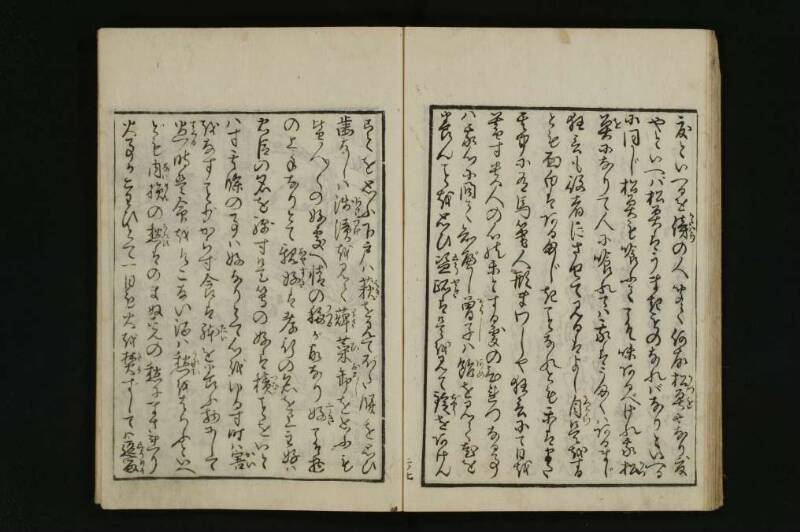
翻刻
度といへるを傍(かたはら)の人聞て何故 松魚(かつを)になり度
やといへば松魚はうまきものなればなりといへる
に同じ松魚も喰ふてこそ味あるべけれ我 松(かつ)
魚(を)になりて人に喰れては我はうまくはあるまじ
狂言も役者にさせて見るはよし自(みつから)是をする
とも面白はあるまじきことなれとも楽はまた
其中に有馬筆人形まわしや狂言にて日を
暮す貴人の心の楽とする処のひれつなる事
は我心に問て知べし曽子(そうし)は飴(あめ)を見て老を
養んことを思ひ盗跖(とうせき)は是を見て錠(ぢやう)をあけん
ことを思ふ下戸は萩(はき)を見てぼた餅を思ひ
歯なしは浅漬(あさつけ)を見て蔊菜卸(わさひおろし)を思ふも
皆人々の好処へ情の移(うつる)が故なり好(すき)こそ物
の上手なりとて親好(おやすき)は孝行の名を上主好は
忠臣の名を残す是等の好は積(つむ)ことをいと
はす其余の事は好なりとて心をゆるす時は害(かい)
をなすこと少からず食は体(たい)を養ふ物にして
過(すくる)時は命をそこない酒は愁(うれひ)をはらふといへ
ども内損(ないそん)の愁(うれひ)そのまぬ先の愁にまされり
火事がこわひとて一日も火を焚(たか)ずしては逗留(とうりう)
現代語訳
度(た)い」というのを傍らの人が聞いて「何故鰹になりたいのか」と言えば「鰹は美味しいものだからなりたい」と言うのと同じである。鰹も食べてこそ味があるものだろう。我が鰹になって人に食べられては、我は美味しくはあるまい。狂言も役者にさせて見るのはよい。自らこれをするとも面白くはあるまじきことであるけれども、楽しみはまたその中にある。馬術、人形回し、狂言にて日を暮らす貴人の心の楽しみとするところの卑劣なることは、我が心に問うて知るべきである。曽子は飴を見て老親を養うことを思い、盗跖はこれを見て錠前を開けることを思う。下戸は萩を見てぼた餅を思い、歯なしは浅漬けを見てわさび下ろしを思うのも、皆人々の好むところへ情が移るが故である。好きこそ物の上手なりとて、親を好むは孝行の名を上げ、主君を好むは忠臣の名を残す。これらの好みは積むことを厭わない。その余の事は、好みなりとて心を緩める時は害をなすこと少なからず。食は体を養う物にして、過ぎる時は命を損ない、酒は愁いを晴らすと言えども、内臓を損なう愁いはその前の愁いに勝る。火事が怖いとて一日も火を焚かずしては滞留
英語訳
want to become [a bonito]." When someone nearby heard this and asked "Why do you want to become a bonito?" he replied "Because bonito is delicious, so I want to become one"—this is the same logic. Bonito only has flavor when eaten. If I became a bonito and was eaten by people, I myself would not taste good. Kyōgen is good when performed by actors for viewing. Even if one does it oneself, it would not be amusing, yet there is still pleasure within it. The base nature of what nobles consider their heart's pleasure—spending their days with horsemanship, puppet manipulation, and kyōgen—should be understood by questioning one's own heart. Zengzi, upon seeing candy, thinks of nourishing his elderly parents; the bandit Zhí Zhí, upon seeing the same, thinks of picking locks. A teetotaler sees bush clover and thinks of rice cakes; a toothless person sees lightly pickled vegetables and thinks of grated wasabi—all because people's emotions move toward what they prefer. "Fondness makes one skilled"—those fond of their parents gain a reputation for filial piety, those fond of their lord leave behind the name of loyal retainer. These kinds of fondness do not hesitate to accumulate merit. For other matters, when one relaxes one's guard because of fondness, the harm caused is considerable. Food nourishes the body, but when excessive, it damages life; alcohol is said to dispel sorrows, yet the sorrow of internal damage surpasses the previous sorrow. Fearing fire, if one does not light a fire even for a single day, one cannot maintain residence