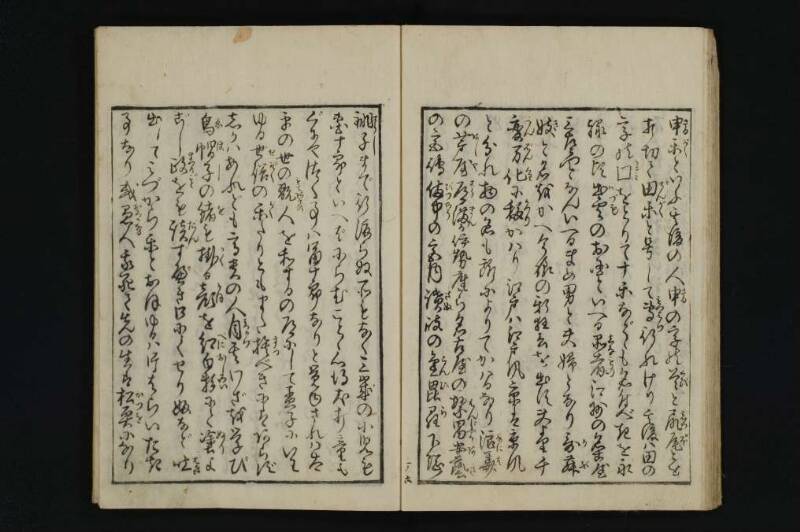
翻刻
申楽(さるがく)といふ其後の人 申(さる)の字の首(くび)と尻尾(しつぽ)とを
打切て田楽(でんがく)と号して専(もつはら)行れけり其後は田の
字の囗(かこみ)をとりて十楽などゝも名付べきを永
禄の頃 出雲(いづも)のお国といへる品者(しなもの)江州の名古屋
三左衛門となんいへるまめ男と夫婦となり歌舞(かぶ)
妓(き)と名をかへ今様の新狂言を出す夫より千
変万化(へんばんくわ)に移(うつり)かはり江戸は江戸風京は京風
と分れ物の名も所によりてかはるなり浪華(なには)
の芦屋道満(あしやどうまん)か伊勢座から名古屋の繁昌(はんじやう)安芸(あき)
の宮島 備中(びつちう)の宮内 讃(さぬ)岐の金昆羅(こんひら)下総の
銚子(てうし)まで行渡らぬ所もなく三歳の小児も
団十郎といへばにらむことゝ心得犬打童も
ぐにやつく事は富十郎なりと覚ゆされは太
平の世の翫(もてあそひ)人を和するの道にして孟子にいわ
ゆる世俗の楽(がく)たりともまた捨(すつ)べきにはあらず
しかはあれども高貴の人 自(みつから)其わざを学び
烏帽子(ゑほし)の緒(を)も掛(かく)る顔(かほ)を紅(べに)白粉(おしろい)にて塗(ぬり)よ
ごし政(まつりごと)をも談(だん)ずべき口にてせりふなど吐(はき)
出してみづから楽とおほゆるは片はらいたき
事なり或 愚(おろかなる)人我死て先の生は松魚(かつを)になり
現代語訳
申楽というのである。その後の人が「申」の字の首と尻尾とを打ち切って田楽と号して、もっぱら行われるようになった。その後は「田」の字の囗(四角い囲み)を取って十楽などとも名付けるべきところを、永禄の頃、出雲のお国という芸人が、近江国の名古屋三左衛門という実直な男と夫婦となり、歌舞伎と名を変えて今様の新狂言を出した。それより千変万化に移り変わり、江戸は江戸風、京は京風と分かれ、物の名も所によって変わるものである。浪華の芦屋道満が伊勢座から名古屋の繁昌、安芸の宮島、備中の宮内、讃岐の金毘羅、下総の銚子まで行き渡らない所もなく、三歳の小児も団十郎といえば睨むことと心得、犬を打つ童も「ぐにゃつく」ことは富十郎なりと覚える。されば太平の世の娯楽として人を和ませる道であって、孟子にいうところの世俗の楽であるとも、また捨てるべきものではない。しかしながら、高貴の人が自らその技を学び、烏帽子の緒も掛ける顔を紅白粉にて塗り汚し、政治をも談ずべき口にて台詞など吐き出して、自ら楽しみと思うのは、見ていて恥ずかしいことである。ある愚かな人が「我死んで来世は鰹になり
英語訳
This was called sarugaku (monkey music). Later people cut off the head and tail of the character "saru" (申) and called it dengaku (field music), which became the predominant form. Later still, one might have taken away the square enclosure (囗) from the character "ta" (田) to call it jūgaku (ten music) or such, but around the Eiroku period (1558-1570), a performer named Okuni from Izumo and a sincere man from Ōmi Province called Nagoya Sanza'emon became husband and wife, changed the name to kabuki, and created new contemporary kyōgen plays. From then on, it underwent countless transformations, with Edo developing its own Edo style and Kyoto its own Kyoto style, and the names of things varying by location. From Naniwa's Ashiya Dōman at Ise-za to Nagoya's prosperity, Aki's Miyajima, Bitchū's Miyanouchi, Sanuki's Konpira, and Shimōsa's Chōshi—there is no place it hasn't reached. Even three-year-old children know that when you say "Danjūrō" you should glare, and even dog-beating street children understand that "gunyatsuku" acting belongs to Tomijūrō. Therefore, this is entertainment for peaceful times and a way to bring harmony to people, and even though it may be what Mencius called "worldly music," it should not be discarded. However, when people of high rank learn these arts themselves, smearing their faces—which should bear the cords of court caps—with rouge and white powder, and uttering stage lines with mouths that should discuss governance, thinking this to be their own pleasure, this is shameful to witness. There is a certain foolish person who says "When I die, in my next life I will become a bonito and