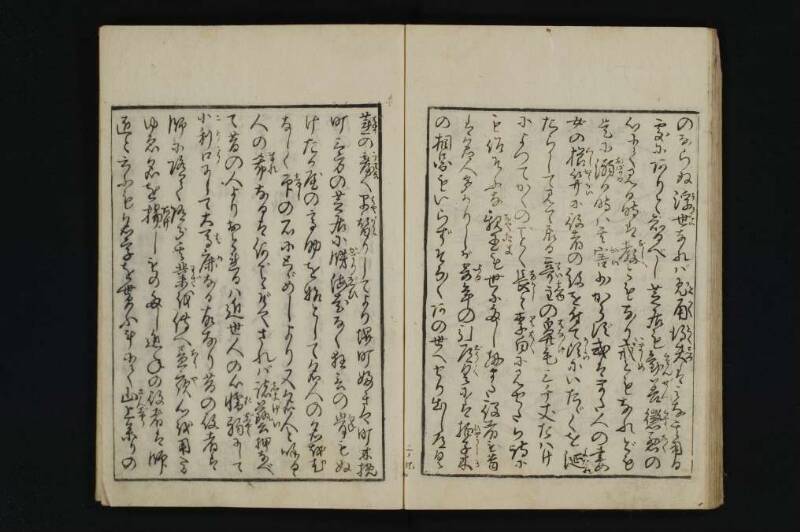
翻刻
のならぬ浮世(うきよ)なれば兎角(とかく)得失(とくしつ)はみな
其用る
処にありと知るべし芝居も勧善懲悪(くわんぜんちやうあく)の
心にて見る時は教(おしへ)ともなり戒(いましめ)ともなれども
是に溺(おぼる)る時は其 害(かい)少からず或はまた人の妻
女の櫛筓(くしかうがい)に役者の紋を付て頭(かしら)にいたゞくを涎(よたれ)
たらして見て居る亭主(ていしゆ)の鼻毛(はなけ)三千丈たはけ
によつてかくのごとく長(ながし)と李白(りはく)に見せたら詩に
も作そふな親玉(おやたま)も世に多し扨また役者も昔
は名人多かりしが寄(よる)年の引 道具(どうく)には拍子木(ひやうしぎ)
の相図もいらずそろ〳〵あの世へせり出し道具
蓮(はす)の台(うてな)へ早替(はやがわり)してより堺町ふきや町木挽
町三方の芝居に飾海老(かざりゑひ)なく狂言の骨(ほね)もぬ
けたか屋の高助を始として名人の名をむ
なしく印(しるし)の石にとゞめしより又名人と呼るゝ
人の希なるは何ごとぞやされば諸芸(しよげい)押なべ
て昔の人よりおとれるは近世人の心 懦弱(だじやく)にして
小利口(こりこう)にして大 馬鹿(ばか)なる故なり昔の役者は
師に随て随分其 業(わざ)を伝へ昼夜(ちうや)心を用たる
ゆゑ名を揚(あげ)しもの多し近年の役者は師
匠と云ふも名字を貰ふ計にて山上(さんじやう)参りの
現代語訳
のならぬ浮世なので、とかく得失はみなその用いる場所にあると知るべきである。芝居も勧善懲悪の心で見る時は教えともなり戒めともなるが、これに溺れる時はその害は少なくない。あるいはまた人の妻女が櫛や笄に役者の紋を付けて頭に載せているのを、よだれを垂らして見ている亭主の鼻毛は三千丈もあるような愚かさで、このように長いと李白に見せたら詩にも作りそうな親玉も世に多い。さてまた役者も昔は名人が多かったが、寄る年波には引き道具として拍子木の合図もいらず、そろそろあの世へせり出し、蓮の台へ早替わりしてから、堺町・葺屋町・木挽町三方の芝居に飾り海老もなく、狂言の骨も抜けてしまった。屋号高助をはじめとして名人の名を虚しく墓石に留めてから、また名人と呼ばれる人が稀なのは何事であろうか。それゆえ諸芸すべて昔の人より劣るのは、近世人の心が軟弱で小利口で大馬鹿だからである。昔の役者は師に従って十分その技を伝え、昼夜心を用いたゆえ名を上げた者が多い。近年の役者は師匠というのも名字をもらうだけで、山上参りの
英語訳
This is the way of the fleeting world, so one should know that all gains and losses depend entirely on how they are applied. Theater too, when viewed with a mind toward encouraging good and punishing evil, can serve as both teaching and admonition, but when one becomes obsessed with it, the harm is considerable. Or again, there are many foolish husbands in this world who drool while watching their wives wear combs and hairpins decorated with actors' crests - their stupidity makes their nose hairs seem three thousand fathoms long, so ridiculous that if Li Bai saw them, he might compose a poem about it. Now, as for actors, there were many masters in the old days, but as the years accumulated, they needed no clappers as stage props to signal their exit, and one by one they made their final stage exit to the other world, making quick costume changes to lotus pedestals. Since then, the theaters of Sakai-cho, Fukiya-cho, and Kobiki-cho lack decorative splendor, and the essence has gone out of the plays. Beginning with Takasuke and others, since the names of masters have been left only as empty marks on tombstones, why is it that people called masters have become so rare? Therefore, the reason all arts are inferior to those of ancient people is that people of recent times have weak hearts, are superficially clever, and are greatly foolish. Actors of old followed their masters and properly transmitted their skills, applying themselves day and night, so many achieved fame. Recent actors call someone "master" merely to receive a stage name, like pilgrims climbing a mountain...