翻刻
【右丁】
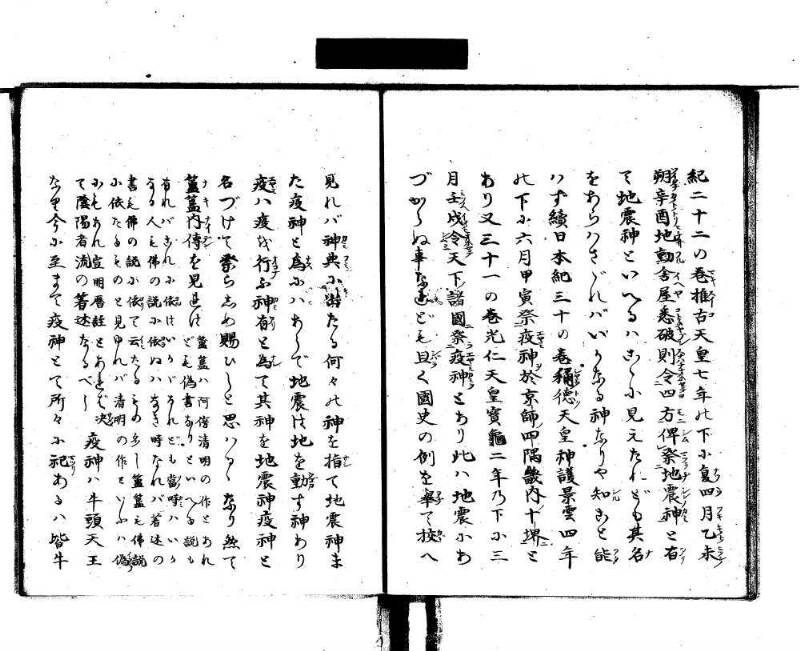
紀二十二の巻(マキ)推古(スイコ)天皇七年の下に夏四月(ナツウツキ)乙未(キノトノヒツシノ)
朔辛酉(ツイタチカノトノトリノヒ) 地動舎屋(チヰフルイヘヤ) 悉破(コト〳〵クヤブレ) 則(スナハチ) 令(オホセテ)_二 四方(ヨモニ)_一俾(シム)_レ 祭(マツラ)_二 地震神(ヂシンノカミ)_一と有(アリ)
て地震神といへるはこゝに見えたれども其 名(ナ)
をあらはさゞればいかなる神なりや知(シル)こと能(アタ)
はず続【續】日本紀三十の巻 称(シヤウ)【穪】 徳(トク)天皇神護景雲四年
の下に六月甲寅祭_二 疫(エヤミ)神 ̄ヲ於京-師 ̄ノ四-隅機内 ̄ノ十-堺_一 ̄ニ と
あり又三十一の巻光仁天皇宝亀二年の下に三
月 壬戌(ミツノヘイヌノヒ) 令(オホセテ)_三【「令」の左に「シム」と再読の振り仮名あり。】 天下 ̄ノ諸国 ̄ニ祭_二 ̄ラ 疫神(エヤミカミヲ)【返り点の「一」が抜けている。】 とあり此は地震にあ
づからぬ事なれども且(シバラ)く国【國】 史の例を挙(アゲ)て挍(カゝ)へ
【左丁】
見れば神典(カミフミ)に出たる何々の神を指(サシ)て地震神ま
た疫神と為(ナス)にはあらで地震は地を動(ウゴカ)す神あり
疫(エヤミ)は疫を行(オコナ)ふ神有(カミアリ)と為(ナシ)て其神を地震神疫神と
名づけて祭らしめ賜ひしと思はるゝなり然て
簠簋(ナキ)【(正しくはホキ)】内傳(ナイデン)を見れば【ここから割書になっているが、長文なので一行書きにする。】
簠簋は阿傍清明の作とあれ
ども偽書なりといへる説も
有ればこれに依(ヨル)はいかゞなれども当(ソノ)【當】時(カミ)はいか
なる人も仏【佛】 の説に依(ヨラ)ぬはなき時なれば著述の
書も仏【佛】 の説に依(ヨリ)て云(イヒ)たるもの多し簠簋も仏【佛】 説
に依たるものと見ゆれば清明の作といふは偽(イツハリ)
にもあれ宣明歴註とあれば決(サダメ)
て陰陽者流の著述なるべし【ここで割書が終わっている。】 疫神は牛頭天王
なり今に至まて疫神とて所々に祀(マツリ)あるは皆牛
現代語訳
【右丁】
『日本書紀』第二十二巻の推古天皇七年の条に「夏四月乙未朔辛酉、地動き家屋ことごとく破る。則ち四方に令して地震神を祭らしむ」とある。地震神という名称はここに見えるが、その具体的な名前を明らかにしていないので、どのような神であるかを知ることはできない。『続日本紀』第三十巻の称徳天皇神護景雲四年の条に「六月甲寅、疫神を京師の四隅、畿内の十堺に祭る」とあり、また第三十一巻の光仁天皇宝亀二年の条に「三月壬戌、天下の諸国に令して疫神を祭らしむ」とある。これは地震に関わることではないが、しばらく国史の例を挙げて比較して
【左丁】
見れば、神典に出てくる特定の神を指して地震神または疫神とするのではなく、地震は地を動かす神があり、疫病は疫病をもたらす神がいるとして、その神を地震神・疫神と名づけて祭らせになったと思われる。そこで『簠簋内伝』を見ると、(簠簋は安倍晴明の作とあるが、偽書であるという説もあるので、これに依拠するのはいかがなものか。しかし当時はどのような人も仏教の説に依らない者はない時代なので、著述の書も仏教の説に依って書かれたものが多い。簠簋も仏説に依ったものと見えるので、晴明の作というのは偽りであっても、宣明暦注とあれば、きっと陰陽師系統の著述であろう。)疫神は牛頭天王である。今に至るまで疫神として各所で祀られているのは皆牛
英語訳
[Right page]
In the Nihon Shoki, Volume 22, under the seventh year of Empress Suiko's reign, it states: "Summer, fourth month, first day kinoto-hitsuji, day kanoto-tori, the earth shook and houses were completely destroyed. Thereupon [the empress] ordered the four directions to worship the earthquake deity." The term "earthquake deity" appears here, but since the specific name is not revealed, we cannot know what kind of deity it was. In the Shoku Nihongi, Volume 30, under Empress Shōtoku's fourth year of Jingo-keiun era, it states: "Sixth month, day kinoe-tora, epidemic deities were worshipped at the four corners of the capital and the ten boundaries of the Kinai region." Also in Volume 31, under Emperor Kōnin's second year of Hōki era: "Third month, day mizunoe-inu, [the emperor] ordered all provinces under heaven to worship epidemic deities." While this does not relate to earthquakes, let me temporarily cite examples from national histories for comparison.
[Left page]
When we examine this, it appears that rather than designating specific deities mentioned in the sacred texts as earthquake deities or epidemic deities, they believed there were deities who move the earth and deities who bring epidemics, and named these deities "earthquake deities" and "epidemic deities" to have them worshipped. Now, looking at the Hoki Naiden: (While Hoki is attributed to Abe no Seimei, there are theories that it is a forgery, so relying on this may be questionable. However, since in those times there was no one who did not rely on Buddhist teachings, many written works were based on Buddhist doctrine. Since Hoki also appears to be based on Buddhist teachings, even if the attribution to Seimei is false, given that it mentions calendar annotations, it must surely be a work of the onmyōji tradition.) The epidemic deity is Gozu Tennō. What are worshipped as epidemic deities in various places up to the present day are all Gozu