翻刻
【右丁 前頁の最後から割書になっているが長文なので一行書きにします。】
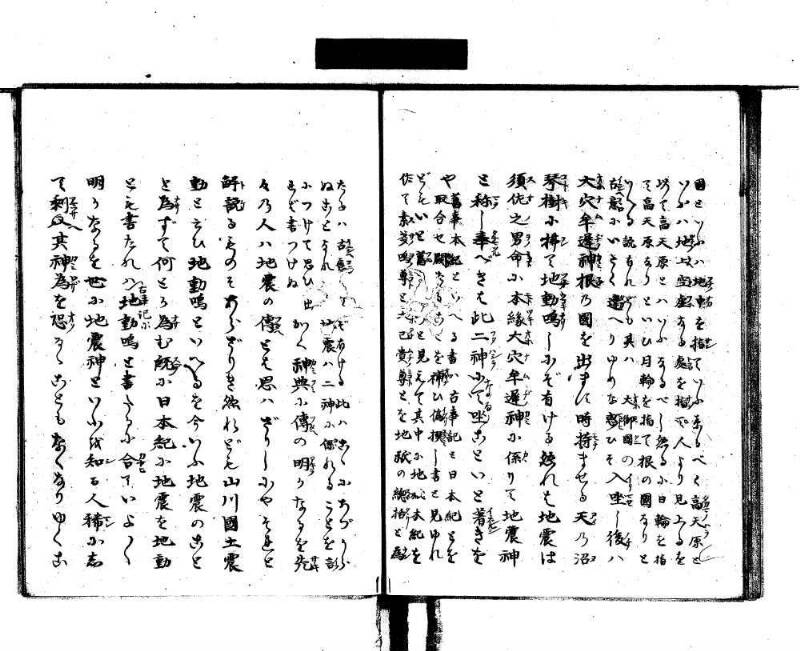
国【國】といふは地中(ツチノナカ)を指(サシ)ていふなるべく高天原(タカマノハラ)と
いふは地上(ツチノウヘ) 空虚(ウツホ)なる所(トコロ)【處】 を指(サシ)て人より見上るを
以て高天原とはいふなるべし然るに日輪を指
て高天原なりといひ月輪を指て根の国【國】なりと
いへる説有れども其は大御国(オホミクニ)【國】の
古意(イニシヘコゝロ)にいたく違(タガ)へりゆめな惑(マドヒ)そ【ここで割書終わり。】入坐(イリマセ)し後(ノチ)は
大穴牟遅神(オホナムヂノカミ) 根(ネ)の国【國】を出ます時 持(モチ)ませる天(アメ)の沼(ヌ)
琴(コト) 樹(キ)に払(フレ)【拂】て地動鳴(ツチウコキナリ)しにぞ有ける然れは地震は
須佐之男命(スサノヲノミコト)に本縁(モトツキ)大穴牟遅神(オホナムヂノカミ)に係(カゝ)りて地震神
と称(マヲ)し奉(タテマツル)べきは此 二神(フタハシラ)なる【「なる」の左側本文の行に「にて坐」をミセケチ】こといと著(イチジルシ)きを
や【ここから割書になっているが、長文故一行書きにします。】旧【舊】事本紀といへる書は古事記と日本紀とを取合せ闕(カケ)たることを補(オギナ)ひ偽撰(イツハリエラミ)し書と見ゆれ
どもいと旧(フル)【舊】□□□と見えて其中に地祇本紀を
作て素戔鳴尊(スサノヲノミコト)と大已貴尊(オホアナムチノミコト)とを地祇の総括(スメクゝリ)と為(ナシ)
【左丁】
たるは古意(イニシエコゝロ)□□てぞ有ける此はこゝにあづから
ぬことなれ□□地震は二神に係(カゝ)れることを言(イフ)
につけて思ひ出
れば書つけぬ【ここまでが割書。本文を続ける】 かく神典(カミフミ)に伝(ツタヘ)【傳】の明(アキラ)かなるを先(サキ)
々の人は地震の伝(ツタヘ)【傳】とは思はざりしにやそれと
解説(トケ)るものもそあらざりき然れども山川国【國】土震
動と云ひ地動鳴といへるを今いふ地震のこと
と為(ナサ)ずて何とか為(ナサ)む既(スデ)に日本紀に地震を地動
とも書きたれは古事記に【「古事記に」は挿入文】地動鳴と書たるに合(カナヒ)ていよ〳〵
明かなるを世に地震神といふを知(シ)る人 稀(マレ)にし
て剰(アマツサ)へ其 神為(カミワザ)を恐(オソ)るゝこともなくなりゆくこ
現代語訳
【右丁】
国というのは地中を指して言うのであろうし、高天原というのは地上の空虚な所を指して、人が見上げることから高天原と言うのであろう。しかし日輪を指して高天原であると言い、月輪を指して根の国であると言う説があるけれども、それは大御国の古い心にひどく違っているので、決して惑わされてはならない。須佐之男命が根の国に入られた後は、大穴牟遅神が根の国を出られるとき、持たれていた天の沼琴が樹に触れて地が動き鳴ったのであった。それゆえ地震は須佐之男命に起源を持ち、大穴牟遅神に関わって、地震神と申し上げるべきはこの二神であることは、まことに明らかなことである。
旧事本紀という書は、古事記と日本書紀とを取り合わせ、欠けたることを補い、偽って選んだ書と見えるけれども、たいそう古いものと見えて、その中に地祇本紀を作って、素戔鳴尊と大已貴尊とを地祇の総括となした
【左丁】
のは古い心によるものであった。これはここには関係のないことであるが、地震は二神に関わることを言うにつけて思い出したので書き付けた。
このように神典に伝承が明らかであるのに、先々の人は地震の伝承とは思わなかったのであろうか、それと解説する者もそれほどいなかった。しかし「山川国土震動」と言い「地動鳴」と言われているのを、今言う地震のこととしなくて何とするのか。すでに日本書紀に地震を「地動」とも書いているので、古事記に「地動鳴」と書いてあるのに合っていて、いよいよ明らかである。世に地震神というものを知る人は稀であって、その上その神の業を恐れることもなくなっていくこと
英語訳
[Right page]
"Kuni" (country/land) probably refers to underground, while "Takamagahara" (High Heavenly Plain) refers to the empty space above ground, called Takamagahara because people look up to it. However, there are theories that say the sun is Takamagahara and the moon is Ne-no-kuni, but these greatly differ from the ancient understanding of our great country, so one must never be misled by them. After Susanoo-no-Mikoto entered Ne-no-kuni, when Onamuji-no-Kami left Ne-no-kuni, the heavenly marsh koto he carried struck the trees and the earth moved and resounded. Therefore, earthquakes originate with Susanoo-no-Mikoto and are connected to Onamuji-no-Kami, and it is extremely clear that these two deities should be called the earthquake gods.
The book called Kujiki (Records of Ancient Matters) appears to be a work that combines the Kojiki and Nihon Shoki, supplementing what was missing and falsely compiled, but it seems quite ancient, and within it, the Chigi Hongi (Records of Earth Deities) was created, making Susanoo-no-Mikoto and Onamuchi-no-Mikoto the overall controllers of earth deities.
[Left page]
This was based on ancient understanding. This is unrelated to our current topic, but I wrote it down because it came to mind when discussing how earthquakes are connected to these two deities.
Even though the tradition is so clear in the divine classics, did people of the past not think of it as earthquake tradition? There were not many who explained it as such either. But if we don't consider "the trembling of mountains, rivers, and land" and "the earth moving and resounding" as referring to what we now call earthquakes, what else would they be? Since the Nihon Shoki already writes earthquakes as "earth movement," it matches what the Kojiki writes as "earth moving and resounding," making it even clearer. Few people in the world know about earthquake deities, and moreover, they no longer fear the work of these gods...