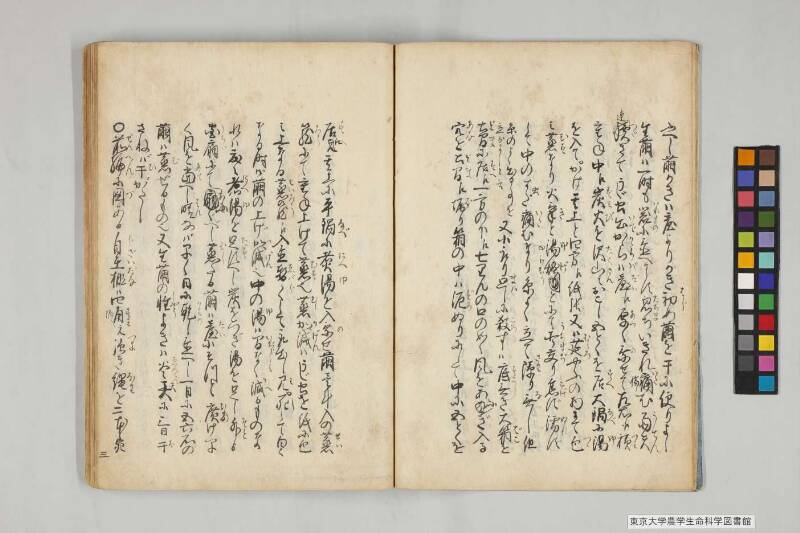
翻刻
ふへし繭かきは臺よりかき/初(ひじ)め繭を干尓便りよし
生繭は一時も/器(いれもの)尓置へから須/忽(たちま)ちいきれ/傷(いた)む/雨天(うてん)
/連(つゞ)きてうじ虫/出(いで)かゝらば/臺(だい)江/厚(あつ)く/乗(の)せて左右江/積(つみ)
重年中江/炭火(すみび)を/沢山(たくさん)におこし五とくを/居(春へ)大/鍋(なべ)尓/湯(ゆ)
を入て。かけ其上と四方江紙張又は/筵(むしろ)やふの物尓て/包(つゝ)
み/蒸(む春)なり火/気(き)と/湯煙(ゆげ)と尓て/打交(うちまぢ)り/焦(こげ)ず/濡(ぬれ)ず
して中の/すだ(虫)/痛(いた)むなり糸よく立て/障(さわ)り/無(な)し但
《割書:糸のよく出る事を|立かよしと云》又小取り/廻(まは)し尓/殺(ころ)すは/底(そこ)無き大/箱(ばこ)を
/土間(どま)尓/居(春へ)江一方の下江七里んの口の如く風をあふぎ入る
/穴(あな)を/土間(どま)江/堀(不)り箱の中は/泥(どろ)ぬり尓して中尓五とくを
/居江(春へ)其上尓平/鍋(なべ)尓/煮湯(にへゆ)を入/乗(の)せ繭壱斗入の/蒸(せい)
籠(ろう)尓て重年上げて/蒸(む春)也/蒸(むし)/加減(かげん)はうじ虫を紙尓包
み上なる/蒸籠(せいろう)江入置/暫(志ばら)くして取出し/見(み)。死して白く
なる時が繭の上げ/加減(かげん)也中の/湯(ゆ)は/間(いぢらしく)なく/減(へ)るものな
れは度々/煮湯(にへゆ)を/足須(た春)へし炭をつぎ湯を足し/外(そと)ゟ
/団扇(うちわ)尓てあふぐべし/蒸(むし)たる繭は/臺(だい)尓そ川と/廣(ひろ)げ早
く風を/当(あて)へし/晴(はれ)なば早く日尓/乾(かわか)し置へし一日尓五六石の
繭は/蒸(む)せるもの也又生繭の/性(しやう)よきは/炎天(ゑんてん)尓三日/干(不)
さねば/干(ひ)がたし
〇/前編(ぜんへん)尓/図(づ)ある/自在棚(じざいだな)は四/隅(春み)え/強(つよ)き/縄(なわ)を二本宛
現代語訳
べし。繭掻きは台より掻き始め、繭を干すのに便利がよし。
生繭は一時も容器に置くべからず。忽ちに蒸れて傷む。雨天が続いてウジ虫が出かかったならば、台へ厚く乗せて左右へ積み重ね、中へ炭火を沢山におこし、五徳を据え大鍋に湯を入れてかけ、その上と四方へ紙張りまたは筵のような物にて包み蒸すなり。火気と湯気とにて打ち交じり、焦げず濡れずして中の虫が痛むなり。糸よく立ちて障りなし。但し(注:糸のよく出ることを立ちがよしと言う)また小取り回しに殺すには、底無しの大箱を土間に据え、一方の下へ七輪の口のごとく風を扇ぎ入る穴を土間へ堀り、箱の中は泥塗りにして中に五徳を
据え、その上に平鍋に煮湯を入れ乗せ、繭一斗入りの蒸籠にて重ねて上げて蒸すなり。蒸し加減はウジ虫を紙に包み上なる蒸籠へ入れ置き、暫くして取り出し見る。死して白くなる時が繭の上げ加減なり。中の湯は絶え間なく減るものなれば度々煮湯を足すべし。炭を継ぎ湯を足し、外から団扇にて扇ぐべし。蒸したる繭は台にそっと広げ早く風を当てるべし。晴れならば早く日に乾かし置くべし。一日に五六石の繭は蒸せるものなり。また生繭の性質よきは炎天に三日干さねば干し難し。
○前編に図ある自在棚は四隅へ強き縄を二本ずつ
英語訳
should be done. Cocoon picking should begin from the platforms, which is convenient for drying cocoons.
Fresh cocoons should not be left in containers even for a moment, as they will immediately become steamed and damaged. If rainy weather continues and maggots begin to emerge, pile them thickly on platforms, stack them on both sides, light plenty of charcoal fires in the center, place a trivet and put a large pot with hot water on it, then wrap the top and four sides with paper or mat-like materials to steam them. The fire heat and steam mix together, and without burning or getting wet, the insects inside are killed. The silk stands well with no problems. However (Note: when silk comes out well, it is said that the "standing is good"). For small-batch processing to kill them, place a bottomless large box on the earthen floor, dig a hole in the earthen floor under one side like the opening of a brazier to fan air in, plaster the inside of the box with mud, and place a trivet in the center.
Place it there, put hot water in a flat pot on top, and steam using steaming baskets that hold one to of cocoons, stacking them up. The steaming timing is determined by wrapping maggots in paper, placing them in the upper steaming basket, and after a while, taking them out to check. When they die and turn white, that is the proper timing for removing the cocoons. The water inside decreases constantly, so hot water must be added frequently. Add charcoal, add hot water, and fan from outside with a fan. Steamed cocoons should be gently spread on platforms and quickly exposed to air. If it's clear weather, quickly dry them in the sun. Five to six koku of cocoons can be steamed per day. Also, fresh cocoons of good quality are difficult to dry unless dried for three days under the blazing sun.
○ The adjustable shelf illustrated in the previous volume has two strong ropes at each of the four corners