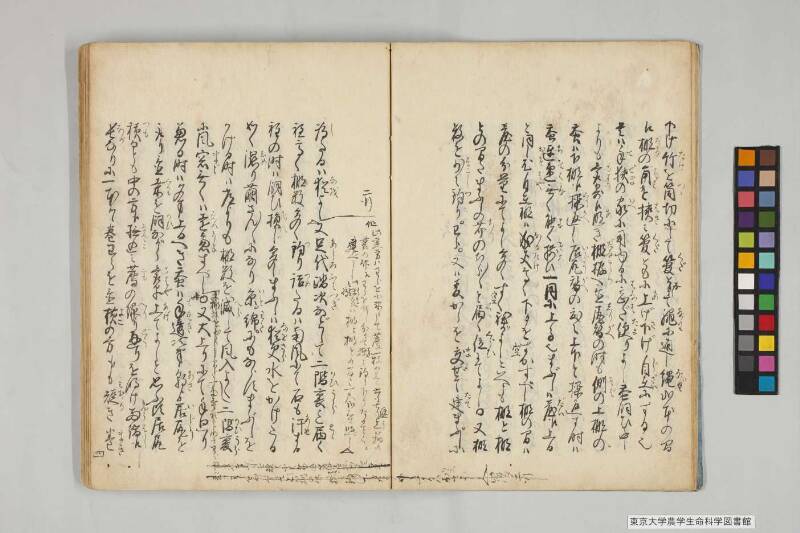
翻刻
下げ/竹(たけ)を/筒(つゝ)切尓して/管(くだ)となして/縄(なわ)尓通し/縄(なは)弐本の間
江/棚(たな)の/角(春み)を/挟(はさ)み/管(くだ)とも尓/上(あ)げ下(さ)げ/自在(じざい)する也
是は/手狭(てぜま)の/家(いへ)尓用ゆる尓/甚(はなは)だ/便(たよ)りよし蚕飼ひ中
よりも/最寄(もより)江/明(あ)き/棚拵(だなこしら)へ置/尻替(志りがへ)の時も/側(そば)の上棚の
蚕は下棚江/操返(くりかへ)し/居尻替(いじりがへ)の度に上下と操返す時は
蚕/遅速(ちそく)/無(な)く/能(よ)く/揃(そろ)ひ一同に上る也まぶしは/臺(だい)江上る
と同し尤自在棚は/成丈(なるたけ)高く下タを/す(空)かすべし棚の間は
臺の分量尓てよし多く/す(空)く程がよしといへとも棚と棚
との間たまふしの/芥(ちり)のちら〳〵と/届(とゞ)く/位(くらひ)尓てよし〇又棚
数を/少(春こし)し/釣(つ)り。わら。又は麦からを/交(ま)ぜて/建(たて)まぶし尓
但《割書:|此建方はわらを小束にして薦一枚の上に六分七分建上は棚の》
二行 《割書: 裏の竹江わらを少し分けて/挟(はさ)み釣り下げたるをくに| 建べし此為方は棚と棚との間た一尺弐三寸明べし△》
/為(し)たるは/猶(な越)よし△又/足代踏次(あしろふみつぎ)などして二/階裏(かひうら)迄/届(とゞ)く
程高く棚数多く/釣(つ)り/詰(つめ)たるは南風尓て石も/汗(あせ)する
程の時は飼ひ/損(そん)じ多しまふしは/猶更(なをさら)水をかけたる
如く/湿(志め)り繭さん〳〵尓なり/糸(いと)。/綿(わた)。尓もなら須まぶしを
かける時は常よりも棚数を/減(へら)して風入よくし二/階裏(かひうら)
尓風/窓(まど)無くは/遠慮(ゑんりよ)すべし〇又大上り尓て手廻り
兼る時は夕方上るへき蚕は/手透(て春き)次第/朝(あさ)ゟ/居尻(いじり)を
取り置/桑(くわ)を/飼(かひ)ながら/最早上(もはやあげ)てよしと思ふ頃居尻
/積(つも)るとも中の方江/撫込(なでこ)み/薦(こも)の/縁(へり)り/通(どう)りを明け/両端(りやうはし)江
長(なが)なり尓一本ツゝ巻わらを置/横(よこ)の方江も/短(みぢか)き/巻(まき)
右ページ六行目左ルビー 「遅速 おそはや」
現代語訳
下げ、竹を筒切りにして管となし、縄に通し、縄二本の間へ棚の角を挟み、管ともに上げ下げ自在とするなり。
これは手狭な家に用いるのに甚だ便利がよし。蚕飼い中よりも最寄りへ明き棚拵えを置き、尻替えの時も側の上棚の蚕は下棚へ繰り返し、居尻替えの度に上下と繰り返す時は、蚕の遅速なく、よく揃い一同に上るなり。まぶしは台へ上ると同じ。もっとも自在棚は成るたけ高く、下を空かすべし。棚の間は台の分量にてよし。多く空く程がよしと言えども、棚と棚との間、まぶしの芥のちらちらと届く位にてよし。○また棚数を少なくし釣り、藁または麦殻を交ぜて建てまぶしに
但し(注:この建て方は藁を小束にして薦一枚の上に六分七分建て、上は棚の)
二行 (注: 裏の竹へ藁を少し分けて挟み釣り下げたるを国に 建てるべし。この為し方は棚と棚との間、一尺二三寸明けるべし△)
したるはなおよし△また足代踏み継ぎなどして二階裏まで届く程高く、棚数多く釣り詰めたるは、南風にて石も汗する程の時は飼い損じ多し。まぶしはなおさら水をかけたるごとく湿り、繭散々になり、糸・綿にもならず。まぶしをかける時は常よりも棚数を減らして風入りをよくし、二階裏に風窓なくは遠慮すべし。○また大上りにて手回り兼ねる時は、夕方上るべき蚕は手透き次第、朝から居尻を取り置き、桑を飼いながら最早上げてよしと思う頃、居尻積もるとも中の方へ撫で込み、薦の縁通りを明け、両端へ長なりに一本ずつ巻藁を置き、横の方へも短き巻
英語訳
lowered, cut bamboo into cylindrical sections to make tubes, thread them through ropes, sandwich the corners of the shelves between two ropes, and make them freely adjustable up and down with the tubes.
This is extremely convenient for use in cramped houses. Rather than during silkworm rearing, prepare spare shelf constructions nearby, and when changing the bedding, move silkworms from the upper side shelves to the lower shelves, repeating this process up and down with each bedding change so that the silkworms develop evenly without delay, all climbing up together. The spinning frames are the same as climbing onto platforms. The adjustable shelves should be made as high as possible, leaving space underneath. The spacing between shelves should be according to the platform measurements. Although it's better to leave more space, it's sufficient if the distance between shelves allows the debris from the spinning frames to scatter and reach. ○ Also, reducing the number of shelves and hanging them, mixing straw or wheat chaff to make standing spinning frames
However (Note: This construction method involves making small bundles of straw, standing six or seven parts on one mat, with the top of the shelf)
Second line (Note: Split some straw and sandwich it into the bamboo on the back of the shelf, hanging it down in the country style. This method should leave one shaku two or three sun between shelves△)
is even better△ Also, using footboards and step extensions to make them high enough to reach the second floor ceiling, with many closely hung shelves, during south winds when even stones sweat, there are many rearing failures. The spinning frames become even more humid as if water had been poured on them, the cocoons become scattered, and cannot become silk or cotton. When setting up spinning frames, reduce the number of shelves more than usual to improve air circulation, and if there are no wind windows in the second floor ceiling, this should be avoided. ○ Also, when there's a major climbing and you can't manage everything, for silkworms that should climb in the evening, as time permits, remove the bedding from morning, and while feeding mulberry leaves, when you think it's time to let them climb, even if bedding accumulates, smooth it toward the center, clear the edges of the mats, place one bundle of straw lengthwise at each end, and also place short bundles crosswise