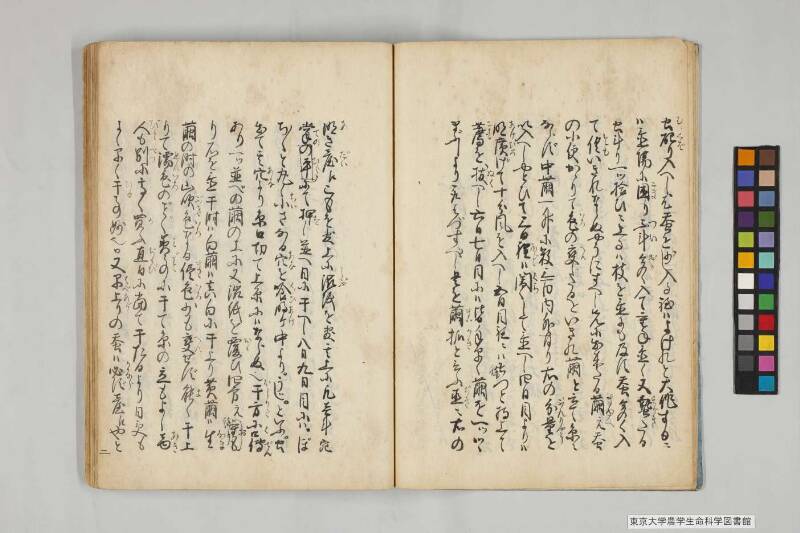
翻刻
/虫配(むしくば)り入へし尤蚕を少し入る程はよけれと大作するに
は置場尓/困(こま)り/不斗(つい)/多(おゝ)く入て重年置く又/蟄(春がき)たる
虫斗り一ツ拾ひに上るは枝を置尓も及須蚕多く入
て/倶(とも)いきれならぬやうにすへし先尓出来たる/繭(まゆへ)え蚕
の小便かゝりて/色(いろ)の/變(へん)じたるをいきれ繭と云て糸に
ならず中繭一升尓数三百内外なり右の/分量(ぶんりやう)を
以入へしやとひて三百/程(不ど)は/闇(くら)くして置へし四日目よりは
/明廣(あけひろ)げて十分風を入へし五日目程には/そ(徐)つと持上て
/薦(こも)を/抜(ぬく)へし六日七日目尓は皆手早く繭を一ツつゝ
まぶしより取はづすべし是を/繭抓(まいかき)と云ふ/直(ぢき)に右の
/明(あ)き/臺(だい)江こもを敷上尓/渋(しぶ)紙を敷其上尓凡壱升宛
/掌(ての)の/平(ひら)尓て/押(を)し並へ日尓干へし八日九日目尓は。ぽ
ち〳〵と丸く/小(ちい)さなる/穴(あな)を/喰明(くひあ)け中より。うじ。といふ。虫
出て其/穴(あな)より糸口切て上糸尓はならぬ也/干方(不しかた)尓/口傳(くでん)
あり一ツ並べの繭の上尓又渋紙を/覆(おゝ)ひ四方え/重(お)も
り石を置干時は白繭は真白尓干上り黄繭は/生(なま)
繭の時の山/吹色(ぶきいろ)なる/侭色(まゝいろ)少も/變(へん)せず/能(よ)く干上
りて/濡色(ぬれいろ)のごとく/美事(みごと)尓干て糸の立もよし/商(あき)
/人(びと)も/別(べつ)尓高く/買(か)ふ/直日(ぢかび)尓當て干たるより日受も
よく早く/干(ひる)事妙也か又/早上(はやあが)りの蚕は/必(かなら)ず臺江やと
左ページ五行目左ルビー 「重も 鎮り」
現代語訳
虫配り入れるべし。もっとも蚕を少し入れる程度はよけれど、大量に作るには置き場に困り、つい多く入れて重ねて置く。また蟄いた虫ばかり一つ拾いに上がるのは、枝を置くにも及ばず、蚕多く入れて共に蒸れにならぬようにすべし。先に出来た繭へ蚕の小便がかかりて色の変じたるを「蒸れ繭」と言いて糸にならず。中繭一升に数三百内外なり。右の分量を以て入れるべし。宿いて三百程は暗くして置くべし。四日目よりは明け広げて十分風を入れるべし。五日目程にはそっと持ち上げて薦を抜くべし。六日七日目には皆手早く繭を一つずつ蔟より取り外すべし。これを「繭掻き」と言う。直ちに右の
明いた台へ薦を敷き、上に渋紙を敷き、その上に凡そ一升ずつ手の平にて押し並べ日に干すべし。八日九日目には、ぽちぽちと丸く小さなる穴を食い明け、中より「うじ」という虫出でて、その穴より糸口切れて上糸にはならぬなり。干し方に口伝あり。一つ並べの繭の上にまた渋紙を覆い、四方へ重り石を置く。干す時は白繭は真白に干し上がり、黄繭は生繭の時の山吹色なる通り色少しも変せず、よく干し上がりて濡れ色のごとく美事に干して糸の立ちもよし。商人も別に高く買う。直日に当てて干したるより日受けもよく早く干ること妙なり。また早上がりの蚕は必ず台へ宿い
英語訳
Distribute the insects properly. While it is acceptable to put in a small number of silkworms, when producing in large quantities, one faces difficulties with space and tends to put in too many, stacking them up. Also, when only cocooning worms are picked up one by one, there is no need to place branches, but when many silkworms are put in together, ensure they do not become steamed. When silkworm urine gets on previously formed cocoons and changes their color, these are called "steamed cocoons" and cannot be made into silk thread. Medium cocoons number about three hundred per sho. Use this proportion when placing them. Keep about three hundred in darkness for lodging. From the fourth day, open them up and let in plenty of air. Around the fifth day, gently lift and remove the straw mats. On the sixth and seventh days, quickly remove the cocoons one by one from the cocoon frames. This is called "cocoon picking." Immediately on the aforementioned
empty platform, lay straw mats, spread oil paper on top, and on this arrange about one sho at a time, pressing them flat with the palm of the hand, and dry them in the sun. On the eighth and ninth days, small round holes will be eaten through here and there, and insects called "maggots" will emerge from within. The silk thread is cut at these holes and cannot be used as high-quality silk. There are oral traditions regarding the drying method. Cover the arranged cocoons with oil paper again and place weight stones at the four corners. When drying, white cocoons dry to a pure white, and yellow cocoons maintain exactly their original golden yellow color from when they were fresh cocoons, with no color change at all. They dry well with a lustrous wet-like appearance, and the silk quality is excellent. Merchants also pay particularly high prices for these. This method provides better sun exposure and faster drying than drying under direct sunlight, which is remarkable. Also, early-ripening silkworms must be lodged on platforms.