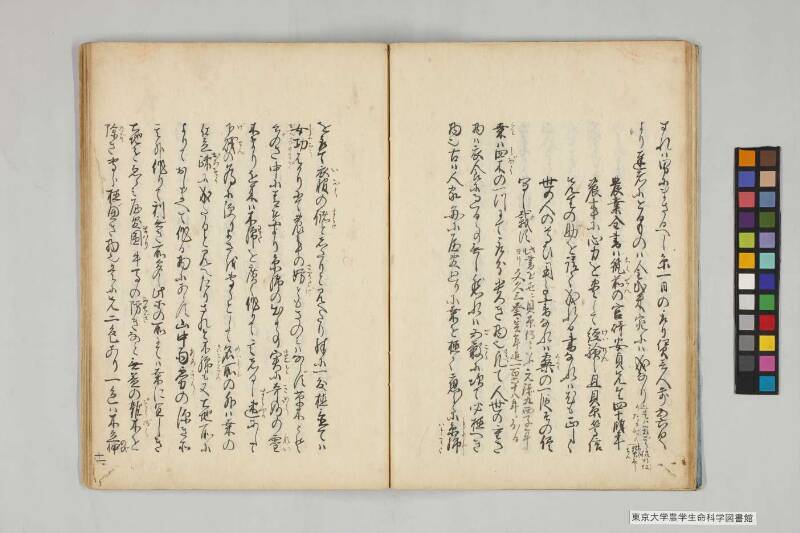
翻刻
すれは男尓まさるへし糸一日の取り賃壱人前五六匁
より達者尓とるものは金弐朱宛尓は成なり但《割書:是は箱どり流行/仕(し)|たる時の/賃(ちん)なり》
農業全書は/筑前(ちくぜん)の宮崎安貞先生四十餘年
農事尓心力を尽して/経験(けいけん)し且貝原等信
先生の助を請て成れる書なれは尤も正しく
世の人の尊ひ用る書なれは/桑(くわ)の一段その侭
写し/載(の)須《割書:此書を世に貝原傳といふ元禄九丙子年|ヨリ文久三癸亥年迄一百六十八年になる》
/桑(くわ)は/四木(しぼく)の一川尓て取分貴き物也/凡(春べ)て人世の重き
物は衣食尓過る事無し然れは/五穀(ごこく)尓次て必植へき
物也古は人家毎尓屋敷廻り尓桑を植て應し〳〵尓/糸綿(いとわた)
を取て/衣服(いふく)の/儲(まうけ)と志たりと見へたり殊尓一度植置ては
/女功(じよこう)はかり尓て農事の/妨(さまたげ)ともさのみはならず草木ら登
多き中尓青葉より糸綿の出る事/実(まこと)尓/奇妙(きめう)の/霊(れい)
木なり近来は木/綿(わた)を廣く作りて其志るし/速(すみやか)尓して
下賤(げせん)の為尓便りよき越専らとして/名所(めいしよ)の外は桑の
仕立/疎(おろそか)尓成たると見へたりされと木綿も又土地所尓
よりておしなへて作る物尓あら須山中/雨霧(あめきり)の深き所
其外作りて利無き所多し此等の所尓ては桑に宜しき
土地をゑらみ屋敷/囲(まはり)牛馬の/防(ふせぎ)きなと無益の/雑木(ぞうぼく)を
/除(のぞのぞ)き専ら植べき物也是尓先二色あり一色は木立/伸(のび)
左ページ二行目左ルビー 「女功 おんなのわざ」
同 五行目左ルビー 「名所 かいこどころ」
現代語訳
すれば男性に勝るでしょう。糸取りの一日の賃金は一人前五、六匁より、達者に取る者は金二朱ずつになります。ただし《割書:これは箱取り流行した時の賃金なり》
農業全書は筑前の宮崎安貞先生が四十余年農事に心力を尽くして経験し、かつ貝原益軒先生の助けを請うて成った書であるから、もっとも正しく世の人の尊び用いる書であるから、桑の一段をそのまま写し載せる《割書:この書を世に貝原伝という。元禄九丙子年より文久三癸亥年まで百六十八年になる》
桑は四木の一つにて取り分け貴い物である。およそ人世の重要な物は衣食に過ぎることはない。それゆえ五穀に次いで必ず植えるべき物である。古くは人家ごとに屋敷回りに桑を植えて、それぞれに糸綿を取って衣服の儲けとしたと見える。殊に一度植え置いては女性の仕事ばかりにて農事の妨げともさほどならず、草木など多い中に青葉より糸綿の出ることは、まことに奇妙な霊木である。近来は木綿を広く作ってその利益が速やかにして下賤の者のために便利がよいことを専らとして、名所の外は桑の仕立てが疎かになったと見える。されども木綿もまた土地によっておしなべて作る物ではなく、山中雨霧の深い所、その外作って利のない所が多い。これらの所においては桑に良い土地を選び、屋敷回り牛馬の防ぎなど無益の雑木を除き専ら植えるべき物である。これにまず二色あり、一色は木立が伸び
英語訳
In that case, they would surpass men. The daily wage for silk reeling is five to six monme per person for regular work, and skilled workers can earn up to two shu in gold. However, {{Note: This was the wage when the box-drawing method was popular}}
The Agricultural Encyclopedia (Nōgyō Zensho) was written by Master Miyazaki Yasusada of Chikuzen, who devoted his heart and soul to agricultural matters for over forty years through experience, and with the assistance of Master Kaibara Ekiken. It is therefore most accurate and a book that people of the world respect and use, so I will copy and include the section on mulberry as is. {{Note: This book is called the Kaibara tradition in the world. From the 9th year of Genroku (1696) to the 3rd year of Bunkyū (1863), it has been 168 years}}
Mulberry is one of the four trees and is particularly precious. Generally, the most important things in human life are nothing more than clothing and food. Therefore, it is something that must be planted after the five grains. In ancient times, each household planted mulberry around their property grounds and took silk cotton from them respectively to profit from clothing. Especially once planted, it requires only women's work and does not greatly interfere with agricultural work. Among the many plants and trees, the fact that silk cotton emerges from green leaves is truly a wondrous sacred tree. Recently, cotton has been widely cultivated because its profits are quick and convenient for the lower classes, so mulberry cultivation has become neglected except in famous silkworm-raising areas. However, cotton also cannot be grown uniformly everywhere depending on the land - in deep mountain areas with heavy rain and fog and other places where cultivation is unprofitable, there are many such locations. In these places, one should select good land for mulberry, remove useless miscellaneous trees around property grounds used for livestock barriers, and focus on planting mulberry. There are first two types: one type grows tall as trees