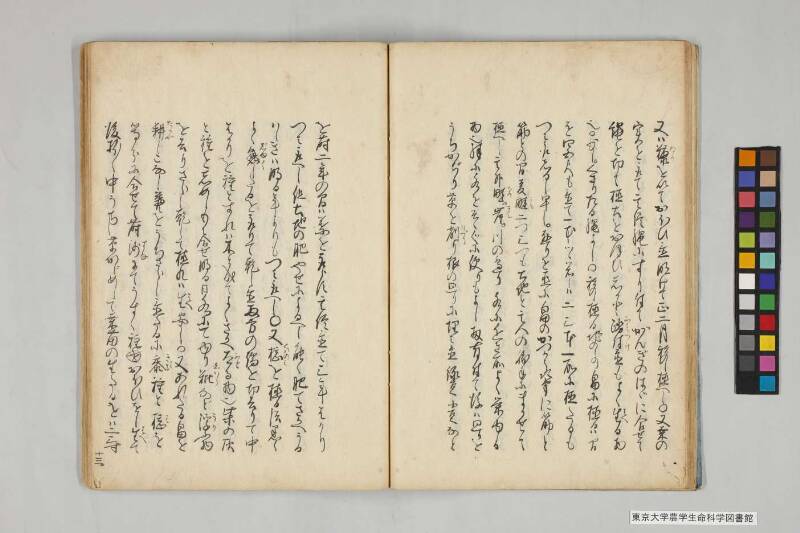
翻刻
又は/糠(ぬか)を以てお不ひ置明けて正二月写し植へし〇又桑の
実を取て其侭縄尓すり付てがんぎのはゞに合せて
縄を切て植土をおほひ志か登/踏付(ふみつけ)置もよく/生(はへ)る物
也〇少し。くさりたる縄よし〇移し植る地の事畠尓植るは間
を四五尺も置て一本ツヽ着しは二三本一所尓植たるも
つみ取志るし早し。通りを直尓畠のかつかう次第に筋と
筋との間麦/畦(う年)二つ三つも土地と其人の勝手尓まかせて
植へし其外/畦(くろ)。/岸(きし)。川の邊り水尓近き所よく栄ゆる
物也殊尓水をそヽぐ尓便りもよし扨有付て後は廻りを
うちかぢり草を/削(けづ)り根の廻り尓埋み置緑豆小豆なと
を蒔二年の間は葉を取ら須其侭置て三年はかり
つみ取へし但土地の肥やせ尓よるへし能く肥てさかへうる
はしきは明る年よりもつみ取へし〇又/椹(くはのみ)を植る法黒く
よく/熟(じゆく)したるを取りて乾し置両方の端を切去りて中
はかりを種とすれは木と成てよくさかへ/太(ふと)る物也柴の灰
と種を志めしもみ合せ明る日水尓てゆり/粃(志いら)など/浮(うか)ふ物
を去りさらし乾して植れは/生(はへ)安し〇又あれたる畠を
/耕(たかや)しこなし糞をうちさらし置たる尓/黍(きび)種と/椹(み)を
等分尓合せて蒔/沙(すな)尓てうすく種お不ひをし/生(はへ)て
後折々中うちし草かじめして桑苗の生たるをは二三寸
現代語訳
また、糠(ぬか)で覆っておいて翌年の正二月に移し植えるべきである。○また桑の実を取ってそのまま縄にすり付けて、がんぎ(田の畦)の幅に合わせて縄を切って植え、土を覆って強く踏み付けておいても、よく生えるものである。○少し腐った縄が良い。○移植する地について:畑に植えるには間を四五尺も置いて一本ずつ植えるか、二三本を一箇所に植えるのも摘み取りがしやすく早い。通りを真っ直ぐに畑の構造に従って筋と筋の間に麦畦を二つ三つも、土地とその人の都合に任せて植えるべきである。その外、畦・岸・川辺りの水に近い所でよく栄えるものである。特に水をそそぐのに便りも良い。さて根付いた後は周りを掘り起こし、草を削り取り、根の回りに埋め込んでおく。緑豆、小豆などを蒔く。二年の間は葉を取らずそのまま置いて、三年ほどで摘み取るべきである。ただし土地の肥沃さによるべきである。よく肥えて栄えるものは翌年からでも摘み取るべきである。○また椹(桑の実)を植える方法:黒くよく熟したものを取って乾かしておき、両方の端を切り去って中ほどを種とすれば、木となってよく栄え太るものである。柴の灰と種を湿らせてもみ合わせ、翌日水で洗い、しいら(空の種)など浮くものを去り、さらして乾かして植えれば生えやすい。○また荒れた畑を耕して耕し、糞を撒いて平らにしておいたところに、黍(きび)の種と椹(桑の実)を等分に合わせて蒔き、砂で薄く種を覆い、生えた後に時折中耕し草を取り除いて、桑苗の生えたものは二三寸
英語訳
Also, cover with rice bran and transplant in the first or second month of the following year. ○Also, take mulberry fruits and rub them onto rope as is, cut the rope to match the width of the gangi (field ridges), plant, cover with soil and tread down firmly - they will grow well this way too. ○Slightly rotted rope is good. ○Regarding the land for transplanting: When planting in fields, space them four to five shaku apart planting one at a time, or planting two to three in one place also makes picking easier and faster. Make the rows straight according to the field's structure, with two or three wheat ridges between rows, depending on the land and the person's convenience. Besides this, they thrive well in ridges, embankments, and riverside areas close to water. Particularly, it is convenient for watering. After they take root, dig around them, scrape away weeds, and bury them around the roots. Sow mung beans, azuki beans, etc. Do not pick leaves for two years, leave them as is, and begin harvesting after about three years. However, this depends on the fertility of the soil. For those that are well-fertilized and thriving, you may begin picking from the following year. ○Method for planting mulberries (mulberry fruits): Take those that are black and well-ripened, dry them, cut off both ends and use the middle portion as seed - these will become trees that thrive and grow thick. Moisten and rub together tree ash and seeds, wash with water the next day, remove floating chaff and other debris, dry in the sun, and plant - they will grow easily. ○Also, in a barren field that has been plowed and cultivated with manure spread and leveled, sow millet seeds and mulberries (mulberry fruits) in equal parts, cover the seeds thinly with sand, and after they sprout, occasionally cultivate and remove weeds. When mulberry seedlings have grown two to three sun (inches)