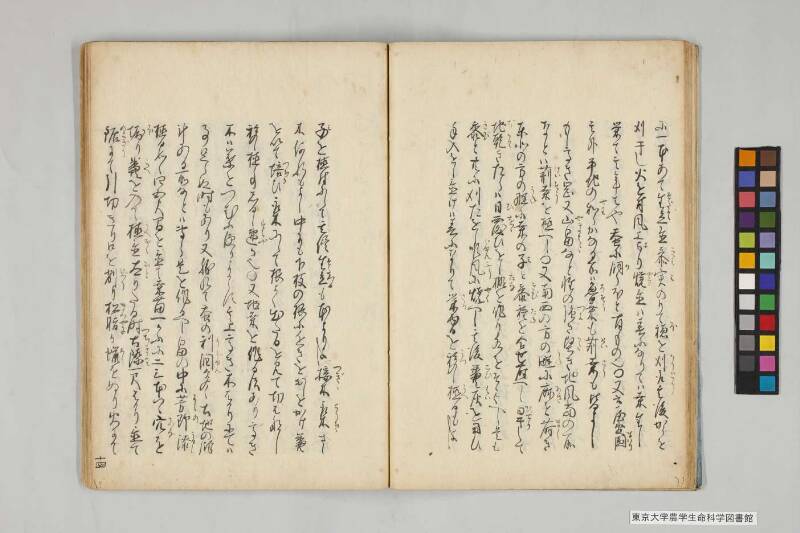
翻刻
尓一本あて/生立(そだて)置/黍実(きびみ)のりて/穂(不)を/刈取(かりとり)其後がらを
刈干し火を付風上/与(よ)り/焼(やき)置は春尓なるては桑生し
栄て其年はや蚕尓/飼(か)う不と有もの也〇又云屋敷/囲(まはり)
其外平地の/和(やわ)らかなる所は/魯桑(ろそう)も/荊桑(けいさう)も皆よし
もし高き岡又/山畠(やまはた)なと性の/強(つよ)き/堅(かた)き地風当の所
なとは/荊桑(けいそう)を植へし〇又南西の方の/畦(う年)尓/麻(あさ)を/蒔(まく)き
東北の方の/畦(う年)尓桑の/子(み)と/黍種(きびた年)を会い合せ蒔へし/旱(ひでり)して
/地乾(ぢかわ)きたらは/日覆(ひをゝ)ひをし/棚(たな)を作り水をそゝぐへし是も
/黍(きび)と共尓刈たをし/順風(じゆんふう)尓/焼(やく)へし其後/糞灰(こひはい)を用ひ
手入をし置けは春尓なりて/栄(さか)ゆるを/移(うつ)し/植(うへ)るもよし
/子(み)を植付尓して其侭/生立(そたつる)も本よりよし/接木(つぎゝ)/取木(とりき)さし
木何れもよし中尓も下枝の根尓近きをあしをかけ糞
を以て/培(つちか)ひ取木尓して根よく出たるを見て切は那し
移し植事志るし/速(春みや)か也〇又地桑を作る法あり高き
木は葉をつむ尓便りよから須其上高き木はかり尓ては
事足らぬ時もあり又勝れて蚕の/利潤(りじゆん)多く土地の餘
斗ある所なとは専ら是を作るへし畠の中尓/芳野漆(よしのうるし)
植る如く四五尺間を置て桑苗一かふ尓二三本つゝ/穴(あな)を
/堀(不)り/糞(こへ)を入て/植置太(うへおくふと)りたる時/土際(つちきわ)一尺はかり置て
/鋸(のこぎり)尓て引切きり口を/削(けづり)り/松脂(まつや尓)をぬり火尓て
現代語訳
に一本ずつ育て置き、黍の実がなって穂を刈り取り、その後茎を刈り干して火を付け、風上より焼いておけば、春になっては桑が生じ栄えて、その年早くも蚕に飼うことができるものである。○また言うには、屋敷回りその他平地の柔らかな所は魯桑も荊桑も皆良い。もし高い岡また山畠など性の強い堅い地や風当たりの所などは荊桑を植えるべきである。○また南西の方の畦に麻を蒔き、東北の方の畦に桑の実と黍種を合わせて蒔くべきである。旱魃して地面が乾いたなら日覆いをして棚を作り水を注ぐべきである。これも黍と共に刈り倒し、順風に焼くべきである。その後糞灰を用いて手入れをしておけば、春になって栄えるのを移し植えるのも良い。
実を植え付けにしてそのまま生い立つのも本来良い。接木・取木・挿し木何れも良い。中でも下枝の根に近いものに足をかけ、糞を以って培い、取木にして根がよく出たのを見て切り離し、移し植えることは非常に速やかである。○また地桑を作る方法がある。高い木は葉を摘むのに便りが良くない。その上高い木ばかりでは事足らぬ時もあり、また勝れて蚕の利潤多く土地の余裕ある所などは専らこれを作るべきである。畠の中に吉野漆を植えるように四五尺間を置いて、桑苗一箇所に二三本ずつ穴を掘り糞を入れて植え置き、太った時土際一尺ばかり置いて鋸にて引き切り、切り口を削り松脂を塗り火にて
英語訳
grow one plant each, and when the millet bears fruit and the ears are harvested, afterwards cut and dry the stalks, set fire to them, and burn from the windward side. Then in spring the mulberries will grow and flourish, and that year they can be fed to silkworms early. ○Also, it is said that around house grounds and other flat, soft places, both Lu mulberry and Jing mulberry are all good. However, if it is a high hill or mountain field with strong, hard soil or windy places, Jing mulberry should be planted. ○Also, sow hemp on the southwest ridges, and sow mulberry seeds mixed with millet seeds on the northeast ridges. If there is drought and the ground becomes dry, make shade coverings and build shelves to pour water. This should also be cut down together with the millet and burned in a favorable wind. Afterwards, use manure ash for maintenance, and in spring when they flourish, transplanting them is also good.
Using seeds for planting and letting them grow naturally is fundamentally good. Grafting, layering, and cutting are all good methods. Among these, placing feet on lower branches close to the roots, cultivating with manure, doing layering, and when good roots emerge, cutting and transplanting is remarkably quick. ○There is also a method for making ground mulberry. High trees are not convenient for picking leaves. Moreover, high trees alone are sometimes insufficient, and in places where silkworm profits are excellent and there is surplus land, this should be made exclusively. Like planting Yoshino lacquer in fields, space them four to five shaku apart, dig holes for two to three mulberry seedlings per spot, put in manure and plant. When they grow thick, leave about one shaku from ground level, cut with a saw, scrape the cut surface, apply pine resin, and with fire