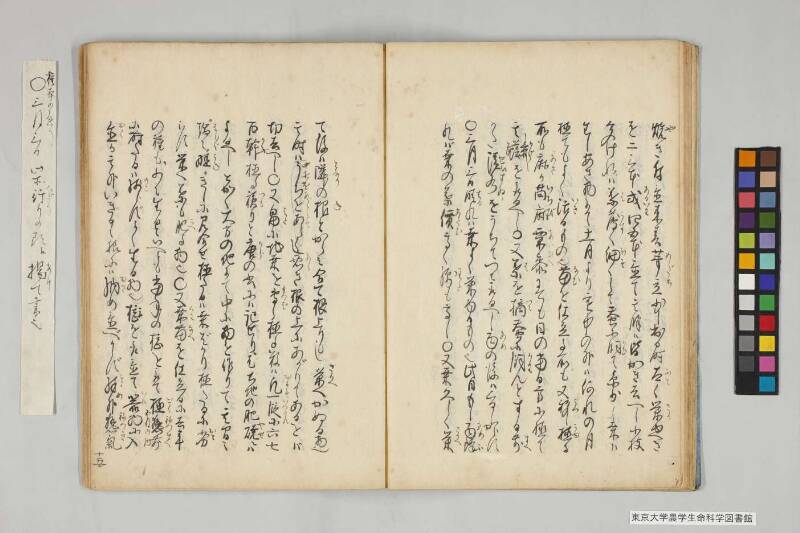
翻刻
/焼(や)き付置来春/芽立(めだち)少し出る時/太(ふと)く/栄(さか)ゆへき
を二三本/或(あるいわ)四五本置て其餘は皆かき去へし小枝
多けれは/葉薄(はうす)く/細(不そ)くして蚕尓/飼(かひ)て糸少し桑は
生し安き物尓て十一月より寒中の外は何れの月
植てもよく/活(いき)るもの也/苗(なひ)を仕立る所も又/移(うつ)し/植(うゆ)る
所も/麻(あさ)か/莔麻(いちび)/粟(あわ)/黍(きび)尓ても日の当る方尓植て
其/蔭(かげ)を取るへし〇又/葉(は)を/摘(つみ)蚕尓/飼(かわ)んとする/前(まへ)
かた/清水(せいすゐ)をうちてつみ取るへし/雨(あめ)の後はくるしから須
〇三月三日/晴(はる)れは桑よく栄ゆるもの也此日もし/雨降(あめふ)
れば桑の葉/價(あたひ)高く/綿(わた)も高し〇又桑久しく/栄(さかへ)
て後は/隣(となり)の/根(年)とからみ合て根上りもし/栄(さか)へかぬる物也
其時は中打をあらくして/悪(あし)き根の上尓あがりてあるをば
切去へし〇又/畠(はた)尓地桑を/専(もつば)ら植る数は/凡一段(およそいつたん)尓六七
百/奸幹(かぶ)植る/積(つも)りと/唐(から)の書尓は記せり尤土地の肥/磽(やせ)には
よりへしとかく大方の地尓て中尓物を作りて其間に
/端々畦(はし〴〵う年)きし尓見合せ植たるは桑ばかり植たる尓/劣(おと)
ら須栄へ葉も/肥(こへ)る物也〇又/桑苗(くわなへ)を仕立る尓去年
の種も少々生るといへとも当年の椹を取て/極熱前(ごく祢つまへ)
尓蒔たるは/残(のこ)らずよく生る物也/椹(み)を取起き置て/器(いれ)物尓入
/置(おく)る其外いきるゝ様尓は/納(おさ)め置べからず/殊(ことの)外/熱氣(祢つき)
種本の痛り
〇三月三日 此所/行(くだり)りの頭江/揚(あげ)て書也
左ページ八行目左ルビー 「極熱前 五月の内」
現代語訳
焼き付けておき、来春芽立ちが少し出る時、太く栄えるべきものを二三本或いは四五本残して、その余は皆かき去るべきである。小枝が多ければ葉が薄く細くなって蚕に飼って糸が少ない。桑は生じ易い物で、十一月より寒中の外はどの月に植えてもよく活着するものである。苗を仕立てる所もまた移し植える所も、麻や莔麻、粟、黍などの日の当たる方に植えて、その陰を取るべきである。○また葉を摘んで蚕に飼おうとする前方、清水を打って摘み取るべきである。雨の後は苦しくない。○三月三日晴れれば桑がよく栄えるものである。この日もし雨が降れば桑の葉の価が高く、綿も高い。○また桑が久しく栄えた後は隣の根と絡み合って根上がりもして栄えなくなるものである。その時は中耕を粗くして、悪い根の上に上がってあるものは切り去るべきである。○また畠に地桑を専ら植える数は、凡そ一段に六七百株植える積もりと唐の書には記されている。もっとも土地の肥瘠によるべきである。とかく大方の地で中に物を作って、その間に端々畦際に見合わせ植えたものは、桑ばかり植えたものに劣らず栄え、葉も肥えるものである。○また桑苗を仕立てるのに、去年の種も少々生えるといえども、当年の椹を取って極熱前(五月の内)に蒔いたものは残らずよく生えるものである。椹を取り起き置いて器物に入れ置く。その外生きる様には納め置くべからず。殊の外熱気で種本が痛む。○三月三日 この所行の頭へ揚げて書くものである。
英語訳
burn it on, and when buds emerge slightly in the coming spring, leave two to three or four to five thick, flourishing ones and remove all the rest. If there are many small branches, the leaves become thin and fine, and when fed to silkworms, there is little silk. Mulberry is something that grows easily, and except during the coldest period from November, it will take root well when planted in any month. Both where seedlings are raised and where they are transplanted, they should be planted on the sunny side of hemp, Indian mallow, millet, or sorghum to provide shade. ○Also, before picking leaves to feed silkworms, sprinkle clean water before picking. After rain, this is not troublesome. ○If March 3rd is clear, mulberry will flourish well. If it rains on this day, mulberry leaf prices will be high, and cotton will also be expensive. ○Also, after mulberry has flourished for a long time, the neighboring roots become entangled, root-lifting occurs, and it stops flourishing. At that time, make the cultivation rough and cut away the bad roots that have risen above. ○Also, regarding the number of ground mulberries to plant exclusively in fields, Chinese books record the intention to plant six to seven hundred plants per tan (about 0.1 hectare). Of course, this should depend on whether the soil is fertile or barren. In general land where crops are grown in the middle, those planted appropriately along the edges and ridge sides flourish no less than those planted with mulberry alone, and the leaves also become thick. ○Also, for raising mulberry seedlings, although last year's seeds also sprout somewhat, those sown before extreme heat (within May) using current year's mulberries all grow well without exception. Take and store the mulberries in containers. Do not store them in ways that would keep them alive otherwise. The heat will particularly damage the seed stock. ○March 3rd - This passage should be elevated to the beginning of this section.