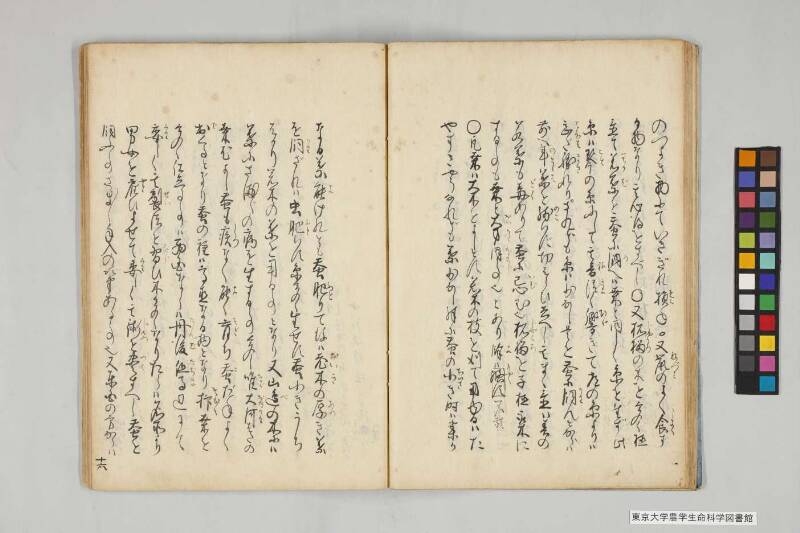
翻刻
のつよき物尓ていきぎれ/損(そこ)年〇又/鼠(ねづみ)のよく/食(しよく)す
る物なり其心得をすべし〇又/柘榴(じやくろ)の木を多く植
置て/若葉(わかば)を蚕尓/飼(か)へは桑と同しく糸を生ず此
糸は/琴(こと)の糸尓してその其/音(祢)/清(きよ)く/響(ひゞ)きて常の糸よりは
/甚(はなは)だ/勝(まさ)れり。されども糸は少なし是を蚕尓/飼(かわ)んとならは
前へ/年葉(のとしは)を/残(のこ)らず切はらひ去へし其まく置は春の
若葉も/毒(どく)ありて蚕尓/忌(いむ)む也/柘榴(じやくろ)を子植取木に
する事も桑と/大方同(お不かたおなじ)事也とあり/餘(よ)は
〇凡桑は大木をよしと須若木の枝を刈て用ゆるはた
やすきやうなれども葉少なし殊尓蚕の/小(ちいさ)き時は柔か
なる葉/能(よ)けれとも蚕/肥(ふと)りて後は/老木(おいき)の/厚(あつ)き葉
を/飼(かわ)ざれは虫/肥(ふと)ら須糸多く生せ須蚕小きうち
はかり若木の葉を用る事となり又山/邊(べ)の木尓は
葉尓さ満〴〵の病を生する事多し/唯(たゞ)/大河(おほかわ)ばたの
桑尤よし蚕も/疾(しつ)なく/能(よ)く/育(そだ)ち/蚕(こ)だ年よく
/出(で)くるとなり蚕の種は高直なる物となり/抑(そも〳〵)桑を
多く仕立る事は西國ならは/丹後但馬(たんごたぢま)辺尓て
/委(くわ)しく其/製(せい)法を/習(なら)ひ木多くなりたらは名所より
男女を/雇(やと)ひよせて/委(くわ)しく其/術(じゆつ)を/盡(つく)すへし蚕を
飼ふ事さま〴〵手入の次第ある事也又東国の方ならは
現代語訳
熱気が強いものであり、生き切れず損なわれる。○またネズミがよく食べる物であるから、その心得をすべきである。○また柘榴の木を多く植え置いて、若葉を蚕に飼えば桑と同じく糸を生ずる。この糸は琴の糸にして、その音が清く響いて、常の糸よりは甚だ勝れている。されども糸は少ない。これを蚕に飼おうとするならば、前年の葉を残らず切り払い去るべきである。そのまま置けば春の若葉も毒があって蚕に害がある。柘榴を実生や取り木にすることも桑と大方同じ事である。その他は省略する。
○凡そ桑は大木を良しとする。若木の枝を刈って用いるのは容易なようであるが葉が少ない。殊に蚕の小さい時は柔らかな葉が良いけれども、蚕が肥えて後は老木の厚い葉を飼わざれば虫は肥えず、糸を多く生じない。蚕が小さいうちばかり若木の葉を用いることとなり、また山辺の木には葉にさまざまな病を生ずることが多い。ただ大河端の桑が最も良い。蚕も病気なく良く育ち、蚕種もよく出てくるとなり、蚕の種は高価な物となる。そもそも桑を多く仕立てることは、西国ならば丹後・但馬辺りで詳しくその製法を習い、木が多くなったら名所より男女を雇い寄せて詳しくその術を尽くすべきである。蚕を飼うことはさまざまな手入れの次第があることである。また東国の方ならば
英語訳
The heat is strong and they cannot survive and are damaged. ○Also, mice eat them well, so one should be aware of this. ○Also, if you plant many pomegranate trees and feed the young leaves to silkworms, they will produce silk just like mulberry. This silk, when used for koto strings, produces a clear and resonant sound that is far superior to ordinary silk. However, the amount of silk is small. If you intend to feed this to silkworms, you must cut away all the previous year's leaves completely. If left as they are, the spring young leaves will also be poisonous and harmful to silkworms. Growing pomegranates from seed or by layering is generally the same as for mulberry. The rest is omitted.
○Generally, large mulberry trees are considered best. Although cutting and using branches from young trees seems easy, they have few leaves. Particularly when silkworms are small, soft leaves are good, but after the silkworms have grown fat, if you do not feed them thick leaves from old trees, the worms will not fatten and will not produce much silk. This means using only young tree leaves while the silkworms are small. Also, trees on mountain sides often develop various diseases in their leaves. Only mulberries by large rivers are best. The silkworms also grow well without disease, and good silkworm eggs are produced, making silkworm seeds valuable items. Generally, for raising many mulberries, in the western provinces one should learn the detailed production methods in the Tango and Tajima regions, and when there are many trees, hire men and women from famous places to thoroughly apply their techniques. Raising silkworms involves various care procedures. Also, in the eastern provinces...