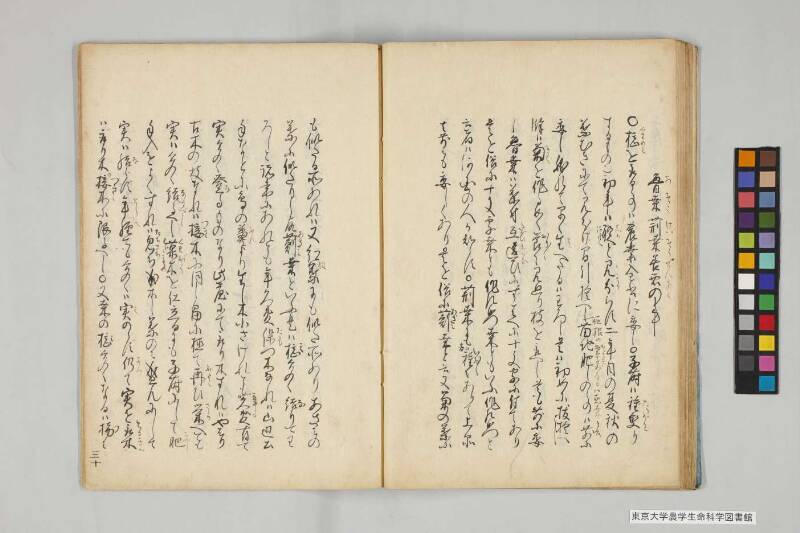
翻刻
/魯桑荊桑善悪(ろそうけいそうぜんあく)の事
〇/椹(くわのみ)を取る亊は農業全書に委し〇子蒔は/種変(た年がわ)り
するもの也初年は/聢(志か)と/見分(みわか)ら須二年目の夏秋の
葉むき尓て見分け間引捨へし但《割書:根の/紫(むらさき)色な|るは悪桑と云》苗地肥しの事は前尓
委し勝れて早く/生(は)へたるはわろし是は初め尓抜捨へし
餘は/菊(きく)を作る如く/節々(おり〳〵)見廻り枝を取へし是も前尓委
し魯桑は葉付/互違(たがひちが)ひ尓ずはへ尓十文字尓付てあり
是を俗尓十文字桑とも作左衛門桑ともいふ作左衛門と
云者は何國の人か知らず〇荊桑尓も各/種々(いろ〳〵)ありて上品
者前にも委しくあり是を俗尓/薊(あざみ)桑と云又菊の葉尓
も似たる所あれは又紅楓尓も似た所ありあさみの
葉尓似たりし故/薊(あさみ)桑といふ是は/椹(み)多く/結(な)りてわ
ろしと諸事尓あれとも年久敷/保(たも)つ木なれは山辺土
手なと尓鳥の/糞(ふん)より生し木小さけれとも年久敷有て
実多く/登(な)るものなり此臺尓て取り木すれはやはり
古木の枝なれは/接(つき)木尓同し畠尓植て/再(ふたゝ)ひ/栄(さか)へとも
実は多く/結(な)るべし/菓木(くわぼく)を仕立る尓も子蒔尓して/肥(こやし)
手入をよくすれは/忽(たちま)ち成等し葉のみ盛ん尓して
実は/結(な)らず/年経(としへ)ても多くは/実(み)のらず/仍(よつ)て実を/取木(とるき)
は取り木。/接木(つきゝ)尓限るへし〇又桑の/椹(み)多くなるは/摘(つ)み
左ページ七行目左ルビー 「菓木 くだもの」
現代語訳
魯桑荊桑善悪の事
桑の実を取る事は農業全書に詳しい。種蒔きは種変わりするものなり。初年は確かと見分からず、二年目の夏秋の葉むきにて見分け間引き捨てるべし。ただし《根の紫色なるは悪桑と云う》苗地肥やしの事は前に詳しい。勝れて早く生えたるは悪し。これは初めに抜き捨てるべし。
余は菊を作るが如く節々見回り枝を取るべし。これも前に詳しい。魯桑は葉付き互い違いにずらえに十文字に付いてあり。これを俗に十文字桑とも作左衛門桑とも言う。作左衛門と云う者は何国の人か知らず。荊桑にも各種々ありて上品者前にも詳しくあり。これを俗に薊桑と云う。また菊の葉にも似たる所あれば、また紅楓にも似た所あり、薊の葉に似たりし故薊桑と言う。これは実多く結りて悪しと諸書にあれども、年久しく保つ木なれば山辺土手などに鳥の糞より生じし木、小さけれども年久しく有りて実多く成るものなり。
この台にて取り木すればやはり古木の枝なれば接ぎ木に同じ。畑に植えて再び栄えども実は多く結るべし。果木を仕立てるにも種蒔きにして肥やし手入れをよくすれば忽ち成長す。葉のみ盛んにして実は結ばず。年経ても多くは実のらず。よって実を取る木は取り木・接ぎ木に限るべし。また桑の実多く成るは摘み
英語訳
On the Good and Bad Qualities of Lu Mulberry and Jing Mulberry
The matter of harvesting mulberry fruits is detailed in the Agricultural Manual (Nōgyō Zensho). Seeds produce varieties that change characteristics. In the first year, it is difficult to distinguish clearly, so one should discriminate and thin out the inferior ones during the summer and autumn leaf picking of the second year. However, {those with purple-colored roots are called bad mulberry}. The matter of fertilizing seedling beds is detailed earlier. Those that grow exceptionally fast are inferior and should be pulled out initially.
For the rest, one should make regular inspections and prune branches as when growing chrysanthemums. This is also detailed earlier. Lu mulberry has leaves arranged alternately in a cross pattern. This is commonly called "cross mulberry" or "Sakuzaemon mulberry." I do not know from which province this person called Sakuzaemon came. There are also various types of jing mulberry, with superior varieties detailed earlier. This is commonly called "thistle mulberry." It also resembles chrysanthemum leaves in some respects, and also resembles red maple in some ways. Because it resembles thistle leaves, it is called thistle mulberry. While various books state that this variety is inferior because it bears many fruits, it is a tree that lasts for many years. Even trees that grow small from bird droppings on mountain slopes and embankments, though small, last for many years and bear abundant fruit.
When layering is done from this stock, since it comes from old tree branches, it is the same as grafting. Even when planted in fields and prospering again, it will bear abundant fruit. When cultivating fruit trees, if one uses seeds and provides good fertilization and care, they grow rapidly. Only the leaves flourish while no fruit forms. Even after years pass, most do not bear fruit. Therefore, trees for fruit production should be limited to layering and grafting. Also, when mulberry bears abundant fruit, it should be picked...