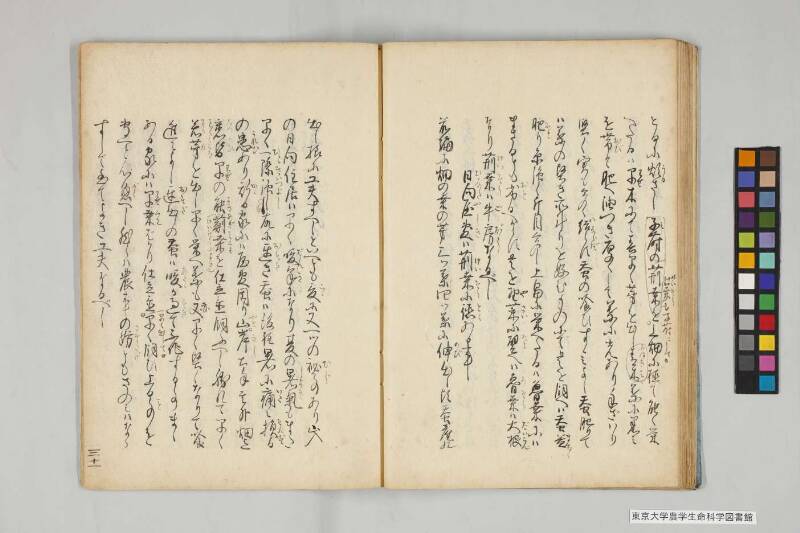
翻刻
とる尓/煩(うる)さし/荊桑(けいそう)も子蒔にして上畑尓植て能く栄
へたるは/早(わせ)木尓て春早く芽を出し/青木葉(あほきは)尓黒み
を/帯(おび)て肥へ油つき厚くして葉尓光あり手ざはり
堅く実も多く/結(な)らず蚕の喰ひすゝみよし蚕肥りて
は葉の堅き所斗りを好むもの尓て是を飼へは蚕/益(ます〳〵)
/肥(ふと)り糸強く斤目多し上畠尓栄へたるは魯桑尓は
まさるとも/劣(おと)るへから須是を/野菜(やさい)尓/譬(たと)へは/魯桑(ろそう)は/大根(だいこん)
なり/荊桑(けいそう)は/牛房(ごぼう)なるべし
/日向屋敷(ひなたやしき)は/荊桑(けいそう)尓/徳(とく)ある事
前編尓畑の桑の芽三ツ葉四ツ葉尓/伸(のび)出し頃蚕産れ
出し様尓工夫すへしといへとも/爰(こゝ)尓又一ツの/秘事(ひじ)あり山入
の日向住居は早く/暖気(だんき)尓なり夏の/暑氣(しよき)もまた
早く/一際強(ひときはつよ)し故尓/遅(おそ)き蚕は後程暑尓/痛(いた)み/損(そんず)る
の/患(うれひ)あり/斯(かく)る家尓は屋敷周り/山(やま)。/岸(きし)土手其外畑迄
/悉皆(志つかひ)/早(わせ)の/能荊桑(よきあざみくわ)を仕立置飼ふへし勝れて早く
/若芽(わかめ)を出し早く栄へ葉も亦早く堅くなりて喰
進みよし/遅出(おそだ)しの蚕は/暖(あたゝ)か/過(春ぎ)てふ作する事まゝ
ある家尓は/早桑(わせくわ)ばかり仕立置早く出して早く飼ひ上る/事(こと)を
第一と心/懸(がく)へし然らは農事の/妨(さまたげ)ともさのみはなら
すして至てよき工夫なるべし
左ページ五行目左ルビー 「悉皆 こと〴〵くみな」
同 左ルビー 「荊桑 けいそうのよき也」
現代語訳
取るのに煩わしい。荊桑も種蒔きにして上畑に植えてよく栄えたるは早生木にて、春早く芽を出し、青木葉に黒みを帯びて肥え、油付き厚くして葉に光あり。手触り堅く実も多く結ばず、蚕の食い進みよし。蚕肥りては葉の堅き所ばかりを好むものにて、これを飼えば蚕ますます肥り、糸強く斤目多し。上畑に栄えたるは魯桑には勝るとも劣るべからず。これを野菜に譬えば、魯桑は大根なり、荊桑は牛蒡なるべし。
日向屋敷は荊桑に徳ある事
前編に畑の桑の芽三つ葉四つ葉に伸び出し頃、蚕産まれ出し様に工夫すべしと言えども、ここにまた一つの秘事あり。山入りの日向住居は早く暖気になり、夏の暑気もまた早く一際強し。故に遅き蚕は後ほど暑さに痛み損ずる憂いあり。かかる家には屋敷周り山・岸・土手その外畑まで悉皆早生のよき荊桑を仕立て置き飼うべし。勝れて早く若芽を出し早く栄え、葉もまた早く堅くなりて食い進みよし。遅出しの蚕は暖か過ぎて不作することままある家には、早桑ばかり仕立て置き、早く出して早く飼い上る事を第一と心掛けるべし。然らば農事の妨げともさのみはならずして、至ってよき工夫なるべし。
英語訳
...taking them is troublesome. When jing mulberry is grown from seed and planted in fertile upland fields where it thrives well, it becomes an early-maturing tree that puts forth buds early in spring. The blue-green leaves have a blackish tinge and are plump, with thick oily coating and a glossy appearance. They feel firm to the touch and do not bear much fruit, making them excellent for silkworm feeding. When silkworms grow fat, they prefer only the firm parts of leaves, and when fed with these, the silkworms become increasingly plump, producing strong silk with high weight yield. Those that thrive in fertile upland fields are not inferior to, and may even surpass, lu mulberry. To compare these to vegetables, lu mulberry is like daikon radish, while jing mulberry would be like burdock root.
Sunny Properties Have Merit for Jing Mulberry
In the previous volume, I said that one should devise ways for silkworms to hatch when mulberry buds extend to three or four leaves in the fields, but here is another secret. Mountain-facing sunny residences warm up early, and summer heat also comes early and is particularly intense. Therefore, late silkworms suffer the worry of being damaged by subsequent heat. In such households, one should cultivate and raise good early-maturing jing mulberry around the property grounds—mountains, slopes, embankments, and even extending to the fields. These excel at putting forth young buds early, thriving early, and their leaves also become firm early, making them excellent for feeding. In households where late-hatching silkworms often fail due to excessive warmth, one should cultivate only early mulberry, making it the first priority to hatch them early and raise them quickly. If done this way, it will not greatly interfere with agricultural work and will be an extremely good strategy.