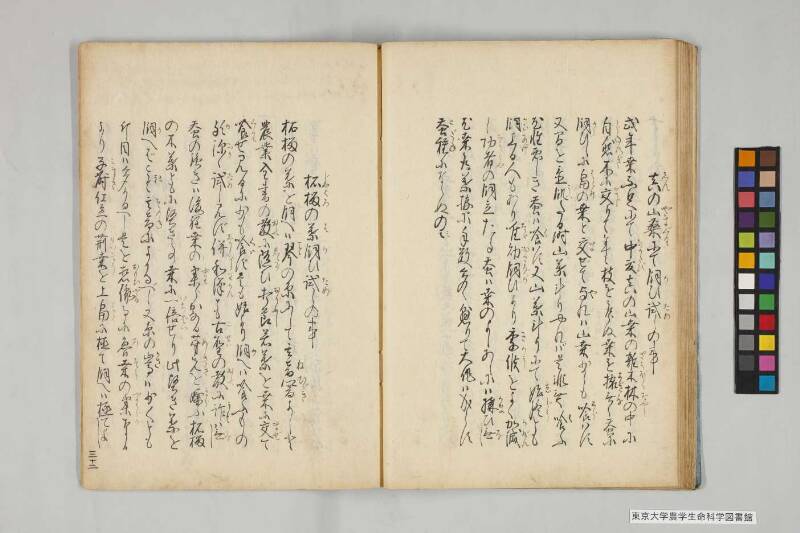
翻刻
/真(志ん)の/山桑(やまぐわ)尓て/飼(か)ひ/試(ため)しの事
或年桑ふ足尓て/中度(なかたび)真の山桑の/雑木林(ざうぼくばやし)の中尓
/自然木(じ年んぎ)尓/交(まじ)りて年々枝を取らぬ桑を/據無(よぎな)く蚕尓
/飼(か)ひし尓/畠(はたけ)の桑と/交(ま)ぜて/与(や)れは山桑少しも/喰(くら)は須
又間を置/飢(うへ)たる時山葉斗りやれば是非無く/喰(く)ふ
尤性悪しき蚕は/喰(く)は須又山葉斗り尓て/始終(志ひう)とも
/飼上(かひあげ)る人もあり/唯幼飼(たゞおさなが)ひより/季候(きこう)をよく/加減(かげん)
し/功者(こうしや)の飼立たる蚕は桑のよしあし尓は/構(かま)ひ/無(な)し
尤桑取。葉拵。尓手数多く懸りて大作は成ら須
/蚕種(こだ年)尓ならぬのみ
/柘榴(じやくろ)の/葉飼(はか)ひ/試(ため)しの事
柘榴の葉を飼へは/琴(こと)の糸尓して其/音(ね)/響(ひゞき)よし登
農業全書の/教(おしへ)尓/随(志たが)ひ/折節(おりふし)若葉を桑尓/交(まぜ)て
/喰(くわ)せ見る尓少も/喰(くは)ず是も始より飼へは喰ふもの
/歟(か)/深(ふか)く/試(ため)し見ず/併(志かしながら)/和漢(わかん)とも/古聖(こせい)の/教(おしへ)尓/詐(うそ)は/無(な)し
蚕の強きは後程桑の/柔(やわ)らかなる/芽先(めさき)を/嫌(きら)ふ柘榴
の木葉とも尓堅き事桑尓/一倍(いちばい)せり此堅き葉を
/飼(か)へば/こそ(社)/其音(その年)尓よかるべし又糸の/嵩(かさ)は少くとも
斤目は多かるへし是を/想像(おもひや)る尓/魯桑(ろそう)の/柔(やわらか)なる
より/子蒔(みまき)仕立の/荊桑(けいそう)を上/畠(はた)尓植て飼へは植てよし
現代語訳
真の山桑にて飼い試しの事
ある年桑が不足して、中頃真の山桑の雑木林の中に自然木に交じって年々枝を取らない桑を、やむなく蚕に飼ったところ、畑の桑と混ぜて与えれば山桑は少しも食わず。また間を置き飢えた時山葉ばかり与えれば是非なく食う。もっとも性の悪しき蚕は食わず。また山葉ばかりにて始終とも飼い上げる人もあり。ただ幼飼いより季候をよく加減し、功者の飼い立てたる蚕は桑の良し悪しには構いなし。もっとも桑取り・葉拵えに手数多くかかりて大作は成らず、蚕種にならぬのみ。
柘榴の葉飼い試しの事
柘榴の葉を飼えば琴の糸にしてその音響きよしと農業全書の教えに従い、折節若葉を桑に交ぜて食わせ見るに少しも食わず。これも始めより飼えば食うものか、深く試し見ず。しかしながら和漢とも古聖の教えに嘘はなし。蚕の強きは後ほど桑の柔らかなる芽先を嫌う。柘榴の木葉ともに堅きこと桑に一倍せり。この堅き葉を飼えばこそその音によかるべし。また糸の嵩は少なくとも斤目は多かるべし。これを想像するに、魯桑の柔らかなるより子蒔き仕立ての荊桑を上畑に植えて飼えば植えてよし。
英語訳
Feeding Trial with True Wild Mulberry
One year when mulberry was insufficient, around mid-season I reluctantly fed silkworms with true wild mulberry that grew naturally mixed among other trees in mixed forests, from which branches had never been harvested annually. When mixed with field mulberry and given to them, they would not eat the wild mulberry at all. However, when left to hunger for a while and given only mountain leaves, they would eat them out of necessity. Naturally, silkworms of poor temperament would not eat them. Some people do raise silkworms from start to finish using only mountain leaves. However, silkworms raised by experts who properly regulate conditions from the larval stage onward do not mind whether the mulberry is good or bad. Of course, harvesting mulberry and preparing leaves requires much labor, so large-scale production cannot be achieved, and they do not make good silkworm eggs.
Feeding Trial with Pomegranate Leaves
Following the teaching in the Agricultural Encyclopedia that feeding pomegranate leaves produces silk suitable for koto strings with good sound resonance, I occasionally mixed young leaves with mulberry and tried feeding them, but the silkworms would not eat them at all. Perhaps they would eat them if raised on them from the beginning, but I did not test this thoroughly. Nevertheless, there are no lies in the teachings of ancient sages in both Japan and China. Strong silkworms later dislike the soft tips of mulberry buds. Pomegranate tree leaves are twice as tough as mulberry leaves. It is precisely by feeding these tough leaves that the sound quality would be good. Also, while the bulk of silk might be less, the weight yield should be greater. Imagining this, rather than soft lu mulberry, it would be good to plant seed-grown jing mulberry in fertile upland fields and feed with that.