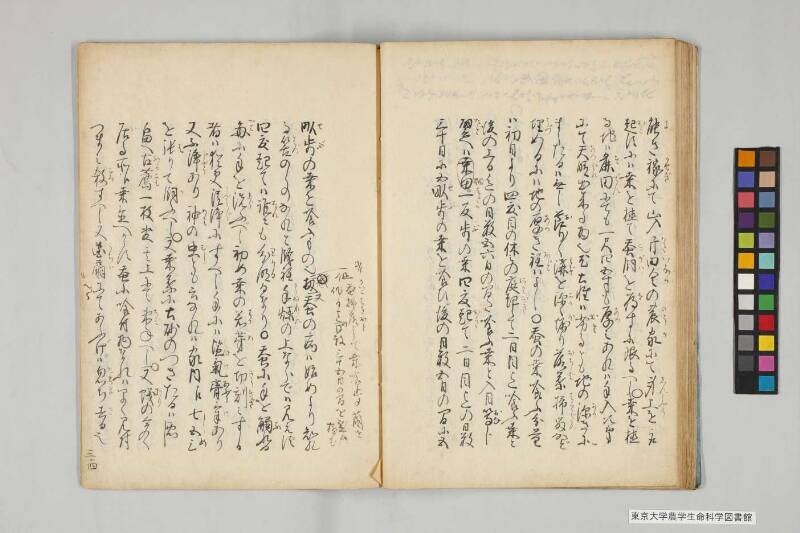
翻刻
/能(よ)き/稼(かせぎ)尓て山入/片田舎(かたいなか)の/農家(のうか)尓て/身上(志んしやう)を取
/起(おこ)須尓は桑を植て/蚕飼(こがい)を/為(な)す尓限るへし〇桑を植
る地は/麁田(そでん)尓ても一尺四五寸も厚みあれは手入次第
尓て/天晴(あつばれ)出来る物也尤土性は/劣(おと)るとも地の/深(ふか)き尓
ましたるは無し/節(お)り〳〵/溝(みぞ)を/深(ふか)く/堀(不)り/落葉(おちば)/掃留(はきだめ)など
/埋(うづ)める尓は地の/厚(あつ)き/程(不ど)はよし〇蚕の桑喰ふ分量
は初日より四度目の休みの/庭起(にわおき)して二日目迄喰ふ桑と
後の上る迄の日数五六日の間た喰ふ桑と入目/等(おな)じ
/譬(たと)へは/畑(はた)一反/歩(ぶ)の桑四反/起(おき)て二日目迄の日数
三十日尓五/畝歩(せぶ)の桑を喰ひ。後の日数五日の間尓五
/畝歩(せぶ)の桑を喰ふもの也但《割書:/蚕掃落(かいこはきおと)して桑喰止め繭を作る|迄の日数三十五日の間を極む》扨又蚕の病は始めより
知れる/筈(はづ)の事なれと餘程/手煉(しゆれん)の上ならでは見えず
四度起ては/誰(たれ)にも/分明(わかる)るなり〇蚕尓手を/觸(ふ)れる
/毎(ごと)尓手を/洗(あら)ふべし初め桑の/若芽(わかめ)を/切刻(きりきざ)みする
者は猶更/清浄(しやう〴〵)尓すべし手尓は/塩氣(しほけ)/膏氣(あぶらけ)あり
又ふ/浄(じやう)あり/神(かみ)の/虫(むし)とも云なれは家内江/七五三(しめ)
を/張(は)りて/飼(か)ふへし〇又桑葉尓土砂のつきたるは悪し
畠へ/古薦(ふるこも)一枚敷其上尓て/束(たば)年へし〇又/蟻(あり)の多く
/居(い)る所江桑置へから須蚕尓喰付物なれは早く見付
つまみ/殺(ころ)すへし又/団扇(うちわ)尓てあふげば/忽(たちま)ち/去(さ)る也
現代語訳
良い収入となり、山間部や片田舎の農家が身代を築き起こすには、桑を植えて養蚕を行うに限るであろう。桑を植える土地は粗悪な田んぼでも、一尺四、五寸も土の厚みがあれば、手入れ次第で素晴らしくできるものである。もっとも土質は劣るとしても、地の深いことに勝るものはない。時々溝を深く掘り、落ち葉や掃き溜めなどを埋めれば、地の厚い程良い。
蚕が桑を食べる分量は、初日より四回目の休みの庭起きをして二日目まで食べる桑と、その後上がるまでの日数五、六日の間に食べる桑と、必要量は同じである。例えば畑一反歩の桑で、四回起きて二日目までの日数三十日に五畝歩の桑を食べ、後の日数五日の間に五畝歩の桑を食べるものである。ただし蚕が掃き落としをして桑を食べるのをやめ繭を作るまでの日数三十五日間を極限とする。
さてまた蚕の病気は始めから分かるはずのことであるが、相当な熟練の上でなければ見えず、四回起きては誰にでも分かるようになる。蚕に手を触れるたびに手を洗うべきである。初めに桑の若芽を切り刻みする者は、なおさら清浄にすべきである。手には塩気、油気があり、また不浄がある。神の虫とも言うので、家内に注連縄を張って飼うべきである。
また桑葉に土砂の付いたものは悪い。畑へ古い薦を一枚敷き、その上で束ねるべきである。また蟻の多くいる所へ桑を置いてはならない。蚕に食いつくものなので、早く見つけてつまんで殺すべきである。また団扇で扇げば、たちまち去るものである。
英語訳
This makes for good income, and for farming households in mountainous areas or remote countryside to build up their wealth, it is best to plant mulberry trees and engage in sericulture. For land to plant mulberry trees, even poor rice fields will work wonderfully with proper care if there is four to five sun (about 12-15 cm) of soil depth. Although the soil quality may be inferior, nothing surpasses having deep earth. Occasionally digging deep ditches and burying fallen leaves and compost will make the land better the thicker it is.
The amount of mulberry that silkworms eat is the same between what they consume from the first day until two days after the fourth molting period (niwaki), and what they eat during the final five to six days until they mature. For example, with mulberry from one tan-bu of field, during the thirty days from the fourth molting until the second day, they eat five se-bu worth of mulberry, and during the final five days, they eat another five se-bu of mulberry. However, the limit is thirty-five days from when the silkworms are cleaned out until they stop eating mulberry and make cocoons.
Now, silkworm diseases should be recognizable from the beginning, but they are not visible without considerable skill. After the fourth molting, anyone can tell. One should wash hands every time before touching the silkworms. Those who initially chop up young mulberry buds should be even more thoroughly clean. Hands have salt, oil, and impurities. Since they are also called "insects of the gods," one should hang sacred ropes (shimenawa) in the house when raising them.
Also, mulberry leaves with dirt and sand attached are bad. One should spread an old straw mat in the field and bundle them on top of it. Also, do not place mulberry where there are many ants. Since they bite the silkworms, find them quickly and pinch them to death. Also, if you fan them with a fan, they will immediately leave.