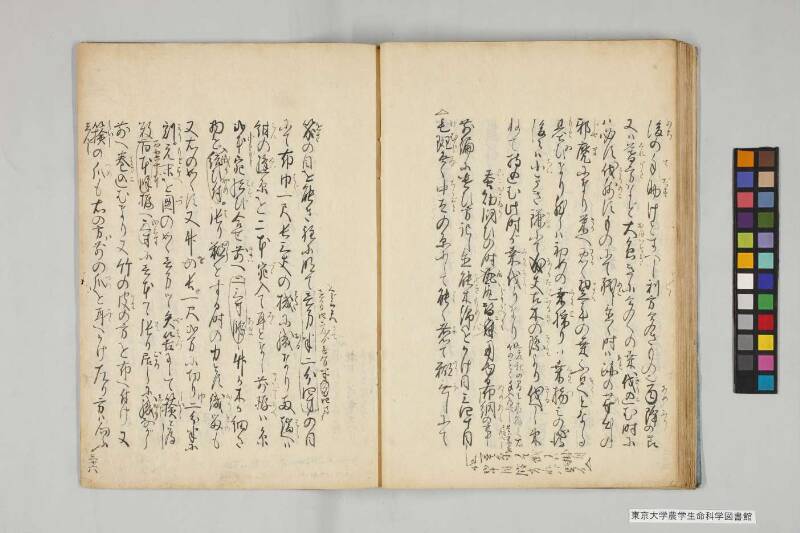
翻刻
/後(のち)の/手助(てだ春)けとすへし利方多きもの也/雨降(あめふり)の節
又は/暮方(くれがた)など/大急(おほいそ)き尓多くの桑/伐込(きりこ)む時尓
は必須/伐残(きりのこ)須もの尓て/残(のこ)し置く時は/跡(あと)の/芽(め)出しの
/邪魔(じやま)尓なり/栄(さか)へ/悪(わる)く/翌(よく)年の桑ふ/足(そく)となる
/基(もと)/ひ(ゐ)なり然らは初めの/桑採(くわと)りは/桑摘(くわつ)みの心得
後には/小(ちい)さき/鎌(かま)尓て/成丈古木(なるたけふるき)の/際(きわ)より/伐(きる)へし束
ねて持込む此時が/桑伐(くわき)りなり但《割書:夏秋の間も木毎之右のことく|手入為べし是は夏蚕に飼べし》
/蚕幼飼(かいこおさなが)ひの時居/尻替(じりがへ)に用ゆる/布網(ぬのあみ)の事
前編尓遣ひ方記し置/能木綿(よきもめん)をかけ目三四十目但《割書:一重糸尓て織尓は掛目|弐十目餘有れば/足(た)る》
/毛斑(けむら)/無(な)く/中太(ちうぶと)の糸尓して/能(よ)く/煮(尓)て/糊無(のりな)し尓て
/筬(をさ)の目を能き程尓明てくじら尺尓て壱分四方ゟ壱分半四方の目
尓て布/巾(はゞ)一尺長三丈の/機(はた)尓/織(おる)なり両/端(はし)へは
/紺(こん)の/縫(ぬい)糸を二本/宛(づゝ)入て/耳(みゝ)となし/前拵(まいごしらへ)は糸
弐本宛/結(むす)び合せ/前(まい)へ二三寸/餘(あま)し竹か木か細き
物を入織り初め/張(は)り/糊(のり)をする時の力と須/織留(おりどめ)も
又右の如く須又竹を長サ一尺弐分尓切り巾二分半尓
/割(わり)。/元末(もと春へ)を/図(づ)の如く壱分ツゝ/矢筈(やはづ)尓して/籡(しいし)と為し
数百五六十本拵へ弐三寸尓壱本ツゝ/張(は)り/居(ごろ)し尓/織(おり)ながら
前へ/巻込(まきこ)むなり又竹の/皮(かわ)の方を布へ付け又
/籡(しいし)の/爪(つめ)も右の方は前の/爪(つめ)を/耳(みゝ)へかけたり方は向ふ
左ページ七行目左ルビー 「籡 しんし」
同 十行目左ルビー 「籡 しんし」
現代語訳
後の手助けとするべきである。利益の多いものである。雨降りの時や夕暮れ時など大急ぎで多くの桑を切り込む時には、必ず切り残すものであり、残しておく時は後の芽出しの邪魔になり、成長が悪く、翌年の桑不足となる基となる。そうであるなら、初めの桑採りは桑摘みの心得で、後には小さな鎌でなるべく古木の際より切るべきである。束ねて持ち込む。この時が桑伐りである。ただし《夏秋の間も木ごとに右のごとく手入れをすべし。これは夏蚕に飼うべし》
蚕の幼虫飼育の時、居場所替えに用いる布網のこと
前編に使い方を記しておいた。良い木綿を掛け目三、四十目、ただし《一重糸にて織るには掛け目二十目余りあれば足りる》毛斑なく、中太の糸にしてよく煮て糊なしにて
筬の目をよき程に明けて、鯨尺にて一分四方より一分半四方の目にて、布幅一尺、長さ三丈の機に織るなり。両端へは紺の縫い糸を二本ずつ入れて耳となし、前拵えは糸二本ずつ結び合わせ、前へ二、三寸余らし、竹か木か細きものを入れ、織り初め、張り、糊をする時の力とする。織り留めもまた右のごとくする。また竹を長さ一尺二分に切り、幅二分半に割り、元末を図のごとく一分ずつ矢筈にして籡とし、数百五、六十本拵え、二、三寸に一本ずつ張り居しに織りながら前へ巻き込むなり。また竹の皮の方を布へ付け、また籡の爪も右の方は前の爪を耳へかけたり、方は向こう
英語訳
This should serve as future assistance. It brings many benefits. When cutting large amounts of mulberry in a hurry during rainy weather or at dusk, there will inevitably be some left uncut, and if left behind, it will interfere with later bud sprouting, causing poor growth and becoming the basis for mulberry shortages the following year. Therefore, the initial mulberry gathering should follow the principles of mulberry picking, and later, small sickles should be used to cut as close as possible to the old wood. Bundle and bring in - this is mulberry cutting. However, "During summer and autumn, each tree should be tended in the same manner. This is for raising summer silkworms."
Regarding cloth nets used for changing locations during silkworm larval rearing:
The usage method was recorded in the previous volume. Use good cotton with 30-40 mesh count, though "for single-thread weaving, about 20 mesh counts will suffice." Use medium-thick thread without uneven spots, well-boiled and without sizing.
Open the reed properly to create square openings of 1 to 1.5 bu using whale-bone measurement, weaving on a loom one shaku wide and three jō long. Insert two dark blue sewing threads at each end to form selvages. For the initial preparation, tie threads together in pairs, leaving 2-3 sun extra at the front, inserting thin bamboo or wood pieces for the initial weaving tension and sizing force. The finishing should be done similarly. Cut bamboo to 1 shaku 2 bu in length, split to 2.5 bu width, and shape both ends into 1-bu arrow-notch shapes to make shiishi (bamboo supports). Prepare several hundred, 50-60 pieces, inserting one every 2-3 sun while weaving and rolling forward. Attach the bark side of bamboo to the cloth, and for the shiishi claws, the right side hooks the front claw to the selvage, while the other side faces away.