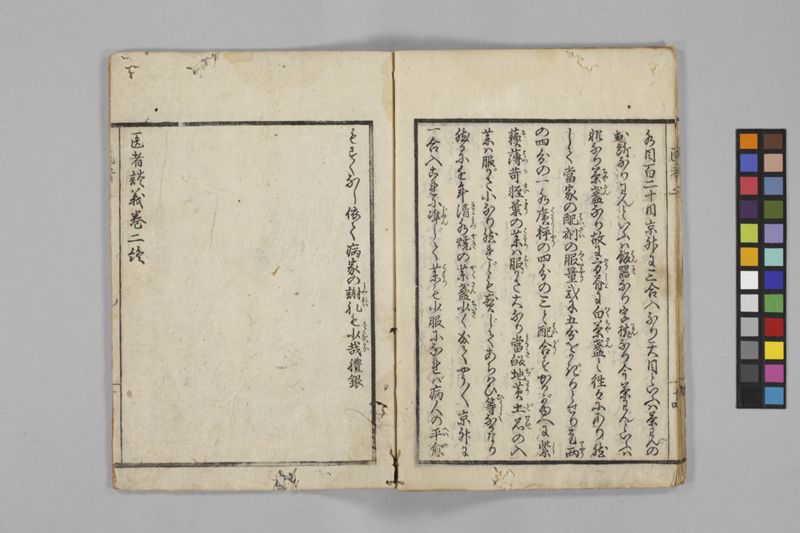
翻刻
水目百二十目京升に三合入なり天目といふは茶わんの
出所なりわんといふは飯器(はんき)なり字 椀(わん)なり今茶わんといふは
非なり茶盞(ちやさん)なり故に方(はう)■(しよ)【書ヵ】に白茶盞(はくちやさん)と往々にあり然
して当家の配剤(はいざい)の服量(ふくりやう)二■【匁ヵ】五分をかぎりとせり是 両(りやう)
の四分の一水 広秤(くわうしやう)の四分の三と配合(はいがう)すかるがゆへに紫(し)
蘇(そ)薄苛(はつか)軽葉(けいよう)の薬(くすり)は服(ふく)がさ大なり当皈(とうき)地黄(ぢわう)土石(どせき)の入
薬は服がさ小なり然れども煎じてあちはひ等(ひとしく)なるなり
然るに近年 清水焼(きよみづやき)の薬盞(やくさん)少(ちいさ)く成てやう〳〵京升に
一合入これに準(じゆん)じて薬(くすり)も少服になれば病人の平愈(へいゆ)
もすくなし依て病家の謝礼(しやれい)も少哉(すくないかな)礼銀
医者談義巻二終
現代語訳
水百二十目で、京升に三合入りである。天目というのは茶碗の出所である。椀というのは飯器のことで、字は「椀」である。今「茶椀」というのは正しくなく、「茶盞」である。故に処方書に「白茶盞」とよくあるのである。
そして当家の配剤の服量は二匁五分を限りとしている。これは両の四分の一で、水は広秤の四分の三と配合する。それ故に紫蘇・薄荷・軽葉の薬は服用する嵩が大きくなり、当帰・地黄・土石の入った薬は服用する嵩が小さくなる。しかしながら煎じて味わいは等しくなるのである。
しかるに近年、清水焼の薬盞が小さくなって、ようやく京升に一合入るほどになった。これに準じて薬も少服になれば、病人の平癒も少ない。よって病家の謝礼も少ないことよ。礼銀も...
医者談義巻二終
英語訳
This equals 120 me of water, which is three go in Kyoto measure. "Tenmoku" refers to the origin of tea bowls. "Wan" refers to rice vessels, written with the character 椀. The current term "chawan" (tea bowl) is incorrect; it should be "chazan" (tea cup). Therefore, prescription books often contain the term "hakuchazan" (white tea cup).
Our family's dosage for medicinal preparations is limited to 2 monme and 5 bu. This equals one-quarter ryo, combined with three-quarters of water by the broad scale. Therefore, medicines with shiso (perilla), hakka (mint), and light leaves have a large volume when taken, while medicines containing toki (angelica), jiō (rehmannia), and minerals have a small volume. However, when decocted, their potency becomes equal.
Recently, however, Kiyomizu-yaki (Kiyomizu pottery) medicine cups have become smaller, barely holding one go of Kyoto measure. When medicine doses are correspondingly reduced, patients' recovery rates also decrease. Consequently, the gratitude payments from patient families are also meager. The礼銀 (ceremonial silver payment)...
End of Isha Dangi (Medical Discussions) Volume 2