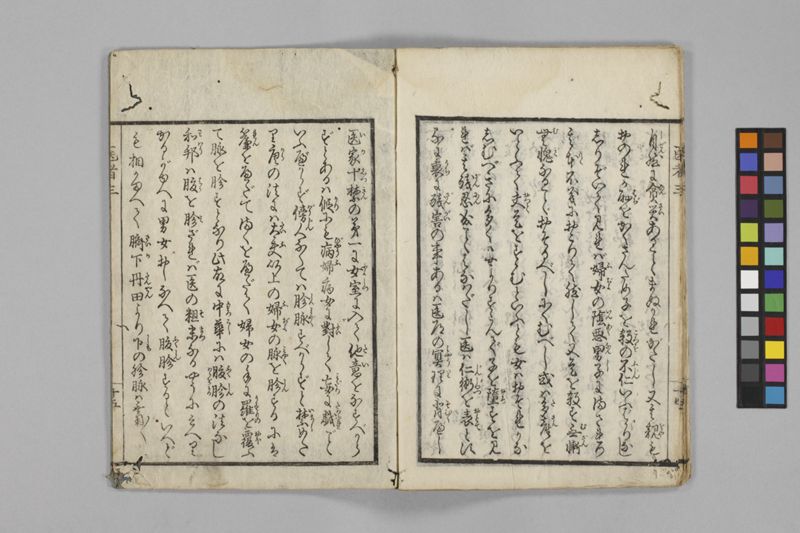
翻刻
自然(しぜん)に貧災(ひんさい)あることまぬかれがたし又其 親(おや)も
おのれか恥(はぢ)をかくさんため子を殺(ころす)の不仁(ふじん)いふばかりなし
しりぞいて見れば婦女(ふぢよ)の陰悪(いんあく)男子(なんし)にまされり
其 本(もと)不義におこりて然して又是を殺す無慚(むざん)
無愧(むぎ)なることおそるべしにくむべし或は多産(たさん)を
いとふて夫(おつと)是をすゝむといふとも女はおそれかな
しむべきに多くは女よりすゝんで子を堕(おろ)すを見
れば其 残忍(ざんにん)成ことはなはだし医は仁術(じんじゆつ)を表(おもて)とす
るに裏(うら)に残害(ざんがい)の事あるは医道の冥理(みやうり)に背(そむく)べし
医家(いか)十禁(しつきん)の第一に女室(によしつ)に入て他意(たい)をなすべから
ずとあるは仮(かり)にも病婦(びやうふ)病女に対(たい)して妄(みだり)に戯(たはふれ)ごと
いふべからず傍人(ばうじん)なくては胗脉(しんみやく)すべからずと禁(いまし)めた
り唐(から)の法には大夫(たいふ)以上の婦女(ふぢよ)の脉(みやく)を胗(しん)するには
簾(れん)をへだてまくをへだて婦女の手に羅(うすもの)を覆(おほ)ふ
て脉を胗すとなり此故に中華(もろこし)には腹胗(ふくしん)【左ルビ・はらをみる】の法なし
和邦(わはう)は腹(はら)を胗(み)ざれば医の粗末(そまつ)なるやうに言へり
かるがゆへに男女おしなへて腹胗(ふくしん)するといへど
も相かまへて臍下丹田(さいかたんでん)より下(しも)の胗脉は無用〳〵
現代語訳
自然に貧困や災いに遭うことは免れがたい。また、その親も自分の恥を隠すために子を殺すという不仁は言葉では表せないほどである。退いて見れば、婦女の陰悪は男子に勝っている。その元は不義から起こり、そしてまたこれを殺すという無慚無愧なことは恐るべく憎むべきである。あるいは多産を嫌って夫がこれを勧めるということがあっても、女は恐れ悲しむべきなのに、多くは女の方から進んで子を堕すのを見れば、その残忍なことは甚だしい。医は仁術を表とするのに、裏に残害の事があるのは医道の妙理に背くであろう。
医家十禁の第一に「女室に入って他意をなすべからず」とあるのは、仮にも病気の婦人や病気の女性に対して、みだりに戯れ言を言ってはならず、付き添いの人がいなくては脈診をしてはならないと戒めたものである。唐の法では大夫以上の婦女の脈を診するには、簾を隔て幕を隔て、婦女の手に薄絹を覆って脈を診するという。この故に中国には腹診(腹を診る)の法がない。我が国では腹を診なければ医の粗末なように言っているが、そのため男女を問わず腹診をするといえども、心がけて臍下丹田より下の診脈は無用である。
英語訳
It is inevitable that poverty and disasters will naturally befall them. Moreover, the inhumanity of parents killing their children to hide their own shame is beyond words. Looking at it from a distance, the hidden evil of women surpasses that of men. This originates from adultery, and then to kill the result - such shameless and unconscionable acts are fearsome and detestable. Even if a husband might encourage this because he dislikes having many children, while women should fear and grieve over it, we often see women themselves taking the initiative to abort children - such cruelty is extreme. While medicine should have benevolent arts as its front, having harmful practices behind it goes against the profound principles of medical practice.
The first of the Ten Prohibitions for Medical Practitioners states "Do not enter women's chambers with ulterior motives," which warns that one must never speak frivolously to sick women or female patients, and must not take their pulse without attendants present. According to Tang dynasty law, when examining the pulse of women of the rank of minister or above, curtains and screens were used as barriers, and thin silk was placed over the women's hands when taking their pulse. For this reason, there is no method of abdominal examination in China. In our country, it is said that not examining the abdomen makes one's medical practice crude, so both men and women undergo abdominal examination, but one must be careful that pulse-taking below the lower dantian is unnecessary.