翻刻
【右丁】
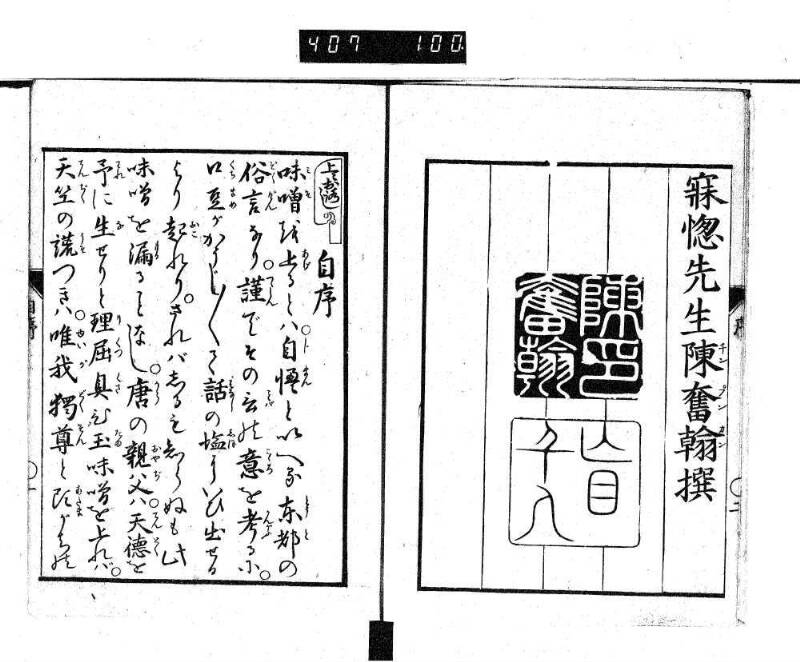
寝惚先生/陳奮翰(チンプンカン)撰
【左丁】
上におろし
自序
味噌(みそ)を上(あげ)るとは。自慢(じまん)といへる東都(とうと)の
俗言(ぞくげん)なり。謹(つゝしん)でその言(ことば)の意(こゝろ)を考(かんがふ)るに。
口豆(くちまめ)がかうじ〳〵て話(はなし)の塩(しほ)にいひ出せる
より起(おこ)れり。さればしるも知らぬも此
味噌を漏(もる)ることなし。唐(から)の親父(おやぢ)は。天徳(てんとく)を
予(われ)に生(な)せりと理屈(りくつ)臭(くさ)ひ玉(たま)味噌を上れば。
天竺(てんぢく)の謊(うそ)つきは。唯我(ゆいが)独尊(どくそん)と頭(あたま)がちの
現代語訳
【右丁】
寝惚先生
陳奮翰(チンプンカン)撰
【左丁】
上におろし
自序
「味噌を上げる」とは、「自慢する」という江戸の俗語である。謹んでその言葉の意味を考えてみると、口が達者でこうじこうじと話の調味料として言い出すことから起こったものである。だから知っているも知らないもこの味噌を漏らすことはない。中国の親父は「天は徳を私に生まれさせた」と理屈臭い上等な味噌を上げれば、インドの嘘つきは「ただ我独り尊し」と頭でっかちの
英語訳
【Right page】
Master Neboke (Drowsy Master)
Selected by Chinpunkan
【Left page】
Superior discourse
Preface
"Miso wo ageru" (to raise miso) means "to boast" in Edo colloquial language. When I respectfully consider the meaning of these words, it originated from being talkative and bringing it up as seasoning for conversation. Therefore, whether one knows or doesn't know, none fail to leak this miso. When a Chinese father raises his pretentious, logic-reeking fine miso saying "Heaven has given birth to virtue in me," the Indian liar, being top-heavy, says "I alone am honored"