翻刻
【右頁】
二
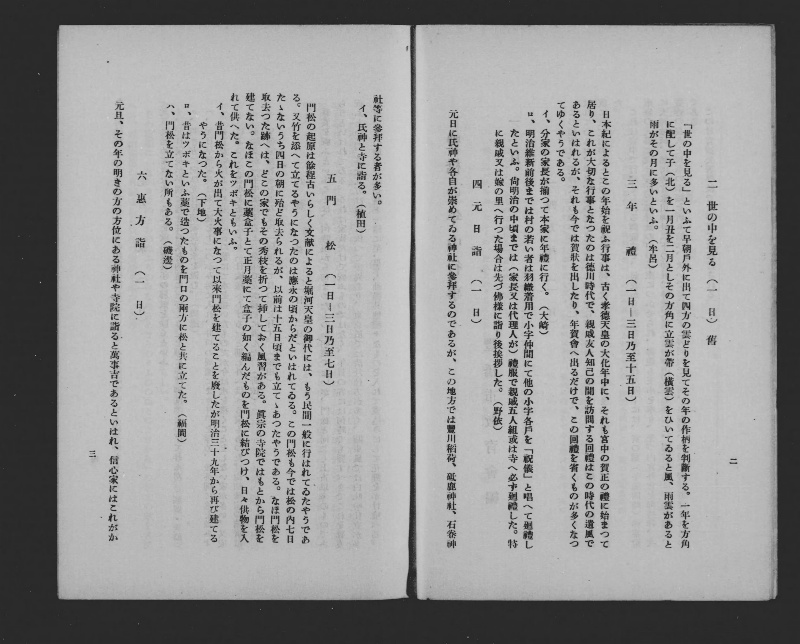
二 世の中を見る (一日) 舊
「世の中を見る」といふて早朝戸外に出て四方の雲どりを見てその年の作柄を判斷する、一年を方角
に配して子(北)を一月丑を二月としてその方角に立雲が帯(横雲)をひいてゐると風、雨雲があると
雨がその月に多いといふ。(牟呂)
三 年禮 (一日-三日乃至十五日)
日本紀によるとこの年始を祝ふ行事は、古く孝德天皇の大化年中に、それも宮中の賀正の禮に始まつて
居り、これが大切な行事となつたのは徳川時代で、親戚友人知己の間を訪問する回禮はこの時代の遺風で
あるといはれるが、それも今では賀狀を出したり、年賀會へ出るだけで、この回禮を省くものが多くなつ
てゆくやうである。
イ、分家の家長が揃つて本家に年禮に行く。(大崎)
ロ、明治維新前後までは村の若い者は羽織着用で小字仲間にて他の小字各戸を「祝儀」と唱へて廻禮し
たといふ。尚明治の中頃までは(家長又は代理人が)禮服で親戚五人組或は寺へ必ず廻禮した。特
に親戚又は嫁の里へ行つた場合は先づ佛様に詣り後挨拶した。(野依)
四 元旦詣 (一日)
元日に氏神や各自が崇めてゐる神社に參拜するのであるが、この地方では豐川稲荷、砥鹿神社、石卷神
【左頁】
社等に參拜する者が多い。
イ、氏神と寺に詣る。(植田)
五 門松 (一日-三日乃至七日)
門松の起原は餘程古いらしく文献によると堀河天皇の御代には、もう民間一般に行はれてゐたやうであ
る。又竹を添へて立てるやうになつたのは應永の頃からだといはれてゐる。この門松も今では松の内七日
たゝないうち四日の朝に殆ど取去られるが、以前は十五日頃までも立てゝあつたやうである。なほ門松を
取去つた跡へは、どこの家でもその秀枝を折つて挿しておく風習がある。眞宗の寺院ではもとから門松を
建てない。なほこの門松に藁盒子とて正月藁にて盒子の如く編んだものを門松に結びつけ、日々供物を入
れて供へた。これをツボキともいふ。
イ、昔門松から火が出て大火事になつて以來門松を建てることを廢したが明治三十九年から再び建てる
やうになつた。(下地)
ロ、昔はツボキといふ藁で造つたものを門口の兩方に松と共に立てた。(福岡)
ハ、門松を立てない所もある。(磯邊)
六 惠方詣 (一日)
元旦、その年の明きの方の方位にある神社や寺院に詣ると萬事吉であるといはれ、信心家にはこれがか
三
現代語訳
【右ページ】
二
二 世の中を見る (一日) 旧
「世の中を見る」といって早朝戸外に出て四方の雲の様子を見てその年の作柄を判断する。一年を方角
に配して子(北)を一月、丑を二月としてその方角に立雲が帯(横雲)を引いていると風、雨雲があると
雨がその月に多いという。(牟呂)
三 年礼 (一日-三日乃至十五日)
日本書紀によるとこの年始を祝う行事は、古く孝徳天皇の大化年中に、それも宮中の賀正の礼に始まって
おり、これが大切な行事となったのは徳川時代で、親戚友人知己の間を訪問する回礼はこの時代の遺風で
あると言われるが、それも今では賀状を出したり、年賀会へ出るだけで、この回礼を省くものが多くなって
いくようである。
イ、分家の家長がそろって本家に年礼に行く。(大崎)
ロ、明治維新前後までは村の若い者は羽織着用で小字仲間にて他の小字各戸を「祝儀」と唱えて回礼し
たという。なお明治の中頃までは(家長又は代理人が)礼服で親戚五人組或いは寺へ必ず回礼した。特
に親戚又は嫁の里へ行った場合は先ず仏様に詣り後挨拶した。(野依)
四 元旦詣 (一日)
元日に氏神や各自が崇めている神社に参拝するのであるが、この地方では豊川稲荷、砥鹿神社、石巻神
【左ページ】
社等に参拝する者が多い。
イ、氏神と寺に詣る。(植田)
五 門松 (一日-三日乃至七日)
門松の起源は相当古いらしく文献によると堀河天皇の御代には、もう民間一般に行われていたようであ
る。また竹を添えて立てるようになったのは応永の頃からだと言われている。この門松も今では松の内七日
経たないうち四日の朝にほとんど取り去られるが、以前は十五日頃までも立ててあったようである。なお門松を
取り去った跡へは、どこの家でもその秀枝を折って挿しておく風習がある。真宗の寺院では元から門松を
建てない。なおこの門松に藁坪子といって正月藁にて坪子のように編んだものを門松に結びつけ、日々供物を入
れて供えた。これをツボキとも言う。
イ、昔門松から火が出て大火事になって以来門松を建てることを廃したが明治三十九年から再び建てる
ようになった。(下地)
ロ、昔はツボキという藁で造ったものを門口の両方に松と共に立てた。(福岡)
ハ、門松を立てない所もある。(磯辺)
六 恵方詣 (一日)
元旦、その年の明きの方の方位にある神社や寺院に詣ると万事吉であると言われ、信心家にはこれがか
三
英語訳
【Right page】
2
2 Observing the World (1st day) Old calendar
"Observing the world" refers to going outdoors early in the morning to look at the clouds in all four directions to judge the year's crop conditions. The year is assigned to directions, with Ne (north) as January and Ushi as February, and if standing clouds form bands (horizontal clouds) in those directions, there will be wind; if there are rain clouds, there will be much rain in that month. (Muro)
3 New Year Courtesy Calls (1st day - 3rd to 15th days)
According to the Nihon Shoki, this New Year celebration event began in ancient times during Emperor Kotoku's Taika era, starting with the New Year felicitation ceremonies at the imperial court. It became an important event during the Tokugawa period, and the custom of visiting relatives, friends, and acquaintances is said to be a remnant of this era. However, nowadays many people omit these courtesy visits and simply send New Year cards or attend New Year parties.
A. Branch family heads gather together to make New Year courtesy calls to the main family. (Osaki)
B. Until around the Meiji Restoration, young men from villages would wear haori and go around with their hamlet groups to other hamlets' houses, calling out "congratulations" as they made their rounds. Until around the middle of the Meiji period, (family heads or their representatives) would always make courtesy calls in formal dress to relatives, five-household groups, or temples. Particularly when visiting relatives or the bride's family home, they would first pay respects to the Buddha and then give greetings. (Noyori)
4 New Year's Day Shrine Visit (1st day)
On New Year's Day, people visit their tutelary deities and shrines they revere. In this region, many people visit Toyokawa Inari, Toga Shrine, Ishimaki Shrine,
【Left page】
and other shrines.
A. Visit the tutelary deity and temple. (Ueda)
5 Gate Pine Decorations (1st day - 3rd to 7th days)
The origin of gate pine decorations appears to be quite ancient, and according to literature, they were already practiced among the general populace during Emperor Horikawa's reign. It is said that adding bamboo began around the Oei period. These gate pines are now mostly removed on the morning of the 4th day, before the seven days of the New Year period are over, but previously they were left up until around the 15th day. There is also a custom of breaking off and inserting the finest branches wherever the gate pines were removed. Jodo Shinshu temples do not erect gate pines from the beginning. Additionally, straw containers called wara tsuboko, woven like containers from New Year straw, were tied to the gate pines, and offerings were placed in them daily. These are also called Tsuboki.
A. Long ago, after a great fire broke out from gate pines, the practice of erecting them was abandoned, but from 1906 they began erecting them again. (Shimoji)
B. In the past, things called Tsuboki made of straw were erected together with pine trees on both sides of the gate. (Fukuoka)
C. There are also places that do not erect gate pines. (Isobe)
6 Lucky Direction Shrine Visit (1st day)
On New Year's Day, it is said that visiting shrines or temples located in that year's auspicious direction brings good fortune in all matters, and for devout believers this is quite
3