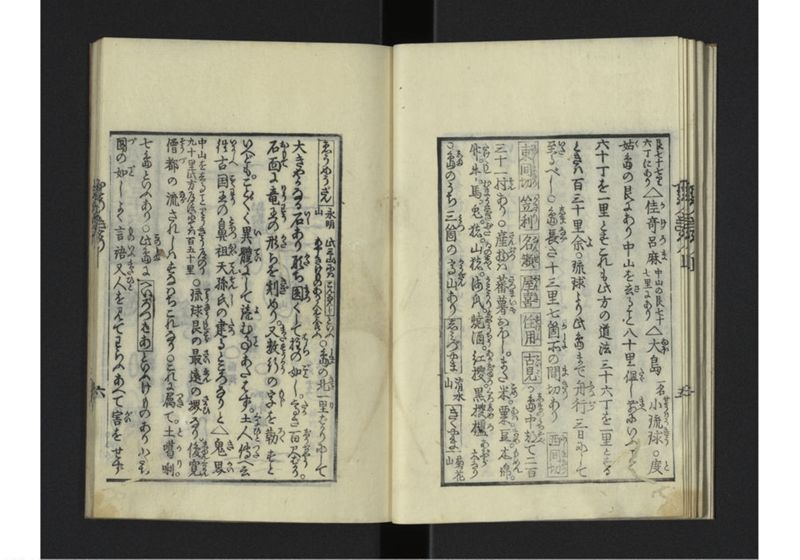
翻刻
《割書:艮七十七里|六丁にあり》△ 佳竒呂麻(かけろま)《割書:中山の艮七十|七里にあり》△ 大(おほ)島《割書:一名》 小琉球(せうりうきう)〇 度(と)
姑(く)島の艮にあり中山を 去(さ)ること八十里 但(たゞ)し 前(まへ)にいふごとく
六十丁を一里とすこれも此方の道法三十六丁を一里とする
ときハ百三十里 余(よ)〇琉球より此島まで 舟行(ふなぢ)三日にして
至(いた)るべし〇 島長(しまなが)さ十三里七 箇所(かしよ)の 間切(まきり)あり 西間切(にしまきり)
東間切(ひがしまきり)【以上六文字を三字ずつ四角で囲む】 笠利(かさり) 名瀬(なんせ) 屋喜(やんき) 住用(すむよ) 古見(こいミ)【以上十文字を二字ずつ四角で囲む】〇 島中都(しまのうちすべ)て二百
三十一 村(そん)あり〇 産物(さんぶつ)ハ 蕃薯(さつまいも)おほし。また 米(こめ)。 粟(あハ)。 豆(まめ)。 木綿(もめん)。
竹(たけ)。 牛(うし)。 馬(むま)。 兎(うさぎ)。 猪(ぶた)。 山猪(ゐのしゝ)。 海瓜(うミうり)。 焼酒(しやうちう)。 紅㯶(あかじゆろ)。 黒㯶櫨(くろしゆろ)《割書:あぶら| 木なり》
〇 島(しま)のうち 三箇(ミつ)の 高山(かうざん)あり しミづやま【以上五文字を四角で囲む】《割書:清水|山》 きくやま【以上四文字を四角で囲む】《割書:菊花|山》
ゑうめうざん【以上六文字を四角で囲む】《割書:永明|山》 《割書:此さんざんにハこんなんじといふ|あやしきけものあり人を食ふ》【「こんなんじ」を四角で囲む】〇 島(しま)の 北(きた)一 里(り)ばかりにして
大きやうなる 石(いし)あり 形(かた)ち 圓(まろ)くして 柱(はしら)の 如(ごと)し。 高(たか)さ 百尺(じうぢやう)ばかり。
石面(おもて)に 竜王(りうわう)の 形(かた)ちを刻(きざ)めり。 又数行(またすうかう)の 字(もじ)を 勒(ろく)すと
いへども。こと〴〵く 異體(いてい)にして 読(よ)む 事(こと)あたはず。 土人(くにひと)傳(つた)へ云
往古(いにしへ)国王(こくわう)の 鼻祖(とほつおや)天孫氏(てんそんし)の 建(たつ)るところなりと△ 鬼界(きかい)
《割書:中山を去ることりうきう道のり|九十里此方道法にてハ百五十里》〇 琉球(りうきう)艮(うしとら)の 最遠(さいゑん)の 堺(さかひ)なり 俊寛(しゆんくわん)
僧都(そうづ)の 流(なが)されしハすなハちこれなり〇これに 属(つき)て。 土噶唎(とかり)。
七島といふあり〇 此島(このしま)にへいろつばあ【以上六文字を四角で囲む】といふけものありかたち
圖(ず)の 如(ごと)しよく 言語又人(ものいふまたひと)を見てわらふあへて 害(がい)をせず
現代語訳
《艮七十七里六丁にある》
△ 加計呂麻:中山の艮七十七里にある
△ 大島《別名》小琉球:度姑島の艮にある。中山から離れること八十里。ただし前に述べたように六十丁を一里とする。これもこの地方の道のりで三十六丁を一里とするときは百三十里余り。○ 琉球からこの島まで船で三日で到着できる。○ 島の長さは十三里。七か所の間切がある:西間切、東間切、笠利、名瀬、屋喜、住用、古見。○ 島全体で二百三十一の村がある。○ 産物は薩摩芋が多い。また米、粟、豆、木綿、竹、牛、馬、兎、豚、山猪、海瓜、焼酎、紅棕櫚、黒棕櫚(油を取る木である)。○ 島の中に三つの高山がある:清水山、菊花山、永明山(この三つの山には「こんなんじ」という怪しい獣がいて人を食う)。○ 島の北一里ほどの所に大きな石がある。形は円くて柱のようである。高さは百尺ほど。石の表面に竜王の形を刻んである。また数行の文字を刻んであるが、すべて異体字で読むことができない。土地の人の伝承によると、往古、国王の鼻祖である天孫氏が建てたところだという。
△ 鬼界:中山を去ること琉球の道のりで九十里、この地方の道のりでは百五十里。○ 琉球の艮(北東)の最も遠い境である。俊寛僧都が流されたのは正にここである。○ これに属して土噶唎、七島というのがある。○ この島に「へいろつば」という獣がいる。形は図のようである。よく言葉を話し、また人を見て笑う。敢えて害をしない。
英語訳
《Located at seventy-seven ri and six cho in the ushitora direction》
△ Kakeroma: Located seventy-seven ri in the ushitora direction from Chuzan.
△ Oshima 《Also called》 Sho-Ryukyu (Little Ryukyu): Located in the ushitora direction of Toku Island. It is eighty ri from Chuzan. However, as mentioned before, sixty cho equals one ri. When using this region's road measure of thirty-six cho per ri, it is over one hundred thirty ri. ○ From Ryukyu to this island, one can arrive by ship in three days. ○ The island is thirteen ri long. There are seven magiri (administrative districts): Nishi-magiri, Higashi-magiri, Kasari, Nase, Yanki, Sumiyo, and Koimi. ○ There are 231 villages in total on the island. ○ The products include many sweet potatoes, as well as rice, millet, beans, cotton, bamboo, cattle, horses, rabbits, pigs, wild boars, sea cucumbers, shochu, red palm, and black palm (trees for oil extraction). ○ There are three high mountains on the island: Shimizu Mountain, Kikuka Mountain, and Eimei Mountain (on these three mountains there is a strange beast called "konnanji" that eats people). ○ About one ri north of the island, there is a large stone. It is round in shape like a pillar. It is about one hundred shaku high. The surface of the stone is carved with the form of a dragon king. There are also several lines of characters carved, but they are all in variant forms and cannot be read. According to the tradition of the local people, it was built in ancient times by Tensōn-shi, the founding ancestor of the national kings.
△ Kikai: Ninety ri from Chuzan by Ryukyu road measure, one hundred fifty ri by this region's road measure. ○ This is the most distant boundary in the ushitora (northeast) of Ryukyu. This is precisely where the monk Shunkan was exiled. ○ Belonging to this are places called Tokari and Shichitō (Seven Islands). ○ On this island there is a beast called "heirotsubaa." Its form is as shown in the diagram. It speaks well and also laughs when it sees people. It does no harm.