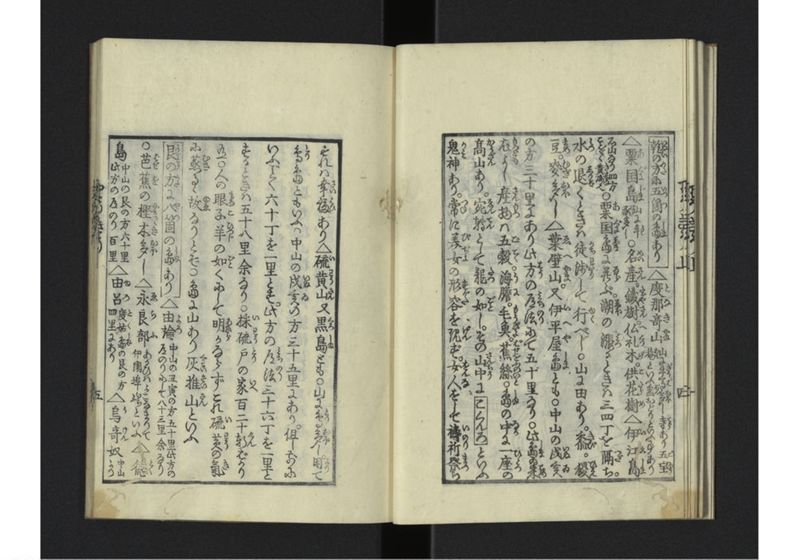
翻刻
乾(いぬい)の 方( かた)に 五箇(いつつ)の 島(しま)あり【以上十文字を四角で囲む】△ 度那竒(となき)山(やま)《割書:山に 牛馬(ぎうば)多(おほ)し 寺(てら)あり 五宝(ごほう)| 菴(あん)といふ 盆(ぼん)おどりといふ事あり》
△ 粟国島(あぐにじま)《割書:山に 牛(うし)| 豕(ぶた)多し》〇 名産(めいさん)。 鐵樹(たがやさん)。 仏礼木(へくりげ)。 供花樹(こたらめ)△ 伊江島(いゑしま)
《割書:石山なり四方|こと〴〵く 黄砂(きすな)也》〇 粟国島(あぐにしま)に 并(なら)ぶ。 潮(しほ)の 漲(ミつ)るときハ三四丁を 隔(つだ)ち。
水(ミつ)の 退(しりぞ)くときハ 徒渉(うちわたり)して 行(ゆく)べし〇山に田あり。 黍(きび)。 稷(ひえ)
豆(まめ)。 麥多(むぎおほ)し△ 葉壁山(ゑへやま)。又 伊平屋島(いへやしま)とも〇中山の 戌亥
の方三十里にあり此 方(ほう)の 道法(ミちのり)にて五十里なり〇此 島(しま)の 米(こめ)
尤(もつとも)よし 産物(さんもつ)ハ 五穀(ごこく)。 海膽(うに)。 毛魚(もうぎよ)。 蕉絲(ばせをふのいと)〇 島(しま)の 中(なか)に 一𫝶(ひとつ)の
高山(かうざん)あり。 宛轉(ゑんてん)として 龍(たつ)の 如(ごと)し。その 山中(さんちう)にこくんろ【以上四文字を四角で囲む】といふ
鬼神(かミ)あり。 常(つね)に 美女(びぢよ)の 形容(すがた)を 現(げん)ず。 女人(をんな)をして 祷祈祭(いのりまつ)ら
すれハ 幸福(さいはひ)あり△ 硫黄山(いわうさん)又 黒島(くろしま)とも〇山に 鳥多(とりおほ)し。 因(より)て
鳥(とり)島ともいふ〇中山の 戌亥の方三十五里にあり。但し前に
いふごとく六十丁を一里とす。此方の 道法(ミちのり)三十六丁を一里と
するときハ五十八里余也〇 採硫戸(いわうとり)の 家(いへ)百二十 軒(けん)ばかり
有〇人の眼子羊の如くにして明かならずこれ硫黄の氣
に 蒸(むさ)るゝ 故(ゆゑ)なりとぞ〇島に山あり 灰推山(くわいすいさん)といふ
艮(うしとら)の 方(かた)に 八箇(やつ)の 島(しま)あり【以上十文字を四角で囲む】△ 由論(よろ)《割書:中山の丑寅の方五十里此方の|道のりにして八十三里余なり》
〇 芭蕉(ばせを)の 樫木多(やまゝきおほ)し△ 永良部(えらふ)《割書:あるひハよこなまりて|伊蘭埠(いらふ)といふ》△ 德(とく)
島《割書:中山の艮の方六十里|此方の道のり百里》△ 由呂(ゆろ)《割書: 度姑島(とくしま)の艮の方|四里にあり》△ 烏竒(うけん)奴《割書:中山|より》
現代語訳
乾(北西)の方に五つの島がある
△ 度那竒(となき)山:山に牛馬が多い。寺があり、五宝庵という。盆踊りという行事がある。
△ 粟国島:山に牛と豚が多い。○ 名産物は鉄樹、仏礼木、供花樹。
△ 伊江島:石山で、四方がすべて黄色い砂である。○ 粟国島に並ぶ。潮が満ちる時は三~四丁を隔てているが、潮が引く時は歩いて渡ることができる。○ 山に田があり、黍、稷、豆、麦が多い。
△ 葉壁山、また伊平屋島ともいう。○ 中山の戌亥(北西)の方三十里にある。この地方の道のりでは五十里である。○ この島の米は最も良い。産物は五穀、海膽、毛魚、芭蕉の糸。○ 島の中に一つの高山があり、うねうねと龍のようである。その山中に「こくんろ」という鬼神がいる。常に美女の姿を現す。女性がこれに祈りを捧げれば幸福がある。
△ 硫黄山、また黒島ともいう。○ 山に鳥が多いため、鳥島ともいう。○ 中山の戌亥の方三十五里にある。ただし前に述べたように六十丁を一里とする。この地方の道のり三十六丁を一里とすると五十八里余りである。○ 硫黄採取の家が百二十軒ほどある。○ 人の瞳が羊のようで明瞭でない。これは硫黄の気に蒸されるためである。○ 島に灰推山という山がある。
艮(北東)の方に八つの島がある
△ 由論:中山の丑寅(北東)の方五十里。この地方の道のりで八十三里余り。○ 芭蕉の樫木が多い。
△ 永良部:あるいは訛って伊蘭埠(いらふ)という。
△ 徳島:中山の艮(北東)の方六十里。この地方の道のりで百里。
△ 由呂:度姑島(徳島)の艮の方四里にある。
△ 烏竒奴:中山より
英語訳
There are five islands in the inui (northwest) direction.
△ Tonaki Mountain: There are many cattle and horses on the mountain. There is a temple called Goho-an. There is an event called bon-odori (Bon dance).
△ Aguni Island: There are many cattle and pigs on the mountain. ○ The specialty products are iron trees, butsureigi trees, and kotarame trees.
△ Ie Island: It is a rocky mountain, with yellow sand all around. ○ It is comparable to Aguni Island. When the tide rises, it is separated by three to four cho, but when the tide recedes, one can walk across. ○ There are fields on the mountain with much millet, Japanese millet, beans, and wheat.
△ Habe Mountain, also called Iheya Island. ○ It is located thirty ri in the inu-i (northwest) direction from Chuzan. By this region's measure of distance, it is fifty ri. ○ The rice from this island is the finest. The products include five grains, sea urchins, hairy fish, and banana fiber. ○ There is one high mountain in the center of the island that winds like a dragon. In that mountain there is a deity called "kokun-ro" that always appears in the form of a beautiful woman. If women pray to it, they will have good fortune.
△ Sulfur Mountain, also called Black Island. ○ Because there are many birds on the mountain, it is also called Bird Island. ○ It is located thirty-five ri in the inu-i direction from Chuzan. However, as mentioned before, sixty cho equals one ri. When this region's road measure of thirty-six cho per ri is used, it is fifty-eight ri and some. ○ There are about 120 houses of sulfur collectors. ○ People's pupils are like those of sheep and not clear. This is because they are steamed by sulfur vapors. ○ There is a mountain on the island called Kaisui Mountain.
There are eight islands in the ushitora (northeast) direction.
△ Yoron: Fifty ri in the ushi-tora (northeast) direction from Chuzan. By this region's road measure, it is eighty-three ri and some. ○ There are many banana and oak trees.
△ Erabu: Sometimes mispronounced as Irafu.
△ Toku Island: Sixty ri in the ushitora (northeast) direction from Chuzan. By this region's road measure, one hundred ri.
△ Yuro: Located four ri in the ushitora direction from Toku Island.
△ Uken-nu: From Chuzan...