翻刻
【右丁上段】
○珊瑚(さんご)は海中(かいちう)の珠(たま)なりいろ
あかし鉄網(てつもう)をもつて是(これ)を取(とる)
七/宝(ほう)の一つなり
○砥(し)は細砺石(さいれいせき)なり硎(まと)とも書(かく)べ
し黄砥(わうし)はあはせどなり
○礪(れい)は麁蛎石(それいせき)なりあらとなり
磑(あらと)とも書べし
○紗(しや)は金紗(きんしや)銀紗(ぎんしや)紗紋(もんしや)等(とう)
ありうすものなり又/法螺漏(ほらろ)
などいふ有/戻子(もじ)といふも有
○熨斗目(のしめ)は筋(すぢ)ある織物(をりもの)也
祝義(しうき)に侍(さふらひ)のきる服(ふく)なり
又/能役者(のふやくしや)などもきるなり
○錦(きん)は五色(ごしき)の糸(いと)を織(をり)て錦(にしき)
とす俗(ぞく)にいふ金襴(きんらん)の類(たぐひ)也
○繍(しう)は五/采(さい)の刺文(しもん)なり
ぬいもの
○絨(じう)は細毛布(さいもうふ)なりその美(び)な
【左丁上段】
る物のを天鵞絨(ひらうと)といふいう褐(かつ)
子(す)氆氇(ふら)兜羅綿(とらめん)みな毛(もう)
布(ふ)なり
○紅染(もみぞめ)は紅なり紅梅(こうばい)緋(ひ)
桃色(もゝいろ)中紅(ちうもみ)茜(あかね)などあり共(とも)
にあか色(いろ)なり
○加賀絹(かがきぬ)は加州(かしう)小松(こまつ)よりお
りいたす絹(きぬ)なり
○縠(こく)は縐紗(そうしや)なり今(いま)いふちり
めんなり俗(ぞく)に縮緬(ちりめん)とかく
○繻子(しゆす)は五/色(しき)有/嶋(しま)【縞】もあり
○繻珍(しゆちん)は五/色(しき)あり繒(かとり)を
もつて織(をる)なり
○綾(りやう)はあやなり又/綾子(りんす)也
花綾(くはれう)は紋綾子(もんりんず)なり光(くはう)
綾(れう)はぬめ綾子(りんず)なり
○綃(せう)はすゞしなり生綃(さんせう)と
書べし熟絹(じゆくけん)はねりぎぬ
【右丁下段挿絵】
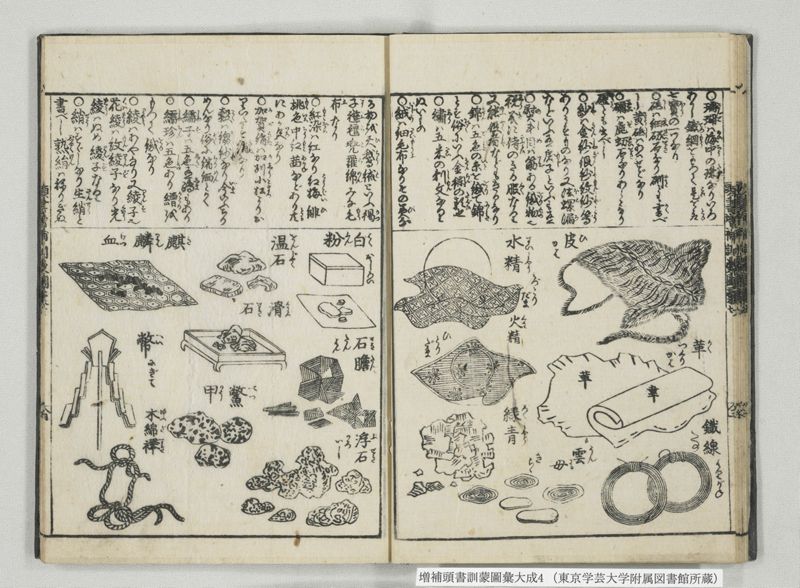
皮(ひ)《割書:かは》 革(かく)《割書:つくり| かは》 韋 革 鉄線《割書:はりがね》
水精(すいしやう)《割書:みづとり| だま》 火(くわ)精《割書:ひ|とり|だま》 緑青(ろくしやう) 雲母(うんも)《割書:き|らゝ》
【左丁下段挿絵】
白粉(はくふん)《割書:おしろい》 石膽(せきたん)《割書:たん|はん》 浮石(ふせき)《割書:かろ|いし》
温石(をんじやく) 滑石(くわつせき) 鱉甲(べつかう)
麒麟血(きりんけつ) 幣(へい)《割書:にぎて》 木綿襷(ゆふだすき)
現代語訳
【右丁上段】
○珊瑚は海中の宝石で、色は赤い。鉄の網を使ってこれを採取する。七宝の一つである。
○砥は細かい砥石である。硎とも書く。黄砥は合砥のことである。
○礪は粗い砥石である。荒砥のことで、磑とも書く。
○紗は金紗、銀紗、紋紗などがあり、薄い織物である。また法螺漏や戻子というものもある。
○熨斗目は縞模様のある織物である。祝い事の際に武士が着る服で、能役者なども着用する。
○錦は五色の糸を織って作る。俗にいう金襴の類である。
○繍は五色の刺繍文様である。縫い物のこと。
○絨は細かい毛織物である。その美しいものを天鵞絨(ビロード)という。褐子、氆氇、兜羅綿はみな毛織物である。
【左丁上段】
○紅染は紅色である。紅梅、緋、桃色、中紅、茜などがあり、ともに赤色である。
○加賀絹は加州小松で織られる絹である。
○縠は縐紗である。今いうちりめんのことで、俗に縮緞と書く。
○繻子は五色があり、縞模様もある。
○繻珍は五色があり、蚕糸を使って織る。
○綾はあや織りである。また綾子(りんず)でもある。花綾は紋綾子で、光綾は滑らかな綾子である。
○綃はすずしという織物である。生綃と書くべきで、熟絹は練り絹のことである。
【挿絵】
皮《かわ》 革《作り革》 韋革 針金
水晶《水取り玉》 火精《火取り玉》 緑青 雲母《きらら》
白粉《おしろい》 石膽《胆礬》 浮石《軽石》
温石 滑石 鼈甲
麒麟血 幣《にぎて》 木綿襷
英語訳
【Right Page Upper Section】
○Coral is a marine gem that is red in color. It is harvested using iron nets. It is one of the seven treasures.
○Whetstone (to) is a fine grinding stone. It can also be written as kei. Yellow whetstone (ōto) refers to finishing stones.
○Grindstone (rei) is a coarse grinding stone. It refers to rough stones and can also be written as arato.
○Gauze (sha) includes gold gauze, silver gauze, patterned gauze, and others - all thin fabrics. There are also types called hora-ro and modoshi.
○Noshime is a striped textile. It is formal wear for samurai on celebratory occasions, and is also worn by Noh actors.
○Brocade (kin) is made by weaving threads of five colors. It is similar to what is commonly called gold brocade (kinran).
○Embroidery (shū) refers to decorative stitching in five colors. It means needlework.
○Felt (jū) is fine woolen cloth. The finest quality is called velvet (birōdo). Kassu, fura, and toramen are all woolen fabrics.
【Left Page Upper Section】
○Crimson dyeing (momizome) produces red colors. Varieties include plum-red, scarlet, peach, medium red, and madder - all red colors.
○Kaga silk is silk woven in Komatsu, Kaga Province.
○Koku is crinkled gauze. It refers to what is now called chirimen (crepe), commonly written as chirimendan.
○Shusu (satin) comes in five colors and also has striped patterns.
○Shuchin comes in five colors and is woven using silk threads.
○Twill (ryō) is diagonal weave. It is also called ayako (rinzu). Flower twill is patterned rinzu, and lustrous twill is smooth rinzu.
○Shō is a cool fabric called suzushi. It should be written as raw shō, while cooked silk refers to degummed silk.
【Illustrations】
Hide《leather}} Processed leather《tanned hide}} Tanned leather Wire
Crystal《water crystal}} Fire crystal《fire crystal}} Verdigris Mica《glitter}}
White powder《face powder}} Chalcanthite《copper sulfate}} Pumice{{light stone}}
Heated stone Talc Turtle shell
Dragon's blood Sacred streamers{{nigite}} Cotton sash