翻刻
籍(せき)と云今いふ帳(ちやう)なり
○暦(こよみ)は黄帝(くはうてい)つくり給ふとも
いふ又/容成(ようせい)つくるとも又/義(ぎ)
和(くは)つくるともいへり
○符(ふ)は符契(ふけい)符信(ふしん)といふ
わりふなり竹(たけ)長(なが)さ六寸にし
て分(わけ)て相合(あいあはせ)て信(しん)とす又/木(き)
にてもつくるなり
○几(き)は今いふつくゑなりまた
脇息(けうそく)なり憑几(へうき)なり又/机(き)に
つくる
○筭(さん)は長(なが)さ六寸/暦数(れきすう)を
もつてはかるものなり黄帝(くはうてい)
のとき《振り仮名:■首|ゑいしゆ》【注】算数(さんすう)をつくる
筭(さん)はあやまりなり算(さん)につくるべし
○蝋燭(らうそく)は蝋(らう)に油(あぶら)をいれてね
【左丁上段】
り竹(たけ)の筒(つゝ)に入かため燭(ともしび)とす
銀蝋燭(ぎんらうそく)あり朱蝋燭(しゆらうそく)あり
○如意(によゐ)は木竹(きたけ)又/象牙(ざうげ)玳瑁(たいまい)
などにてつくる物(もの)をわすれ
まじきために書付(かきつけ)手(て)にもつ
物(もの)なり文殊(もんじゆ)の持(もち)給ふ物なり
○翳(ゑい)は天子(てんし)のうしろにかざす
物なり女嬬(によじゆ)の役(やく)なり
○払塵(ふつぢん)ははいはらひなり禅家(ぜんけ)
には払子(ほつす)といふ揮指(しき)する具(ぐ)
なり麈(しゆ)の尾(を)白熊(はぐま)にて作(つくる)
○案(あん)は今(いま)いふ几(つくゑ)なりふつくゑ
又/卓(しよく)ともいふ几案(きあん)ともいふ
○鐘(しやう)つきかねは十二/調子(てうし)の中(うち)
黄鐘(わうしき)の調子(てうし)をよしとすよ
つて鐘(しやう)といふ
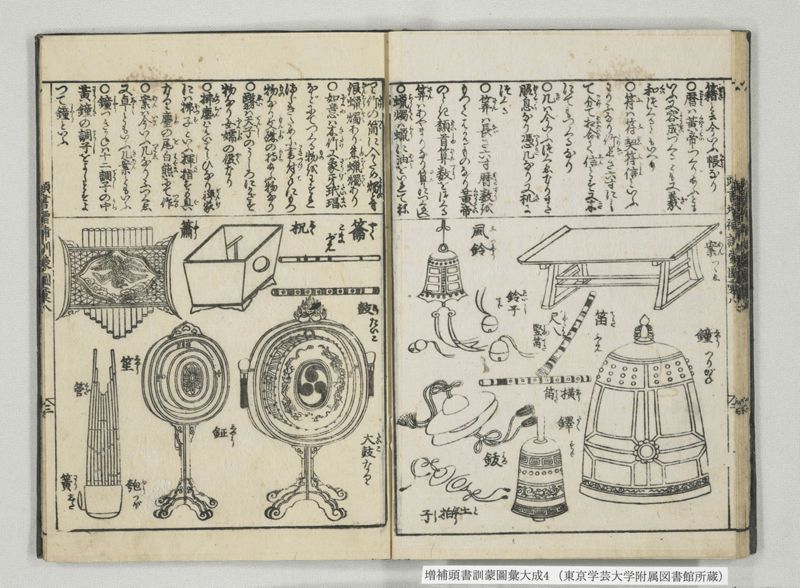
【右丁下段挿絵】
案(あん)《割書:つくゑ》 鍾(しやう)《割書:つりがね》
風鈴(ふりやう) 鈴子(れいし)《割書:すゞ》 笛(てき)《割書:ふえ》 尺八(しやくはち) 竪笛(しゆてき) 横笛(くはうてき)
鐸(たく)《割書:すゞ》 鈸(はつ) 土拍子(とびやうし)
【左丁下段挿絵】
籥(やく)《割書:こまぶえ》 柷(しく) 鼓(こ)《割書:たいこ》 太鼓(たいこ)なり 鉦(しやう)
簫(しやう) 笙(しやう) 管(くだ) 匏(ほう)《割書:つぼ》 簧(わう)《割書:した》
【注 ■は「柰+頁」・「頴」「䫴」ヵ・「■首」は「隷首」の誤ヵ】
現代語訳
籍と言い、現在でいう帳簿のことである。
○暦は黄帝が作ったとも言う。また容成が作ったとも、義和が作ったとも言われている。
○符は符契、符信という割り符のことである。竹を長さ六寸にして分けて、互いに合わせて信用の証とする。また木でも作る。
○几は現在でいう机のことである。また脇息(肘掛け)のことである。憑几ともいう。また机とも書く。
○算は長さ六寸で、暦数(計算)を用いて計算するものである。黄帝の時代に隷首が算数を作った。「筭」は誤りで、「算」と書くべきである。
○蝋燭は蝋に油を入れて練り、竹の筒に入れて固めて燭(明かり)とする。銀蝋燭や朱蝋燭がある。
【左丁上段】
○如意は木竹、また象牙や玳瑁などで作る。物事を忘れないために書き付けて手に持つものである。文殊菩薩が持っているものである。
○翳は天子の後ろに掲げるものである。女官の役目である。
○払塵は塵払いのことである。禅宗では払子という。指揮をする道具である。麈(大鹿)の尾や白熊(ヤクの毛)で作る。
○案は現在でいう机のことである。文机、また卓とも言い、几案とも言う。
○鐘(撞き鐘)は十二調子の中で黄鐘の調子を良しとする。よって鐘という。
【右丁下段挿絵】
案《机》 鐘《釣鐘》
風鈴 鈴子《鈴》 笛《笛》 尺八 竪笛 横笛
鐸《鈴》 鈸 土拍子
【左丁下段挿絵】
籥《小笛》 柷 鼓《太鼓》(太鼓である) 鉦
簫 笙 管 匏《壺》 簧《舌》
英語訳
They are called seki, which refers to what we now call account books.
○Calendars are said to have been created by the Yellow Emperor. It is also said that Yōsei created them, or that Gika created them.
○Fu refers to split tallies called fukei or fushin. Bamboo is cut to six sun in length and split, then matched together as proof of trust. They are also made of wood.
○Ki refers to what we now call desks. They are also armrests called kyōsoku, or hyōki. They are also written as ki (desk).
○San (counting rods) are six sun in length and are used for calculation with calendar numbers. In the time of the Yellow Emperor, Reishu created arithmetic. "San" (筭) is incorrect and should be written as "san" (算).
○Candles are made by mixing oil into wax, kneading it, putting it in bamboo tubes and hardening it to make light. There are silver candles and vermillion candles.
【Left Page Upper Section】
○Ruyi are made of wood, bamboo, ivory, or tortoiseshell. They are items held in the hand with notes written on them so as not to forget things. They are what Manjusri Bodhisattva holds.
○Ei are items held up behind the emperor. This is the duty of court ladies.
○Futsujin refers to dusters. In Zen Buddhism they are called hossu. They are tools for giving directions. They are made from the tails of zhu deer or white yak hair.
○An refers to what we now call desks. They are also called writing desks or tables, and are also called ki-an.
○Bells (struck bells) use the ōshiki tone among the twelve tones as the best. Therefore they are called shō.
【Right Page Lower Illustration】
An《desk》 Shō《hanging bell》
Wind chime Reishi《bell》 Teki《flute》 Shakuhachi Shuteki Ōteki
Taku《bell》 Hatsu Clay clappers
【Left Page Lower Illustration】
Yaku《small flute》 Shiku Ko《drum》(which is taiko) Shō
Shō Shō Kan Hō《gourd》 Ō《reed tongue》