翻刻
【右丁上段】
○肋(あはらほね)は釈名(しやくみやう)に肋(ろく)は勒(ろく)なり
五 臓(ざう)を撿勒するゆゑん也
かたはらぼねたすけのほね
あばらぼね液(えき)【注】脇(けう)脋(けう)なり
びにわきなり
○心(しん)は五 臓(ざう)のうちにして
一身(いつしん)の主(しゆ)なり胸(むね)のあいだ
にあり色(いろ)あかし火(ひ)なり
○肺(はい)は五 臓(ざう)のうちなり胸(むね)
のあいたにあり蓮花(れんげ)をうつ
むけたるかたちのごとし
六 葉(よう)両耳(りやうに)あり孔(あな)ありて
よく声(こゑ)をいだし痰(たん)を生(しやう)
ず色白し金(かね)なり
○脾(ひ)は五 臓(ざう)のうちなり土
なり食(しよく)ふくろなり色(いろ)黄(き)
【左丁上段】
なり腹(はら)の中脘(ちうくはん)にあり
○腎(じん)は五 臓(ざう)のうちなり
腰(こし)にあり水(みづ)なり色(いろ)くろ
しかたち卵(たまご)のごとし左(ひだり)
にあるは腎(じん)なり右(みぎ)に有
は命門(めいもん)なり
○肝(かん)は五 臓(ざう)のうちなり
左(ひだり)のわきにあり木(き)なり
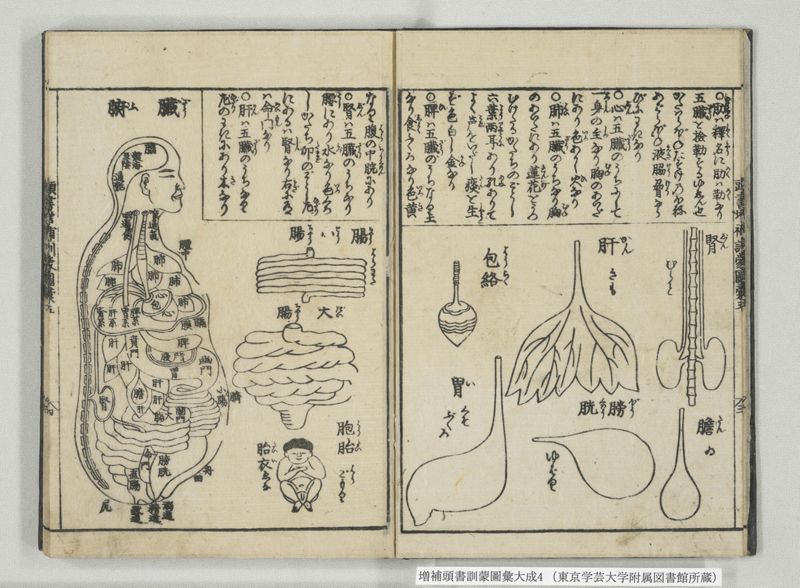
【右丁下段挿絵】
腎(じん)《割書:むらと》 膽(たん)《割書:ゐ》
肝(かん)《割書:きも》 《割書:膀(ぼう)|胱(くはう)》《割書:ゆばり》
包絡(はうらく) 胃(い)《割書:くそ| ぶくろ》
【左丁下段挿絵】
腸(ちやう)《割書:はらわた》 胞胎(はうたい)《割書:はう| ごもり》
《割書:小(せう)|腸(ちやう)》 《割書:大(だい)|腸(ちやう)》 胎衣(たいい)《割書:ゑな》
【おおよそ上から下に右から左の順に】
臓(ざう)
腑(ふ)
脳 髓海 至陰 通骶 喉通気 咽通食
膻中 肺 肺 肺 肺 肺 肺 心包 心
脾系 胃系 肝系 腎系
膈膜 脾 脂■【月+曼】 賁門 胃 幽門
肝 肝 肝 肝 肝 膽 肝 腎
臍 小腸 闌門 大腸
丹田 膀胱 命門 直腸
溺道 精道 穀道 尻
【注 「液」は寛文版は「腋」】
現代語訳
【右丁上段】
○肋(あばら骨)は『釈名』に「肋は勒なり、五臓を検束・統制するためである」とある。
脇の骨、助けの骨、
あばら骨。液(わき)【注】脇、脋もまた
脇である。
○心は五臓の中にあって
一身の主である。胸の間
にある。色は赤く、火である。
○肺は五臓の中にある。胸
の間にあり、蓮の花を下向き
にしたような形である。
六葉両耳があり、穴があって
よく声を出し、痰を生じ
る。色は白く、金である。
○脾は五臓の中にある。土
である。胃袋である。色は黄色
【左丁上段】
である。腹の中脘にある。
○腎は五臓の中にある。
腰にあり、水である。色は黒
く、形は卵のようである。左
にあるのは腎である。右にある
のは命門である。
○肝は五臓の中にある。
左の脇にある。木である。
【右丁下段挿絵】
腎(むらと)、胆(い)
肝(きも)、膀胱(ゆばり)
包絡、胃(くそぶくろ)
【左丁下段挿絵】
腸(はらわた)、胞胎(ほうごもり)
小腸、大腸、胎衣(えな)
【おおよそ上から下に右から左の順に】
臓
腑
脳、髄海、至陰、通骶、喉通気、咽通食
膻中、肺、肺、肺、肺、肺、肺、心包、心
脾系、胃系、肝系、腎系
横隔膜、脾、脂膜、噴門、胃、幽門
肝、肝、肝、肝、肝、胆、肝、腎
臍、小腸、闌門、大腸
丹田、膀胱、命門、直腸
尿道、精道、肛門、尻
【注 「液」は寛文版では「腋」】
英語訳
【Right Page Upper Section】
○Ribs (abara bone) - according to "Shakumyō" (Explaining Names), "ribs are restraints, because they constrain and control the five organs."
Side bones, supporting bones,
ribs. Armpit fluid 【Note】 armpit, underarm are also
armpits.
○The heart is among the five organs and
is the master of the entire body. It is located between
the chest. Its color is red, it is fire.
○The lungs are among the five organs. They are in the chest
area and shaped like
an upturned lotus flower.
They have six lobes and two ears, with holes that
can produce voice and generate
phlegm. The color is white, it is metal.
○The spleen is among the five organs. It is earth.
It is the stomach. Its color is yellow
【Left Page Upper Section】
It is located in the middle epigastrium of the abdomen.
○The kidneys are among the five organs.
They are in the lower back, they are water. The color is black
and the shape is like an egg. What is on the left
is the kidney. What is on the right
is the gate of life (meimon).
○The liver is among the five organs.
It is on the left side. It is wood.
【Right Page Lower Section Illustration】
Kidney (murato), gallbladder (i)
Liver (kimo), bladder (yubari)
Pericardium, stomach (kusobukuro)
【Left Page Lower Section Illustration】
Intestines (harawata), womb (hōgomori)
Small intestine, large intestine, placenta (ena)
【Generally from top to bottom, right to left order】
Organs
Bowels
Brain, marrow sea, ultimate yin, sacral passage, throat for air, pharynx for food
Chest center, lung, lung, lung, lung, lung, lung, pericardium, heart
Spleen system, stomach system, liver system, kidney system
Diaphragm, spleen, fat membrane, cardia, stomach, pylorus
Liver, liver, liver, liver, liver, gallbladder, liver, kidney
Navel, small intestine, ileocecal valve, large intestine
Elixir field, bladder, gate of life, rectum
Urinary tract, seminal duct, anus, buttocks
【Note: "eki" (fluid) is written as "waki" (armpit) in the Kanbun edition】