翻刻
【右丁上段】
○幞(ぼく)は後周(ごしうの)武帝(ふてい)のつくり
はじめ給ふ唐人(とうじん)のかむり也
幅巾(ひとはばのぬの)を戴(たい)して四/脚(あし)を出す
○緌(い)は両方(りやうはう)耳(みゝ)をおほふ物なり
冠(かむり)の紐(ひも)なり領の下に垂(たる)る物也
○巾(きん)は頭巾(つきん)なりその製(せい)品(しな)
おなじ方(けた)なるを巾(きん)といひ円(まとか)
なるを帽(ばう)と云ともいへり
○帽(ばう)は頭衣(づい)なり唐(もろこし)には上
官(くはん)より下官(げくはん)にいたるまでも
帽(はう)をきる冠(かむり)の下(した)にきる物なり
○帽子(もうす)は僧(そう)の冠(かむり)なり仏会(ぶつゑ)
法事(はうじ)のとききるなり
○笏(こつ)は手板(しゆはん)なり天子(てんし)は玉(たま)
諸候(しよこう)【侯の誤】は象牙(さうげ)太夫(たいふ)は魚須(うをのひれ)文(ま)
竹(だけ)士(し)は木(きに)籀文(こりんじ)をほりてみな
用(もち)ゆ官人(くはんにん)の手(て)にもつ物なり
○烏帽(うばう)は紙(かみ)にてつくり漆(うるし)に
【左丁上段】
てぬるなり左折(ひたりをり)は侍従(じしう)以上
着(ちやく)す右折(みきをり)は五 位(い)已上(いしやう)これを
着(ちやく)す侍従(じじう)以上(いじやう)は糸(いと)の緒(を)四
位(い)已下(いげ)は紙(かみ)の緒(を)にて結(むす)ぶ
○袞(こん)は天子(てんし)の御衣裳(おんいしやう)なり
一に竜(れう)二に山(さん)三に花虫(くはちう)四に
火(くは)五に虎(とら)以上 衣(ゐ)に有六に
藻(さう)七に粉米(ふんべい)八に黼(ほ)九に黻(ふつ)
以上 裳(しやう)にありこれを九/章(しやう)
の御衣(ぎよい)といふ
○裳(しやう)は上(うへ)を衣(い)といひ下(した)を
裳(しやう)といふ裳(しやう)の紋(もん)の事/藻(さう)
粉米(ふんべい)黼(ほ)黻(ふつ)なり九 章(しやう)の内(うち)
なり天子(てんし)御衣(きよい)の裳(しやう)なり
○珮(はい)は官人(くはんにん)の腰(こし)におぶるもの
なり上(かみ)に双衡(さうかう)あり衡(かう)の長(なが)
さ五寸ひろさ一寸 下(した)に双璜(さうくはう)
あり璜(くはう)のわたり三寸也/蠙(ひん)
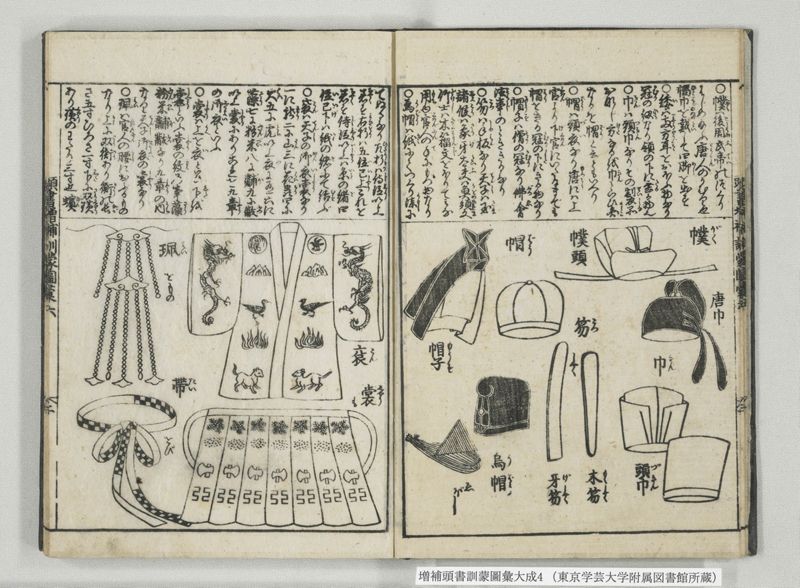
【右丁下段挿絵】
幞(ぼく) 唐巾 巾(きん) 頭巾(づきん)
幞頭 笏(こつ)《割書:しやく》 木笏(もくしやく) 牙笏(げしやく)
帽(ばう) 帽子(もうす) 烏帽(うばう) 《割書:ゑ| ぼ| し》
【左丁下段挿絵】
袞(こん) 裳(しやう)《割書:も|》
珮(はい)《割書:をもの》 帯(たい)《割書:をび》
現代語訳
【右丁上段】
○幞は後周の武帝が作り始めた中国人の冠である。
一幅の布を頭に載せて四つの脚を出す。
○緌は両方の耳を覆う物である。
冠の紐である。襟の下に垂れる物である。
○巾は頭巾である。その作りで品が
同じ方形のものを巾といい、円形
のものを帽というともいう。
○帽は頭に着ける衣である。中国では上級
官吏から下級官吏に至るまで
帽を着ける。冠の下に着ける物である。
○帽子は僧侶の冠である。仏会や
法事の時に着けるものである。
○笏は手板である。天子は玉製、
諸侯は象牙製、太夫は魚のひれや文
竹製、士は木製に古い文字を彫って皆
用いる。官人が手に持つ物である。
○烏帽子は紙で作り漆で
【左丁上段】
塗るものである。左折は侍従以上が
着ける。右折は五位以上がこれを
着ける。侍従以上は糸の緒、四
位以下は紙の緒で結ぶ。
○袞は天子の御衣裳である。
一に竜、二に山、三に花虫、四に
火、五に虎、以上は衣にある。六に
藻、七に粉米、八に黼、九に黻、
以上は裳にある。これを九章
の御衣という。
○裳は上を衣といい、下を
裳という。裳の紋のこと―藻、
粉米、黼、黻である。九章の内の
ものである。天子の御衣の裳である。
○珮は官人が腰に帯びるもの
である。上に双衡があり、衡の長
さは五寸、幅は一寸。下に双璜が
ある。璜の幅は三寸である。蠙
【右丁下段挿絵】
幞 唐巾 巾 頭巾
幞頭 笏《しゃく》 木笏 牙笏
帽 帽子 烏帽子《えぼし》
【左丁下段挿絵】
袞 裳《も》
珮《おもの》 帯《おび》
英語訳
【Right Page Upper Section】
○The "boku" is a Chinese cap that Emperor Wu of Northern Zhou first created.
It consists of a single width of cloth worn on the head with four legs protruding.
○The "i" is something that covers both ears.
It is the cord of the cap. It is what hangs down below the collar.
○The "kin" is a head covering. In its construction, items of
the same square shape are called "kin," and round
ones are also called "bou" (hat).
○The "bou" is head clothing. In China, from high-ranking
officials to low-ranking officials,
all wear hats. It is worn under the cap.
○The "boushi" is a monk's cap. It is worn during Buddhist gatherings
and religious services.
○The "kotsu" is a hand tablet. The emperor uses jade,
feudal lords use ivory, ministers use fish fins or patterned
bamboo, and samurai use wood with ancient characters carved on it—all
use them. It is what officials hold in their hands.
○The "eboshi" is made of paper and painted with lacquer.
【Left Page Upper Section】
The left-folded type is worn by courtiers of chamberlain rank and above.
The right-folded type is worn by those of fifth court rank and above.
Chamberlain rank and above use silk cords, while fourth
rank and below tie them with paper cords.
○The "kon" is the emperor's ceremonial robes.
First: dragon, second: mountain, third: flowering insects, fourth:
fire, fifth: tiger—these are on the upper garment. Sixth:
seaweed, seventh: rice grains, eighth: fu (ax pattern), ninth: futsu (paired pattern),
these are on the lower garment. This is called the nine-symbol
imperial robe.
○"Shou" refers to the upper part being called "i" (garment) and the lower part being called
"shou" (skirt). Regarding the patterns on the skirt—seaweed,
rice grains, fu, and futsu. These are within the nine symbols.
It is the skirt of the emperor's ceremonial robe.
○"Hai" is what officials wear at their waist.
Above are twin horizontal pieces, with each horizontal piece being five
sun long and one sun wide. Below are twin curved pieces.
Each curved piece spans three sun. Hin
【Right Page Lower Section Illustration】
Boku Tang headwrap Kin Head covering
Boku-tou Kotsu《shaku》 Wooden tablet Ivory tablet
Bou Boushi Eboshi《eboshi》
【Left Page Lower Section Illustration】
Kon Shou《mo》
Hai《omono》 Obi《obi》