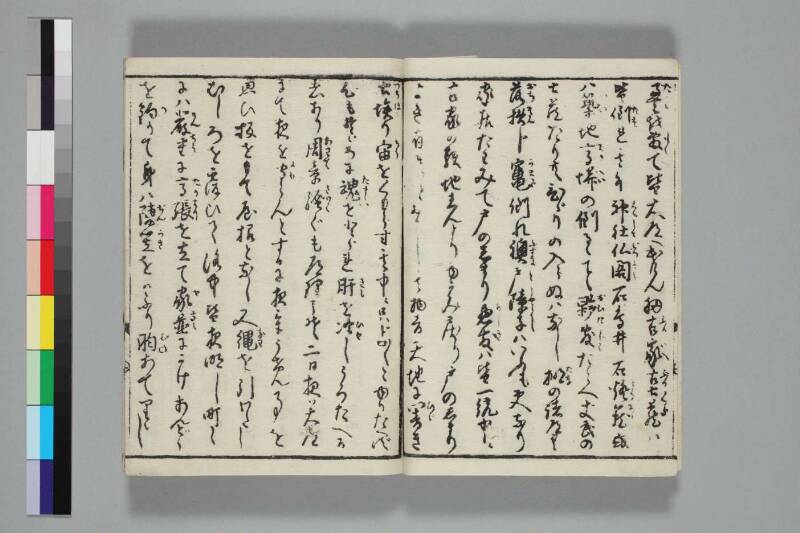
翻刻
畳(たゝみ)を敷(しい)て皆大道へ出けん扨 古家(ふるいへ) 古土蔵(ふるくら)は
皆 倒(たを)れ其外 神社仏閣(しんしやぶつかく)石鳥井 石 灯籠(とうろう)或は
は築(つい)地 高塀(たかへい)の倒るゝこと夥敷(おびたゝじく)たとへ丈武の
土蔵たりともひゞりの入らぬはなし棚(たな)の諸道具
落損(おちそん)じ竈(かまど)倒れ襖(ふすま)戸(と)障子(しやうじ)はいふも更なり
家居たわみて戸のしまり悪敷(あしき)は皆一統中に
古家の類地しんよりゆかみ戻り戸のしまり
よき有もいとおかし其物音天地に響(ひゞ)き
土埃(つちほこ)り宙(ちう)をくもらす其中に只ドロ〳〵ゆりたへず
心もそゞろに魂(たましい)をとられ肝(きも)を冷(ひや)しうろたへる
者あり周章(あわて)騷(さはく)#1ぐも道理こそ二日夜は大道
にて夜を守(まも)らんとするに夜気うけん事を
思ひ板をもて屋根となし又 縄(なわ)を引わたし
むしろを覆ひて洛中皆夜明し町〻
には厳重(けんちう)に高張(たかはり)を立て家並(やなみ)にかけあんどう
を釣(つ)りて身は陣笠(ぢんかさ)をかふり胸(むね)あてりゝし
現代語訳
畳を敷き、皆が大通りへ出たのであった。さて、古い家屋や古い土蔵はことごとく倒れ、そのほか神社仏閣、石造りの鳥居、石灯籠、あるいは築地塀、高塀が倒れることおびただしく、たとえ頑丈な土蔵であっても、ひびの入らないものはなかった。棚の諸道具は落ちて壊れ、竈は倒れ、襖・戸・障子については言うまでもない。家屋がゆがんで戸の建て付けが悪くなったのは皆一様であった。その中でも、古い家の類はもともと地震以前からゆがんでいたために、かえって戸の建て付けが良いものもあり、それがまた何とも奇妙なことであった。その物音は天地に響き渡り、土埃が宙を曇らせた。
その中でただひたすらドロドロと揺れが止まず、心も乱れ、魂を奪われ、肝を冷やし、うろたえる者もあり、周章狼狽するのも無理からぬことである。二日の夜は、大通りで夜を明かそうとしたが、夜の冷気を受けることを思い、板をもって屋根となし、また縄を引き渡してむしろを覆い、洛中みな夜明かしをした。各町々では、厳重に高張提灯を立て、家並みに掛け行灯を吊るし、身には陣笠をかぶり、胸当てをつけて(続く)
英語訳
...laying out tatami mats, everyone made their way out onto the main streets. As for old houses and old earthen storehouses (dozō), all had collapsed. Furthermore, shrines and temples, stone torii gates, stone lanterns, mud-plastered walls (tsuiji-bei), and tall fences fell in tremendous numbers. Even the sturdiest of storehouses was not spared cracks. Shelved goods fell and were damaged, kitchen stoves toppled, and sliding doors (fusuma), wooden doors, and paper screens (shōji) needless to say suffered damage. It was universally the case that houses warped and doors no longer shut properly. Among all this, there was a curious irony: old houses that had already been warped before the earthquake sometimes found their doors fitting better than before — and this too was a strange and amusing thing. The sounds of destruction echoed throughout heaven and earth, and clouds of dust darkened the air.
All the while, the low rumbling continued without pause; minds were thrown into disarray, souls seemed stolen away, and people were chilled to the bone with fear — those who panicked and fell into a frenzy were hardly to be blamed. On the night of the 2nd, people intended to keep watch through the night on the main streets, but thinking of how they might suffer from the cold night air, they used boards to fashion makeshift roofs, stretched ropes across and covered them with straw mats, and the entire city of Kyoto spent the night outdoors. In each neighborhood, tall lanterns (takaharichiochin) were solemnly erected, hanging lanterns (andō) were strung along the rows of houses, people donned warrior's sedge helmets (jinkasa) and chest armor... (continues)