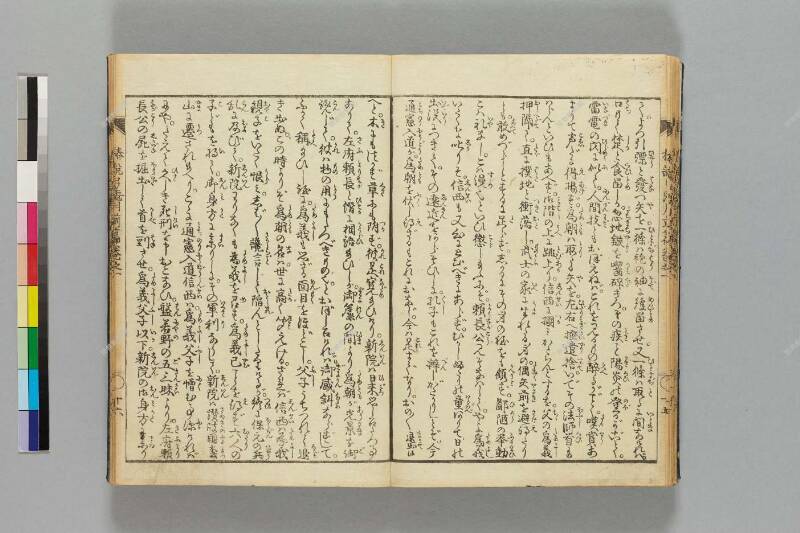
翻刻
【右丁】
て。よつ引摽(ひやう)と発(はな)つ矢(や)を。一条(ひとすぢ)は袍(はう)の袖(そで)に縫留(ぬひとめ)させ。又 一条(ひとすぢ)は取(と)るに間(いとま)なければ。
口(くち)もて楚(しか)と食留(くひとめ)しか。忽地(たちまち)鏃(やじり)を嚼碎(かみくだ)きつ。その疾(とき)こと陽炎(かきろひ)の登(のぼ)かごとく。
雷電(いなずま)の閃(ひらめく)に似(に)て。人間技(にんげんわざ)ともおぼえねば。これを見るもの酔(えへ)るがごとく。嘆賞(たんせう)あ
まりて声(こゑ)だに得揚(えあげ)ず。為朝(ためとも)は取(とり)たる矢(や)を。左右(ひだりみぎ)へ掻(かい)遣捨(やりすて)。いでその法師(ほふし)首(くび)給
わらんといひもあへず。御階(みはし)の上(うへ)に跳上(とびあか)り。信西(しんせい)に掴(つか)みかゝらんとするを。父(ちゝ)の為義(ためよし)
押隔(おしへだて)て。直(たゞ)に僕地(はた)と衝落(つきおと)し。武士(ものゝふ)の家(いえ)に生(うま)れたる身の。偶(たま〳〵)矢前(やさき)を避得(さけえ)たり
とも。敢(あへて)めづらしとするに足(た)らず。しかるにその身の程をも顧(かへりみ)ず。鄙陋(ひろう)の挙動(ふるまひ)
こは礼(いや)なし。こは漫(すゞろ)也といひ懲(こら)し給ふにぞ。頼長公(よりながこう)見そなわして。やよ為義(ためよし)
いたくな叱(しか)りそ。信西(しんせい)も又心にとむべきにあらず。むかしふたりの童(わらわべ)ありて日の
出没(いでいり)につきて。その遠近(ゑんきん)をあらそひしに。孔子(くし)もこれを弁(べん)しがたかりしとぞ。今
道憲入道(みちのりにうどう)が。為朝(ためとも)を伏(ふく)し得(え)ざるもこれにおなじ。今は是(これ)までなり。おの〳〵退出(まうで)候
【左丁】
へと。木(き)にもつかず。草(くさ)にも附(つか)ず。彼是(かれこれ)寛(なだめ)給ひけり。新院(しんいん)は日来(ひごろ)思し召たつ事
ありて。左府頼長(さふよりなが)と潜(ひそか)に相語(かたらひ)給ひしが。御簾(ぎよれん)の間(ひま)より為朝(ためとも)が光景(ありさま)を御(ご)
覧(らん)じて。彼(かれ)は物(もの)の用(よう)にもたつべきもの也。とおぼし召ければ。御感斜(ぎよかんなゝめ)ならずして。
ふかく称(たゝへ)給ひし程に。為義(ためよし)も思ざる面目(めんもく)をほどこし。父子(ふし)うちつれて退(しりぞ)
き出ぬ。この時よりよりぞ為朝(ためとも)の名(な)は。世に高(たか)く聞(きこ)えける。されば信西(しんせい)は為義(ためよし)
親子(おやこ)をいたく恨(うら)み。しば〳〵讒言(さかしらごと)して陥(おとしいれ)んとしたりけるが。終(つひ)に保元(ほうげん)の兵(ひやう)
乱(らん)に及(およ)びて。新院(しんいん)わりなくも為義(ためよし)を召(め)す。為義(ためよし)已(やむ)ことを得(え)ず六人(むたり)の
子(こ)どもを抱(い)て。御身方(おんみかた)に参(まい)りしに。その軍(いくさ)利(り)なうして。新院(しんいん)は讃岐国(さぬきのくに)松(まつ)
山(やま)に遷(うつ)され給へり。こゝに道憲入道(みちのりにうどう)信西(しんせい)は。為義父子(ためよしふし)を憎(にく)む事 深(ふか)ければ
にや。たえて久(ひさ)しき死刑(しけい)を申おこなひ。般若野(はんにやの)の五三昧(ごさんまい)より。左府(さふ)頼(より)
長(なが)公(こう)の屍(しかばね)を堀出(ほりいだ)して首(かうべ)を刎(はね)させ。為義父子(ためよしふし)以下(いか)。新院(しんいん)の御身方(おんみかた)に参(まゐ)り
現代語訳
【右丁】
よっ引いて「ひゅっ」と放った矢を、一本は袍(ほう)の袖に縫い留め、もう一本は取る間もなかったので、口でしっかりと食い留め、たちまち鏃(やじり)を噛み砕いた。その素早いこと、陽炎が立ち上るがごとく、稲妻がひらめくに似て、人間業とも思われなかった。これを見る者は酔ったようになり、感嘆のあまり声すら上げられなかった。
為朝は取った矢を左右に掻い捨て、「さあ、その法師の首をいただこう」と言うやいなや、御階(みはし)の上へ飛び上がり、信西に掴みかかろうとするのを、父の為義が押し隔てて、まともに地面へ突き落とし、「武士の家に生まれた身が、たまたま矢先を避けられたからといって、決してめずらしいとするには足らぬ。それなのにその身の程もわきまえず、卑しく礼を失した振る舞い、これは無礼である、これは軽率である」と諭し懲らしめなさった。
すると頼長公がご覧になって、「やや、為義よ、そうきつく叱るな。信西もまた心に留めるには及ばぬ。昔、二人の童があって、日の出入りについてその遠近を争ったが、孔子もこれを弁じかねたという。今、道憲入道(信西)が為朝を伏し得なかったのもこれと同じこと。今はこれまでじゃ。おのおの退出なされよ」と、木にも付かず草にも付かず(どちらの側にも肩入れせず)、穏やかになだめなさった。
【左丁】
新院(崇徳上皇)は、日ごろお考えになっていたことがあって、左府・頼長と密かに語らっておられたが、御簾の間から為朝の様子をご覧になって、「あれは物の役に立てられる者だ」とお思いになったので、深くお感じになり、手放しでお褒めになった。そのため為義も思いがけない面目を施し、父子ともに連れ立って退き出た。
この時より、為朝の名は世に高く聞こえるようになった。
しかし信西は為義親子をひどく恨み、しばしば讒言をして陥れようとしていたが、ついに保元の乱に及んで、新院は無理にも為義を召し出された。為義はやむを得ず、六人の子どもを率いて御味方に参じたが、その軍は利なく(敗北し)、新院は讃岐国松山に遷され申した。
ここに道憲入道・信西は、為義父子を憎むこと深かったためか、久しく絶えていた死刑を申し行い、般若野の五三昧(墓地)より左府・頼長公の屍を掘り出して首を刎ねさせ、為義父子以下、新院の御味方に参じた……
英語訳
【Right Page】
He drew the bow fully and released two arrows with a sharp "whish." One arrow he caught by sewing it into the sleeve of his court robe, and the other, with no time to reach for it, he seized in his mouth and bit—instantly crushing the arrowhead between his teeth. His speed was like heat shimmer rising into the air, like a flash of lightning, and none could believe it was humanly possible. Those who witnessed it were left as if intoxicated, and such was their astonishment that they could not even raise their voices in exclamation.
Tametomo flung the caught arrows aside to left and right, and cried, "Now then, let me have that monk's head!"—barely finishing the words before he leapt up onto the steps of the palace and made to grapple with Shinzei. His father Tameyoshi thrust between them and knocked him straight to the ground, saying, "You were born into the house of a warrior. That you happened to dodge the tips of those arrows is nothing remarkable whatsoever. And yet, heedless of your station, this vulgar and shameful conduct—it is disgraceful, it is reckless!"—and thus he admonished and chastised him.
At this, Lord Yorinaga looked on and said, "Come now, Tameyoshi, do not scold him so harshly. Nor need Shinzei take it to heart. In ancient times, two children argued over whether the sun was nearer at rising or setting, and even Confucius could not settle the dispute. It is just the same that Michinori-nyūdō [Shinzei] could not best Tametomo. Let us leave it here. Everyone, withdraw," and thus, without taking sides with either party, he gently pacified them all.
【Left Page】
The Retired Emperor [Sutoku] had long harbored certain designs and had been conferring secretly with the Minister of the Left, Yorinaga. Peering through a gap in the blinds, he observed Tametomo's performance and thought, "That one can be put to good use." Deeply impressed, he praised Tametomo without reservation. Thus Tameyoshi, too, unexpectedly found his honor restored, and father and son withdrew together.
From this time forward, Tametomo's name became widely renowned throughout the land.
Yet Shinzei harbored a deep grudge against Tameyoshi and his son, and repeatedly sought to slander and destroy them. In the end, when the Hōgen Rebellion broke out, the Retired Emperor urgently summoned Tameyoshi. Having no choice, Tameyoshi gathered his six children and presented himself on the Retired Emperor's side. But the battle went against them, and the Retired Emperor was banished to Matsuyama in Sanuki Province.
Now, the lay monk Dōken—Shinzei—his hatred for Tameyoshi and his son ran so deep that he revived the long-suspended practice of capital punishment: he had the corpse of the Minister of the Left, Lord Yorinaga, dug up from the burial ground at Hannyano, and had his head severed. Then, Tameyoshi, his sons, and all others who had fought on the side of the Retired Emperor…