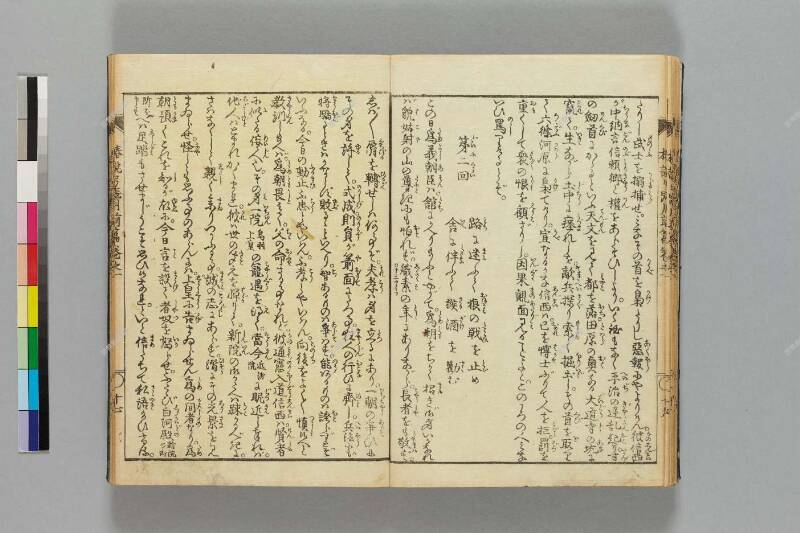
翻刻
【右丁】
たりし武士(ものゝふ)を搦捕(からめとら)せ。みなその首(かうべ)を梟(かけ)たりし悪報(あくほう)にやよりけん。彼(かの)信西(しんせい)
が中納言(ちうなごん)信頼卿(のぶよりきやう)と権(けん)をあらそひしより。いく程もなく平治(へいぢ)の逆乱(ぎやくらん)起(おこ)り。寸(すん)
の剣(けん)首(くび)にかゝるといふ天文(てんもん)を見て都(みやこ)を落(おち)。田原(たはら)の奥(おく)なる大道寺(だいどうじ)の抗(あな)に
竄(かくれ)て。生(いき)ながら土中(どちう)に瘞(うづま)れしを。敵兵(てきへい)探(さぐ)り索(もとめ)て堀出(ほりいだ)し。その首(くび)を取(と)り
て六條河原(ろくでふかわら)に梟(かけ)てけり。宣(うべ)【冝】なるかな信西(しんせい)は。己(おのれ)を博士(はかせ)ぶりて人を拒(こばみ)。罰(ばつ)を
重(おも)くして衆(もろ〳〵)の恨(うらみ)を顧(かへりみ)ざりし。因果(いんぐわ)覿面(まのあたり)見(み)ることよと。このころの人みな
いひ罵(のゝし)りけるとぞ。
第二回(だいにくわい) 《割書:路(みち)に迷(まよ)ふて狼(おほかみ)の戦(たゝかひ)を止(とゞ)め|舎(いへ)に伴(ともな)ふて猴酒(さるざけ)を勧(すゝ)む》
この日為義朝臣(ためよしあそん)は。舘(たち)にかへり給ふとやがて。為朝(ためとも)をちかく招(まね)き。御身いかなれ
ば貌姑射(はこや)の山の尊(たふと)きにも怕(おそ)れず。《振り仮名:織素|しよくそ|○十三をいふ)》の年(とし)にありながら。長者(ちやうしや)をも敬(うやまわ)ず。
【左丁】
しば〳〵唇(くちびる)を転(ひるがへ)せしは何事ぞ。夫(それ)孝(こう)は身を立(たつ)るにあり。一朝(いちちやう)の争(あらそ)ひに
その身を許(ゆる)して。式茂(のりしげ)。則員(のりかず)が箭面(やおもて)にたつ事。狂人(きやうじん)の行(おこな)ひに斉(ひと)し。兵法(へいほう)にも。
将(せう)驕(おご)るときはかならず。敗(やぶ)るゝといへり。智(ち)あるものは争(あらそ)わず。能(のう)あるものは誇(ほこ)らずとぞ
いふなる。今日の動止(ふるまひ)ふ忠(ちう)とやいわん。ふ孝(こう)とやいわん。向後(このゝち)よく〳〵慎(つゝしみ)候へと
教訓(きやうくん)し給へば。為朝(ためとも)畏(かしこ)みて。父(ちゝ)の命(おふせ)さる事なれど。彼(かの)道憲入道信西(みちのりにやうどうしんせい)は。賢者(けんしや)
に似(に)たる侫人(ねいじん)也。その身(み)一院(いちいん)《割書:鳥羽|上皇》の寵遇(ちやうぐう)を得(え)て。当今(とうきん)《割書:近衛|院》に眤近(ぢつきん)し奉れば。
他人(あだしびと)とまれかくまれ。彼(かれ)は世の聞(きこ)えを憚(はゞか)りて。新院(しんいん)の御かたへは疎(うと)かるべきに。
さはなくして親(したし)く参(まゐ)りつかふる事。誠(まこと)の志(こゝろざし)にあらず。潜(ひそか)にその光景(ありさま)を見
まゐらせ。怪(あや)しとも思ふ事のあらんには。上皇(じようくわう)に告(つげ)まゐらせん為(ため)の間者(まわしもの)なり。為(ため)
朝(とも)預(かね)てこれを知(し)るが故(ゆゑ)に。今日 言(こと)を設(まうけ)て者奴(しやつ)を怒(いか)らせ。ふたゝび白河殿(しらかわどの)《割書:新院|の御》
《割書:所を|申す》へは足蹈(あしぶみ)もさせまじうこそ思ひ候なれ。といと信(まめ)たちて私語(さゝやき)給ひさる。
現代語訳
【右丁】
……た武士たちを捕らえさせ、みなその首を晒したという悪報のせいであろうか。あの信西が中納言・信頼卿と権力を争うようになってから、いくほどもなく平治の乱が起こり、「寸の剣が首にかかる」という天文(天体の兆し)を見て都を落ち、田原の奥にある大道寺の穴に隠れて、生きながら土中に埋まっていたところを、敵兵が探し求めて堀り出し、その首を取って六条河原に晒したのであった。
もっともなことよ。信西は己を学者ぶって人を拒み、罰を重くして衆人の恨みを顧みなかった。因果応報、目の当たりに見ることよ——と、このころの人々は皆、口々に罵ったということだ。
---
**第二回 路に迷うて狼の戦いを止め、舎に伴うて猴酒を勧む**
この日、為義朝臣は館にお帰りになるとすぐに、為朝を近くに招き、「お前はどういうわけで、貌姑射(はこや)の山の尊い方(*「織素」、すなわち十三歳の者をいう)にありながら、長者をも敬わず、しばしば唇を翻して言い返したのは何事か。
【左丁】
そもそも孝とは身を立てることにある。一朝の争いにその身を投げ出して、式茂・則員の矢先に立ったこと、狂人の振る舞いに等しい。兵法にも『将が驕れば必ず敗れる』とある。知ある者は争わず、能ある者は誇らず、というものだ。今日の振る舞い、不忠とやいうべきか、不孝とやいうべきか。今後はよくよく慎みなされよ」と教訓なさったので、為朝は畏まって、「父上のおっしゃることはごもっともですが、あの道憲入道・信西は、賢者に似た佞人(ねいじん、へつらい者)でございます。その身は一院(鳥羽上皇)のご寵遇を得て、当今(近衛院)にも親しく近侍申し上げておりますから、他の人はともかく、彼は世間の聞こえを憚って、新院(崇徳上皇)の御方へは疎遠であるべきところ、そうではなく親しくお仕え申し上げていること、誠の志からではございません。ひそかにその様子を見て、怪しいと思うことがあれば、上皇に告げ申し上げるための間者(スパイ)でございます。為朝はかねてこれを知っていたがゆえに、今日あえて言葉を設けてあの者を怒らせ、再び白河殿(新院のご所をいう)へは足踏みもさせまいと思った次第でございます」と、いかにも真剣な様子でひそやかに申し上げるのであった。
英語訳
【Right Page】
…the warriors [who had fought for the Retired Emperor] were all seized and had their heads exposed [on stakes]. Perhaps it was the retribution for that very act. Not long after Shinzei began his power struggle with the Middle Counselor, Lord Nobuyori, the Heiji Rebellion broke out. Reading in the stars the omen that "a blade of an inch would fall upon his neck," Shinzei fled the capital and hid himself in a pit at Daidōji, deep in Tahara, burying himself alive in the earth—only to be sought out by enemy soldiers who dug him up and cut off his head, which was then exposed on the Rokujō riverbank.
How fitting. Shinzei had played the scholar to keep others at bay, had made punishments severe without heeding the resentment of the multitudes. "The workings of karma, laid bare before our very eyes!"—so everyone of that time cursed and reviled him, it is said.
---
**Chapter Two: Losing the Way, He Stops a Battle Between Wolves; Accompanying Him Home, He Is Offered Monkey-Brewed Wine**
That same day, as soon as the Senior Retainer Tameyoshi returned to his manor, he summoned Tametomo close to him and said: "For what reason did you, one who is at the age called *shokuso* (that is, thirteen years old)—a time that should be held as sacred as the holy mountain of Hakoya—show no deference to your elders, and time and again turn your lips to answer back?
【Left Page】
Filial piety lies in establishing oneself properly in the world. To throw your life into a moment's quarrel and present yourself before the arrows of Noriake and Norikazu—this is the conduct of a madman. Even in the arts of war it is said: 'When a general grows arrogant, he will surely be defeated.' It is said that a man of wisdom does not quarrel, and a man of ability does not boast. Shall today's behavior be called disloyal? Or unfilial? Henceforth, conduct yourself with great care and prudence," he admonished.
Tametomo bowed respectfully and replied: "What you say, Father, is entirely reasonable. Yet that lay monk Dōken—Shinzei—is a flatterer who merely resembles a wise man. He gained the special favor of the Retired Emperor Ichiin [Toba], and now attends closely upon the reigning sovereign [the Konoe Emperor]. As for others, they may do as they please—but he, mindful of his public reputation, ought to keep his distance from the Retired Emperor Shin'in [Sutoku's] faction. That he does not do so, but instead serves him intimately, is not out of genuine loyalty. He watches covertly, and should he find anything suspicious, he is a spy set to report it to the [Toba] Retired Emperor. Tametomo knew this all along—and so today, he deliberately provoked that fellow into anger, intending that he should never again set foot in the Shirakawa Palace [the residence of the Retired Emperor Shin'in]." So saying, he whispered in a most earnest and sincere manner.