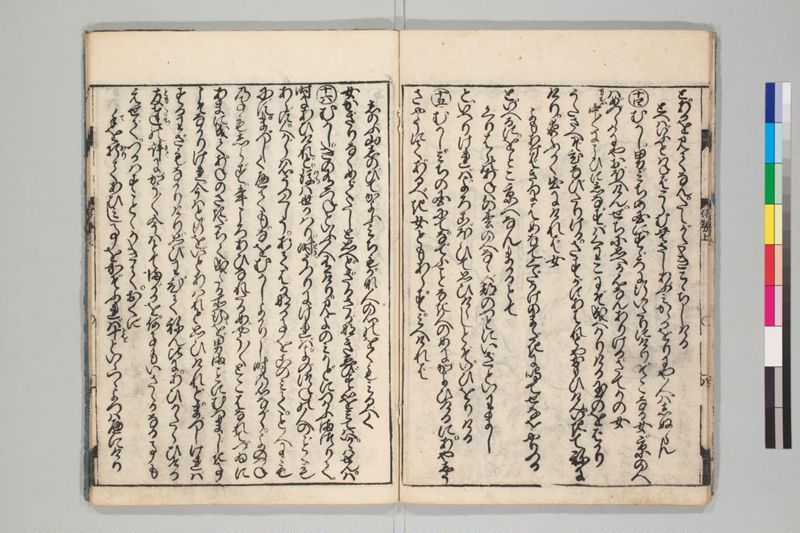
翻刻
と。あるを見てなん。たえがたきこゝちしける
とへばいふとはねばうらむむさしあぶみかゝるをりにや人はしぬらん
「十四」むかし。男。みちの国に。すゞろに行いたりにけり。そこなる女。京の人
は。めづらかにやおぼへけん。せちに思へる心なんありける。さてかの女
《送り仮名:万葉》中々にこひにしなずばくわこにぞ成へかりける玉のをばかり
うたさへぞひなびたりける。さすがにあはれとやおもひけん。いきてねに
けり。夜ふかく出にければ女
よもあけばきつにはめなてくだかけのまだきに鳴てせなをやりつる
と。いへるに。をとこ京へなんまかるとて
くりはらのあねはの松の人ならば都のつとにいざといわまし
と。いへりければ。よろこぼひて思ひけらしとぞ。いひをりける
「十五」むかし。みちの国にて。なでふことなき人のめにかよひけるに。あやしう
さやうにて。あるべき女ともあらず。みへければ
【左丁】
しのぶ山しのびてかよふみちもがな人の心のをくもみるべく
女かぎりなくめでたしと思へど。さるさがなきゑびす心をみては。いかゝはせん。#1は
「十六」むかし。きの有つねといふ人有けり。みよのみかどにつかふまつりて。
時にあひけれど。後(のち)は世かはり。時(とき)うつりにければ。よのつねの人のごとくも
あらず。人がらは心うつくしう。あてはかなる事をこのみて。こと人にも
にず。まづしくへても。なをむかしよかりし時の心ながら。よのつね
の事もしらず。年ころあひなれたるめ。やう〳〵とこはなれて。つゐに
あまに成て。あねのさきだちて。成たる所へ行(ゆく)を。男まことにむつまじき事
こそなかりけれ。今はと行を。いとあはれと思ひけれど。まづしければ
するわざもなかりけり。思び#2わびてねん比に。あひかたらひける
友達(ともたち)の許(もと)に。かう〳〵今はとてまが#2るを。何事もいさゝかなる事も
えせで。つかはすことゝかきて。おくに
手(て)を折(おり)てあひみし事をかぞふれば十(とを)といゝつゝよつはへにけり
現代語訳
(前ページより続き・第十三段)
〔男の返歌〕
*問えば言う 問わねば恨む 武蔵鐙 かかる折にや 人は死ぬらん*
(訪ねれば何か言う、訪ねなければ恨む——武蔵鐙ではないが、このような板挟みの折に、人は死んでしまうのだろうか)
と書いてあるのを見て、(女は)耐えがたい気持ちがした。
---
【第十四段】
昔、ある男が、陸奥の国へ、何となく出かけて行った。そこにいた女は、京の人を珍しく思ったのだろうか、ひたむきに恋い慕う気持ちがあった。さてその女が詠んだ歌、
*中々に 恋に死なずば 桑子(くわこ)にぞ 成るべかりける 玉の緒ばかり*
(いっそのこと恋に死ねないなら、蚕になってしまえばよかった——せめて糸のように細くつながる命だけでも)
歌までも田舎びていた。それでも(男は)しみじみとあわれと思ったのだろうか、女のもとに行って共に寝た。夜が深いうちに出て行ったので、女が詠んだ、
*夜も明けば きつにはめなて くだかけの まだきに鳴きて せなをやりつる*
(夜が明けたら、きつにはめるではないが——早鳴きの鶏が鳴いて、愛しい人を行かせてしまった)
と言ったので、男は「京へ帰ります」と言って、
*栗原の あねはの松の 人ならば 都の土産に いざと言わまし*
(栗原のあねはの松が人であったなら、「さあ都への土産に」と誘うのだが)
と詠んだので、(女は)たいそう喜んで、(男を)思い続けたということだ。
---
【第十五段】
昔、陸奥の国で、たいして身分もない人の妻に通っていたところ、不思議とそのような(身分低い)ままでいるべき女とも見えなかったので(男が詠んだ)、
【左丁】
*しのぶ山 忍びて通う 道もがな 人の心の 奥も見るべく*
(しのぶ山に忍びて通う道があればよいのに——あなたの心の奥底をも見極めることができるように)
女は限りなく素晴らしいと思ったけれど、そのように荒々しい田舎者(の夫)の心を見ては、どうしようもない。
---
【第十六段】
昔、紀有常(きのありつね)という人がいた。三代の帝にお仕え申し上げて、時流に乗っていたが、後に世が変わり、時が移ってしまったので、世間並みの人のようにも(豊かに)過ごせなくなった。人柄は心が清らかで優雅なことを好み、他の人とは違っていた。貧しく暮らしながらも、やはり昔栄えていた頃の心のまま、世間一般の処世術も知らなかった。長年連れ添った妻が、だんだんと離れて行き、ついに尼になって、姉が先に尼になっていた所へ行くのを、男(有常)は本当に深い情愛があるわけでもなかったが、今を限りと去って行くのを、たいそうあわれと思ったけれど、貧しいので何かをしてやることもできなかった。思い悩んで、かねてより親しく語り合っていた友達のもとへ、「このような次第で、今を限りに妻が去って行くのを、何事も少しのことさえもしてやることができず、見送ることになった」と書いて、末尾に、
*手を折りて あひ見し事を かぞふれば 十(とを)と言いつつ 四つは経にけり*
(指を折って、共に過ごした年月を数えてみると、十と言いながらさらに四つ、つまり十四年が経ってしまった)
英語訳
(Continued from previous page — Section 13)
[The man's reply poem:]
*Toeba iu / towaneba uramu / Musashi abumi / kakaru ori ni ya / hito wa shinuran*
(If I visit, you complain; if I do not, you resent me — like a Musashi stirrup caught in a bind, is it any wonder a man might die in such a predicament?)
Upon reading this, the woman felt a pain she could hardly bear.
---
【Section 14】
Long ago, a man found himself wandering into the province of Michinoku (the far northeast). A woman there, perhaps finding someone from the capital a rare and wonderful thing, conceived a deep and earnest love for him. The woman composed:
*Nakanaka ni / koi ni shinazuba / kuwako ni zo / naru beka rikeru / tama no o bakari*
(If I cannot die of this love, I should have been born a silkworm — at least then I might have stretched out as a slender thread of life.)
Even her poem had a rustic, provincial quality. Yet the man was moved with tenderness, and went to her and spent the night. As he slipped away while the night was still deep, the woman said:
*Yo mo akeba / kitsu ni wa menate / kudakake no / madaki ni naite / sena wo yaritsuru*
(Before the dawn has come — like the phrase "to put in a box," — the cock crowed too early and sent my beloved away.)
The man, saying he was returning to the capital, replied:
*Kurihara no / aneha no matsu no / hito naraba / miyako no tsuto ni / iza to iwamashi*
(If the pine of Aneha in Kurihara were a person, I would gladly say, "Come, let me take you as a gift to the capital.")
At these words, the woman was greatly delighted and, it is said, kept him in her thoughts ever after.
---
【Section 15】
Long ago, in the province of Michinoku, a man was visiting the wife of a man of no great standing. Yet strangely, she did not appear to be a woman who should remain in such circumstances, and so he composed:
【Left Page】
*Shinobu yama / shinobite kayou / michi mo gana / hito no kokoro no / oku mo miru beku*
(If only there were a hidden path through Mount Shinobu to visit secretly — so that I might see into the very depths of your heart.)
The woman thought him utterly wonderful, but seeing the rough and savage heart of such an uncouth provincial husband, what could she do?
---
【Section 16】
Long ago, there was a man called Ki no Aritsune. He had served three successive emperors and enjoyed great favor, but as the world changed and times shifted, he was no longer able to live as ordinary people did (i.e., he fell into poverty). His character was gentle and refined; he loved elegance and was unlike others. Though he lived in poverty, he still carried in his heart the spirit of his former prosperous days, ignorant of the ways of the mundane world. The wife who had been with him for many years gradually drifted away from him and finally became a nun, setting out for the place where her elder sister had already taken vows before her. The man (Aritsune), though they had not been deeply intimate in affection, felt profound sorrow as she left him for the last time, yet being poor, there was nothing he could do for her. Overcome with grief, he wrote to a close friend with whom he had long confided:
"It is as I have described — she is leaving now for good, and I cannot do even the smallest thing for her as she goes."
At the end of his letter, he wrote:
*Te wo orite / aimishi koto wo / kazofu reba / tō to iitsutsu / yottsu wa he ni keri*
(Counting on my fingers the years we were together, I find that beyond ten, four more have passed — fourteen years in all.)