翻刻
【右丁】 みよしのゝたのむのかりもひたふるに君が方にそよるとなくなる
《送り仮名:むこかねかへし》わかかたによるとなくなるみよしのたのむのかりをいつかわすれん
と。なん人の国にても。なをかゝる事なん。やまざりける
「十一」#1むかし。男。あづまへ行けるに友達共(ともだちとも)に。道よりいひをこせける
《送り仮名:拾遺》わするなよ程はくもゐに成ぬともそら行月のめぐりあふまで
「十二」昔。男。ありけり。人のむすめをぬすみて。むさしのにゐてゆく程に
。ぬす人成ければ。国のかみにからめられにけり。女をば草村(くさむら)の中にを
きて。にげにけり。道くる人。此野はぬす人あなりとて。火(ひ)つけんとす。女わびて
《送り仮名:古今》むさし野はけふはなやきそ若草(わかくさ)のつまもこもれり我もこもれり
と。よみけるをきゝて。女をばとりて。ともにゐでいにけり
「十三」昔。むさし成男。京なる女の許(もと)に。きこよればはづかし聞えねばくるし□と
書(かき)て。上(うは)かきに武蔵(むさし)鐙(あぶみ)と書(かき)ておこせて後(のち)。音(をと)もせず成にければ。京より女
むさしあぶみさすがにかけて頼(たの)むにはとはぬもつらしとふもうるさし
【左丁】
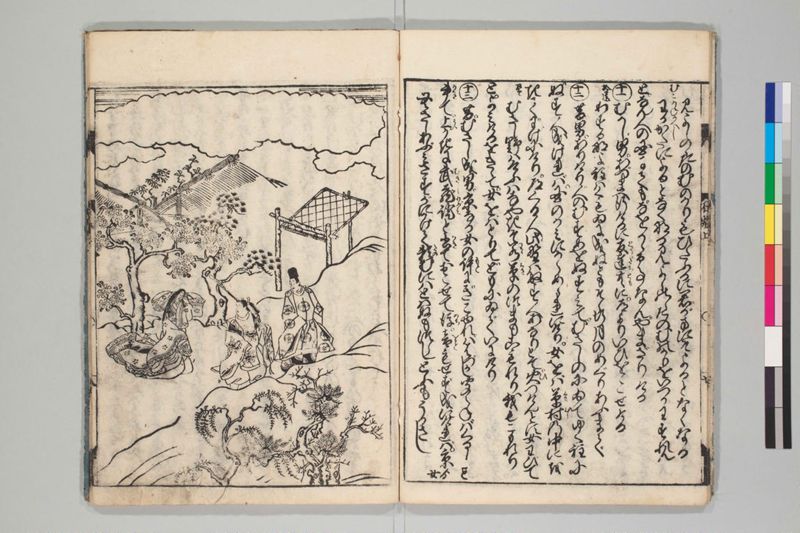
【挿絵】
現代語訳
【右丁】
*みよしのの たのむのかりも ひたふるに 君がかたにぞ よるとなくなる*
(三芳野の田面の雁も、一途にあなたの方へと寄るように鳴いている)
〔婿候補の男の返歌〕
*わがかたによるとなくなる みよしの田のむのかりを いつか忘れん*
(私の方へと寄って鳴くという、三芳野の田面の雁を、いつまでも忘れないでしょう)
と詠んだ。このように、東の国に行っても、やはりこのような(恋の)ことは、やまなかった。
【第十一段】
昔、ある男が東国へ旅立つ際、友達たちに、道すがら(手紙を)送ってよこした歌、
*忘るなよ 程は雲居に 成ぬとも 空行く月の めぐりあふまで*
(遠く雲の彼方に離れてしまっても、忘れないでくれよ。空を行く月がめぐり合うように、いつかまた会える日まで)
【第十二段】
昔、ある男がいた。ある人の娘を盗み出して、武蔵野に連れて行く途中、盗人であるとして、国の守(かみ)に捕まってしまった。男は女を草むらの中に置いて逃げてしまった。通りかかった人たちが「この野には盗人がいるらしい」と言って、火をつけようとした。女は困り果てて詠んだ、
*武蔵野は けふはなやきそ 若草の つまもこもれり 我もこもれり*
(武蔵野よ、今日は焼かないでください。若草のように、夫も隠れている、私も隠れている)
と詠んだのを聞いて、女を連れ出して、一緒に逃げ去った。
【第十三段】
昔、武蔵にいる男が、京にいる女のもとへ、「聞こえてくれば恥ずかしく、聞こえなければ辛い」と書いて、上書きに「武蔵鐙(むさしあぶみ)」と書いて送った後、(男からの)便りが来なくなったので、京から女が(歌を送った)、
*武蔵鐙 さすがにかけて 頼むには とはぬもつらし とふもうるさし*
(「武蔵鐙」の「かけ」という言葉ではないけれど、やはり心にかけて頼りにしているあなたのことを、訪ねてこないのもつらいし、訪ねてきても煩わしい)
【左丁】
【挿絵】
英語訳
【Right Page】
*Miyoshino no / tanomuno kari mo / hitafuru ni / kimi ga kata ni zo / yoru to naku naru*
(Even the wild geese on the rice fields of Miyoshino call out as they wing their way toward you, utterly devoted in their course.)
[The prospective bridegroom's poem in reply:]
*Waga kata ni / yoru to naku naru / Miyoshino / tanomuno kari wo / itsu ka wasuren*
(The geese on the fields of Miyoshino, crying out as they turn toward me — how could I ever forget them?)
And so, even in the eastern provinces, such matters of the heart never ceased.
【Section 11】
Long ago, when a man was setting out for the eastern provinces, he sent this poem to his companions along the road:
*Wasuru na yo / hodo wa kumoi ni / nari nu tomo / sora yuku tsuki no / meguriawu made*
(Do not forget me — even as the distance between us becomes as vast as the sky and clouds, until we meet again, like the moon that travels through the heavens and comes back around.)
【Section 12】
Long ago, there was a man who abducted a certain person's daughter and was making his way across Musashino with her, when, being recognized as a thief, he was apprehended by the provincial governor's men. He left the woman hidden in a thicket and fled. Some people passing by said, "There appears to be a thief in this field" and made to set it alight. The woman, in great distress, composed:
*Musashino wa / kyō wa na yaki so / wakakusa no / tsuma mo komore ri / ware mo komore ri*
(Oh Musashino plain, do not set fire to it today — like tender young grass, my husband is hiding here, and I too am hiding here.)
Hearing this poem, the people took the woman out and left together with her.
【Section 13】
Long ago, a man in Musashi wrote to a woman in the capital: "If my feelings reach you, I am embarrassed; if they do not reach you, I am pained." He wrote on the outside of the letter "Musashi Abumi" (Musashi stirrup) and sent it. After that, no more word came from him. So the woman in the capital replied:
*Musashi abumi / sasuga ni kakete / tanomu ni wa / towanu mo tsurashi / tou mo urushi*
(Though I hang my hopes on you as a stirrup is hung — calling to mind the word *kake* — it is painful when you do not come, yet tiresome when you do.)
【Left Page】
【Illustration】