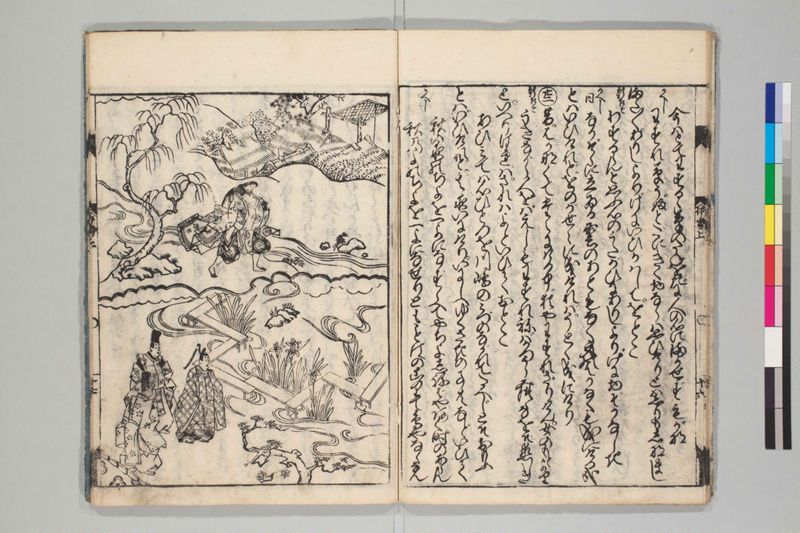
翻刻
【右丁】
今はとてわするゝ草のたねをだに人の心にまかせずもがな
《送り仮名:かへし》わすれ草うぶとだにきく物ならば思ひけりとはしりもしなまし
また〳〵。ありしよりげにいひかはして。をとこ
《送り仮名:新古今》わするらんと思ふ心のうたがひにありしよりげに物ぞかなしき
《送り仮名:かへし》《返り点:同》なかぞらに立ゐる雲のあともなく身のはかなくも成にける哉
とはいひけれど。をのが世々に成ければ。うとく成にけり
「廿二」昔。はかなくてたえにける中。猶やわすれざりけん。女のもとより
《送り仮名:新古今》うきながら人をばえしもわすれねばかつうらみつゝなをぞ恋しき
と。いへりければ。されはよといひてをとこ
あひみては心ひとつを川島のみづのながれてたへじとそおもふ
とは。いひけれど。其夜いにけり。いにしへゆくさきの事共などいひて
秋の夜のちよを一よになずらへてやちよしねばやあく時のあらん
《送り仮名:かへし》秋のよのちよを一よになせりともことばのこりて鳥やなくなん
【左丁】
【挿絵】
現代語訳
【右丁】
(第二十一段、続き)
*今はとて 忘るる草の 種をだに 人の心に まかせずもがな*
(もう終わりと思って(あなたが私を)忘れようとするなら、せめてその「忘れ草」の種さえも、あなたの心のままにさせたくないものです)
(返し)
*忘れ草 生うとだにきく ものならば 思ひけりとは 知りもしなまし*
(忘れ草を植えたとだけでも聞くことができたなら、(あなたが私のことを)思っていたのだと知ることもできただろうに)
また(その後も)、以前にも増して言い交わして(いた中で)、男(が詠んだ)、
*忘るらんと 思ふ心の 疑ひに ありしよりげに ものぞ悲しき*
((あなたが私を)忘れてしまうのではないかと思う心の疑いによって、以前にも増して、しみじみと悲しいことよ)
(返し)
*中空に 立ち居る雲の 跡もなく 身のはかなくも なりにけるかな*
(空中に漂う雲のように跡形もなく、わが身のはかなくなってしまったことよ)
とは言い合ったけれど、(二人は)それぞれ別々の道(別れ別れの身)となってしまったので、(次第に)疎遠になってしまった。
---
【第二十二段】
昔、(男女の中が)はかなく途絶えてしまった関係(であったが)、それでもやはり(互いに)忘れられなかったのだろうか。女のもとから(歌が届いた)、
*憂きながら 人をばえしも 忘れねば かつ恨みつつ なをぞ恋しき*
(つらい思いをしながらも、あの人をどうしても忘れることができないので、一方では恨みながら、それでも(あなたのことが)恋しいのです)
と言ってきたので、「それはそうだろう(もっともなことだ)」と思って、男(が返した)、
*逢ひ見ては 心ひとつを 川島の 水の流れて 絶えじとぞ思ふ*
(逢って(顔を)見ては(あなたへの)一途な心を、川の島のほとりを流れる水のように、絶えることなく(思い続けよう)と思う)
とは言ったけれど、その夜(男は女のもとに来て)帰って行ってしまった。昔のこと・これからのこと(行く末のこと)などを話し合って(男が詠んだ)、
*秋の夜の 千代を一夜に なずらへて 八千代し寝ねば 明く時のあらん*
(秋の夜の千年を一夜に例えて、(あなたと)八千年も(共に)寝たとしても、(それでも)夜が明ける時が来るだろうか(いや、永遠に明けることはないだろう)――(それほど長く共にいたい))
(返し)
*秋の夜の 千代を一夜に なせりとも 言葉のこりて 鳥やなくなん*
(秋の夜の千年を一夜とされるとしても、(別れを告げる)言葉が残ったまま夜明けを告げる鳥が鳴いてしまうことでしょう――(どれほど長い夜もやがては終わる))
【左丁】
【挿絵】
英語訳
【Right Page】
(Section 21, continued)
*Ima wa tote / wasururu kusa no / tane wo dani / hito no kokoro ni / makase zu mo gana*
(If you are to forget me, saying "now it is over" — I wish I could prevent even the seed of the "forget-me herb" from being left to your heart's doing.)
(Reply)
*Wasuregusa / u to dani kiku / mono naraba / omoi keri to wa / shiri mo shi namashi*
(If only I could hear even that you had planted the "forget-me herb," I would at least know that you had been thinking of me.)
And again, more than ever before, they exchanged poems, and the man (composed):
*Wasururan to / omou kokoro no / utagai ni / arishi yori ge ni / mono zo kanashiki*
(In the doubt of my heart, fearing that you will forget me, things are, if anything, more deeply sorrowful than they ever were before.)
(Reply)
*Nakazora ni / tachi iru kumo no / ato mo naku / mi no hakanaku mo / nari ni keru kana*
(Like a cloud drifting through the mid-sky, leaving no trace behind — how fleeting and insubstantial my very being has become.)
So they spoke to one another, yet since they had each gone their separate ways, they grew ever more distant.
---
【Section 22】
Long ago, (a man and a woman's) relationship had come to a fragile end. And yet, perhaps neither could truly forget the other. From the woman, (a poem arrived):
*Uki nagara / hito wo ba e shimo / wasureneба / katsu uramitsu tsu / nao zo koishiki*
(Though I suffer, I cannot bring myself to forget you — and so, even as I resent you, I love you still.)
Hearing this, the man thought, "How could it be otherwise," and replied:
*Ai mite wa / kokoro hitotsu wo / kawashima no / mizu no nagarete / taеji to zo omou*
(When I see your face, I think of this single, steadfast heart of mine — like the waters flowing around the river-isle, I am resolved it shall never cease.)
So he said, and yet that same night he left and went away. They spoke of days gone by and of what lay ahead, and (the man composed):
*Aki no yo no / chiyo wo hitoyo ni / nazurae te / yachiyo shi neneba / aku toki no aran*
(If one were to liken a thousand years of autumn nights to a single night, would there ever come a dawn — even if we slept together for eight thousand years? Surely not — and yet I wish it so.)
(Reply)
*Aki no yo no / chiyo wo hitoyo ni / naseri tomo / kotoba nokorite / tori ya naku nan*
(Even if a thousand years of autumn nights were made into one, words of farewell would still remain unspoken when the cock crows to announce the dawn.)
【Left Page】
【Illustration】