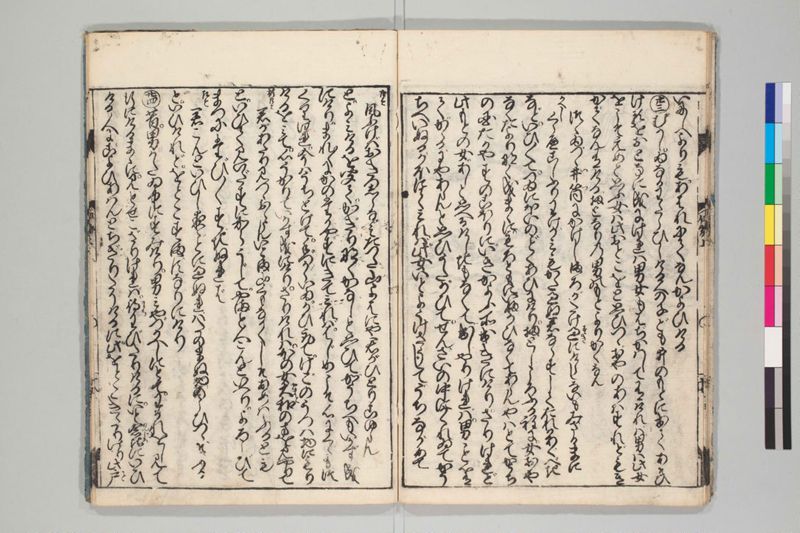
翻刻
【右丁】
いにしへよりも。あはれにてなんかよひける
「廿三」むかし。ゐなかわたらひしける人の子ども井のもとに出てあそひ
けるをおとなに成にけれは男女もはぢかはして有ければ男は此女
をこそえめと思ふ女は此おとこをと思ひつゝ。おやのあはすれどもき
かでなん有ける。扨となりの男のもとよりかくなん
つゝゐづゝ井筒(いつゝ)にかけしまろがたけ過(すき)にけらしないもみさるまに
《送り仮名:かへし》くらへこしふりわけがみもかた過ぬ春ならずしてたれかあぐべき
など。いひ〳〵て。つゐにほいのごとくあひにけり。扨としころふる程に。女おや
なくたよりなく成まゝに。もろともにいふかひなくてあらんやはとてかうち
の国たかやすのこほりに。いきかよふ所出きにけり。さりけれど
此もとの女。あしと思へるけしきもなくて。出しやりければ。男こと心有
て。かゝるにやあらんと思ひうたがひて。せんざいの中にかくれゐてかう
ちへいぬるがほにてみれば。此女いとようけさうじて。うちながめて
【左丁】
《送り仮名:古今》風ふけばおきつしらなみたつた山よはにや君がひとりこゆらん
と。よみけるを聞て。かぎりなくかなしと思ひてかうちへもいかず成
にくり。まれ〳〵にかのたかやすにきてみれば。はじめこそ心にくゝもつ
くりけれ。今はうちとけて。手づからいゐがひ取て。けごのうつは物にもり
けるをみて。心うかりていかず成にけり。さりけれは。かの女 大和(やまと)の方を見やりて
《送り仮名:新古今》君があたり見つゝおらんいこま山くもなかくしそあめはふるとも
と。いひて見いだすにからうじて。やまと人こんといへり。よろこびて
まつにたび〳〵すぎぬれば
《送り仮名:古今》君こんといひし夜ごとに過ぬればたのまぬ物のこひつゝぞ□【ふ】る
と。いひけれど。をとこすまずなりにけり
「廿四」昔。男。かたゐ中にすみけり。男みやづかへしにとて。わかれをしみて
行にけるまゝに。みとせこざりければ。待(まち)わびたりけるに。いと念比(ねんごろ)にいひ
ける人に。こよひあはんとちぎりたりけるに。此おとこきたりけり此 戸(と)
現代語訳
【右丁】
(第二十二段、続き)
(二人は)昔にも増して、しみじみとした情愛をもって通い合っていた。
---
【第二十三段】
昔、田舎暮らしをしていた人の子どもたちが、井戸のそばに出て遊んでいた。(やがて)大人になってしまったので、男女(として)互いに恥ずかしがっていたが、男はこの女をぜひ妻にしたいと思い、女もこの男を(夫に)と思いながら、親が(他の人と)娶せようとしても、聞かずにいた。そうして、隣の男のもとから(女へ)このように(歌を送った)、
*筒井つつ 井筒にかけし まろが丈 過ぎにけらしな いもみざるまに*
(筒井の井筒に(背の高さを)比べた私の背丈も、(いつの間にか)あなたを見ない間に、すっかり(それを)超えてしまったようだ)
(返し)
*くらべこし 振り分け髪も 肩過ぎぬ 君ならずして 誰かあぐべき*
((あなたと)比べ合ってきた振り分け髪も(今では)肩を過ぎてしまいました。あなた以外の誰が(この髪を)結い上げてくれるというのでしょう)
などと、言い交わして、ついに念願通りに結ばれた。さて、年月が過ぎる間に、女の親がなくなって頼りなくなるにつれて、「二人して甲斐もなく暮らしていてよいものか」と思って、河内の国(現在の大阪府南東部)の高安の郡に、通って行く所(女)ができてしまった。(そう)なったけれど、もとの(妻の)女は、(それを)悪く思っているようすもなく、(男を)送り出していたので、男は(女に)別の心があるのではないかと思い、疑って、庭の植え込みの中に隠れていて、河内へ行くふりをして(様子を)見ていると、この女はたいへんよく化粧をして、物思いにふけりながら(詠んだ)、
【左丁】
*風吹けば 沖つ白波 龍田山 夜半にや君が ひとり越ゆらん*
(風が吹けば沖に白波が立つという龍田山を、夜中に(あなたは)ひとりで越えていかれているのだろうか)
と詠んだのを聞いて、(男は)限りなく(女が)いとおしいと思って、河内へも行かなくなってしまった。たまに(それでも)あの高安へ来て(様子を)見ると、はじめは奥ゆかしく(身だしなみを)整えていたのに、今はすっかり打ち解けて、自らご飯粒を(杓文字で)すくい取って、毛籠の器に(飯を)盛っているのを見て、(男は)嫌な気持ちになって(高安へ)行かなくなってしまった。そうなったので、あの(高安の)女は、大和の方を見やって、
*君があたり 見つつをらん いこま山 雲なかくしそ 雨は降るとも*
(あなたのいらっしゃる方(大和)を見続けていましょう。生駒山よ、雨が降ったとしても、雲で(山を)隠さないでください)
と言って外を眺めていると、かろうじて(やっと)「大和(の男)が来る」と(知らせが)あった。(高安の女が)喜んで待っていたが、何度も(来るはずの)夜が過ぎてしまったので、
*君来んと 言ひし夜ごとに 過ぎぬれば 頼まぬものの 恋ひつつぞ□(経)る*
(あなたが来るとおっしゃった夜ごとに(あなたが来ないまま)過ぎてしまうので、もう頼みにするまいと思いながらも、恋い慕いながら(日を)過ごしています)
と言ったけれど、男はもう(高安へ)来なくなってしまった。
---
【第二十四段】
昔、男が、辺鄙な地方に住んでいた。男は宮仕えをしに(都へ)と、(女との)別れを惜しんで行ってしまったまま、三年(もの間)来なかったので、(女が)待ちわびていたところ、(女に)たいへん懇意にして言い寄っていた(別の)人と、今夜逢おうと(密かに)約束していたところに、この(もとの)男が来てしまった。(女は)この戸(を……)
英語訳
【Right Page】
(Section 22, continued)
More than ever before, the two continued to visit one another with tender, heartfelt affection.
---
【Section 23】
Long ago, children of people who lived in the countryside used to come out to play by the side of a well. As they grew into adults, the boy and girl became shy with each other; yet the boy thought only of making this girl his wife, and the girl thought only of this boy as her husband — and so, even when their parents tried to arrange other matches for them, neither would listen. Then, from the boy next door, (a poem arrived for the girl):
*Tsutsui-tsu tsu / izutsu ni kakeshi / maro ga take / sugi ni kerashi na / imo mizaru ma ni*
(The height I once measured against the well's round frame — it seems I have long since surpassed it, in all the time I have been without a glimpse of you, my dear.)
(Reply)
*Kurabe koshi / furiwake gami mo / kata suginu / kimi narazushite / tare ka agubeki*
(The hair I once let hang loose and compared with yours has now grown past my shoulders. Who but you should be the one to put it up?)
Exchanging poems such as these, they at last came together as they had always wished. As the years went by, however, the woman's parents passed away and she was left without support; and thinking to himself, "Can the two of us really go on like this, struggling together to no avail?", the man found himself a place he began to visit in Takayas u in Kawachi Province (present-day southeastern Osaka Prefecture). Even so, the woman at home showed no sign of resentment and always sent him off (without complaint). Suspicious that she might have feelings for someone else, the man hid himself in the garden shrubbery one day, pretending to leave for Kawachi, and watched secretly. He saw the woman carefully apply her makeup and, gazing out into the distance with longing, compose:
【Left Page】
*Kaze fukeba / okitsu shiranami / Tatsuta-yama / yowa ni ya kimi ga / hitori koyuran*
(When the wind blows, white waves rise on the open sea — and at Tatsuta Mountain, are you crossing over all alone in the dead of night?)
Hearing this, the man was moved to boundless tenderness for her and ceased going to Kawachi altogether. Occasionally, though, he would come to Takayas u to see (the new woman), and whereas at first she had comported herself with admirable refinement, she had now grown quite at ease, and he saw her with her own hands scooping up grains of rice and heaping them into a shaggy wicker bowl. At the sight of this, he found her disagreeable and stopped visiting altogether. Left thus, that woman of Takayas u looked out toward Yamato and said:
*Kimi ga atari / mitsutsu woран / Ikoma-yama / kumo na kakushi so / ame wa furu tomo*
(I shall go on gazing toward the place where you are. O Mount Ikoma — do not let the clouds conceal you, even should the rain fall.)
She gazed outside, and word barely reached her that "the man from Yamato is coming." She waited with joy, but night after night passed without his arrival, and so she composed:
*Kimi kon to / iishi yo goto ni / suginureba / tanomanu mono no / koitsutsu zo □(furu)*
(Every night you said you would come has now gone by without you; I have given up hoping — and yet I spend my days longing for you still.)
So she said, yet the man came no more.
---
【Section 24】
Long ago, a man lived in a remote, rustic place. He parted sorrowfully from a woman to go up to the capital for court service, and from that point on he did not return for three years. She had grown weary of waiting, and had made a secret promise to meet that very night with a man who had been pressing his suit most ardently — when her former man arrived. (She was at) this door (when…)