翻刻
【右丁】
「卅四」むかし。をとこ。つれなかりける人のもとに
いへばえにいはねばむねにさはがれて心ひとつになげくころかな
おもなくて。いへるなるべし
「卅五」むかし。心にもあらで。たへたる人のもとに
玉のをゝ。あはをによりてむすべれば。たへてのゝちもあはんとそおもふ
「卅六」昔。わすれぬるなめりと。とひごとしける。女のもとに
《送り仮名:万葉》たにせばみみねまではへる玉かづらたへんと人にわがおもはなくに
「卅七」むかし。男。色このみ成ける。女にあへりけり。うしろめたくや思ひけん
我ならでしたひもとくな朝皃(あさがほ)のゆふかげまたぬ花はありとも
《送り仮名:かへし》ふたりしてむすびしひぼをひとりしてあひみるまではとかじとぞ思ふ
「卅八」昔。きの有つねがりいきたるに。ありきておそくきにけるによみてやりける
君により思ひならひぬ世の中の人はこれをやこひといふらん
《送り仮名:かへし》ならはねは世の人ごとになにをかもこひとはいふととひしわれしも
【左丁】
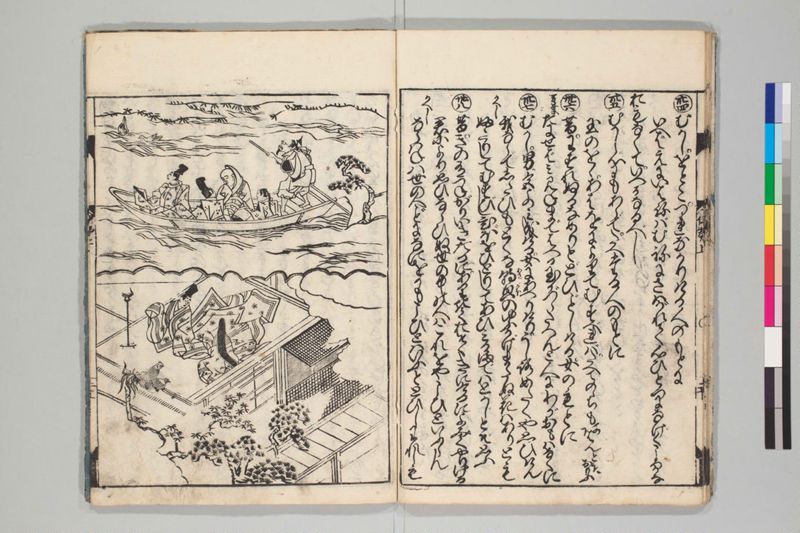
【挿絵】
現代語訳
【右丁】
---
【第三十四段】
昔、男が、よそよそしかった(つれなかった)人のもとに(歌を送った)。
*いへばえに いはねばむねに さはがれて 心ひとつに なげくころかな*
((思いを)言えば(うまく言えないままに)困ってしまうし、言わなければ胸の中がざわめいて落ち着かない——ひとり心の中でひたすら嘆いているこの頃です)
(これは)厚かましくも(おもなくて)詠んだものであろう。
---
【第三十五段】
昔、心ならずも(男と)絶えた(疎遠になった)女のもとに(男が詠んだ)。
*玉のをを あはをによりて むすべれば たへてののちも あはんとぞおもふ*
(珠を貫く糸を、泡を縒り合わせて結んでいるようなもので(=はかなく結ばれていたとしても)、(縁が)絶えた後でも(また)逢おうと思っているのです)
---
【第三十六段】
昔、(女が男のことを)忘れてしまったようだと(感じて)、たびたび問い続けていた(問いごとしていた)女のもとに(男が詠んで送った)。
*たにせばみ みねまではへる 玉かづら たへんと人に わがおもはなくに*
(谷を挟んで峰から峰へと這い渡る玉葛(たまかずら)のように、(私たちの縁が)絶えようなどとあなたに思われているはずがない——(私は決して絶えようとは思っていないのです))
---
【第三十七段】
昔、男が、恋多き(色好みな)女と逢った。(男は女のことが)気がかりだったのか(他の男に奪われはしないかと不安に思ったか)、(次のように詠んだ)。
*われならで したひもとくな 朝顔の ゆふかげまたぬ 花はありとも*
(私以外の者には、(その帯の紐を)解かせないでください。朝顔のように夕暮れを待たずに(すぐ)萎れてしまう(はかない)花であったとしても)
(女の)返し。
*ふたりして むすびしひぼを ひとりして あひみるまではとかじとぞ思ふ*
(二人で結んだ(帯の)紐を、一人でいる間は——(また)お逢いするまでは——解くまいと思っています)
---
【第三十八段】
昔、紀有常(きのありつね)のもとへ(男が)行ったところ、(有常は)外出していて遅く帰ってきたので、(男が)詠んで贈った。
*君により 思ひならひぬ 世の中の 人はこれをや こひといふらん*
(あなたのせいで(こうして待つ)思いが身についてしまいました。世の中の人々はこれを「恋(=待ち焦がれること)」と言うのでしょうか)
(有常の)返し。
*ならはねば 世の人ごとに なにをかも こひとはいふと とひしわれしも*
((こんな思いに)慣れていなかったので、世の人はみな何のことを「恋」と言うのかと(かつて)問うていた私ですが——(今はその気持ちがよくわかります))
---
【左丁】
【挿絵】
英語訳
【Right Page】
---
【Section 34】
Long ago, a man sent a poem to a woman who had been cold and indifferent toward him:
*Ieba e ni / iwaneba mune ni / sawagarete / kokoro hitotsu ni / nageku koro kana*
(If I speak my feelings, I am left at a loss; if I keep silent, my heart is all astir and will not settle — and so it is that I spend these days lamenting all alone within my single, lonely heart.)
This poem was surely composed with some boldness — without any sense of shame.
---
【Section 35】
Long ago, a man sent a poem to a woman from whom he had drifted apart, though not by his own desire:
*Tama no o wo / awa wo ni yorite / musubere ba / taete no nochi mo / awan to zo omou*
(Our bond is tied like a thread of jewels spun from nothing more than foam — fragile and insubstantial as it may be, even after the thread has broken, I still intend to meet you again.)
---
【Section 36】
Long ago, to a woman whom the man suspected had forgotten him, and who had been persistently sending him inquiries, he composed and sent:
*Tani se ba mi / mine made haeru / tama kazura / taen to hito ni / waga omowa naku ni*
(Like the jeweled vine that stretches all the way from valley stream to mountain peak — do you truly think that I have any intention of letting our bond be severed? I have never once thought of cutting it.)
---
【Section 37】
Long ago, a man came to meet a woman who was known for her passionate, amorous nature. Perhaps anxious about her faithfulness, he composed:
*Ware narade / shitahi motoku na / asagao no / yūkage matanu / hana wa ari to mo*
(Do not let anyone but me loosen your sash-cord. Even if you are like the morning glory — a flower that wilts before the evening shadows even fall — I ask this of you still.)
Her reply:
*Futari shite / musubishi himo wo / hitori shite / ai miru made wa / tokaji to zo omou*
(The cord that the two of us tied together — while I am alone, I intend not to untie it until we meet again.)
---
【Section 38】
Long ago, a man went to call on Ki no Aritsune, but Aritsune had been out and returned late. The man composed this poem and sent it to him:
*Kimi ni yori / omohi narainu / yo no naka no / hito wa kore wo ya / koi to iu ran*
(Because of you, I have grown accustomed to this feeling of longing and waiting. Is this what people in the world call "love"?)
Aritsune's reply:
*Narawane ba / yo no hito goto ni / nani wo ka mo / koi to wa iu to / toishi ware shimo*
(Because I had never known such a feeling before, I once asked of everyone I met: "What is this thing that people call love?" — and now I find that I understand it all too well.)
---
【Left Page】
【Illustration】