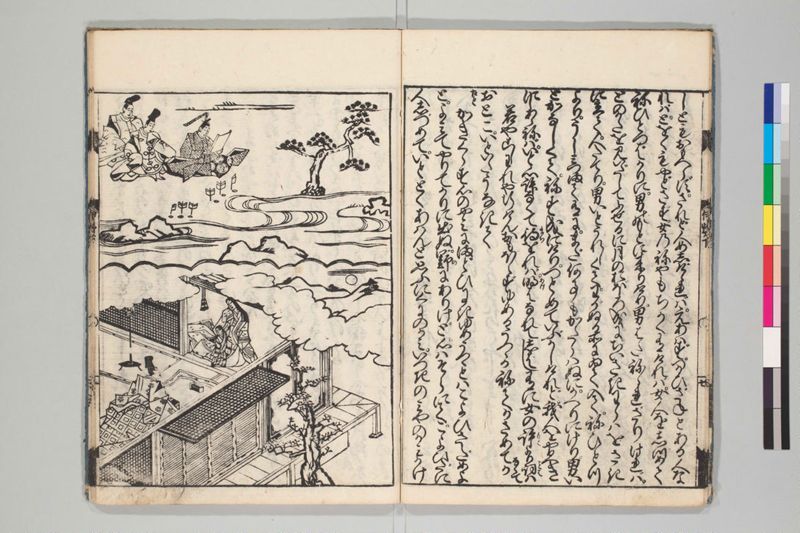
翻刻
【右丁】
しともおもへらず。されど人めしげゝれば。えあはず。つかひざねとある人な
れば。とをくもやどさず。女のねやもちかく有ければ。女人をしつめて
ねひとつばかりに。男のもとに来りけり。男はたねられざりければ。
とのかたを見いだしてふせるに月のおぼろ成に。ちいさきわらはをさき
に立て。人たてり。男いとうれしくて。わがぬる所にゐて入て。ねひとつ
より。うしみつまて有に。まだ何事もかたらはぬに。かへりにけり。男い
とかなしくて。ねす成にけり。つとめていぶかしけれど。我人をやるへき
にしあらねば。いと心許なくて待(まち)をれば。明(あけ)はなれてしばし有に女の許(もと)より詞(ことは)はなくて
若#1やこしわれや行けんおもほえずゆめかうつゝかねてかさめてか
おとこ。いといたうなきて
《送り仮名:古今》かきくらす心のやみにまどひにきゆめうつゝとはこよひさだめよ
と。よみてやりてかりに出ぬ。野(の)にありけど。心はそらにて。こよひだに。
人しづめて。いととくあはんと思ふにくにのかみ。いつきのみやのかみかけ
【左丁】
【挿絵】
現代語訳
【右丁】
(前頁より続き・第六十九段)
…と思ってはいたが、人目が多かったので、逢うことができなかった。つかいの長(使い頭)である人物であったので、遠くに宿もとらせず、女の寝室の近くに部屋を用意した。女は人々を静まらせてから、夜一つ(午後十一時頃)に男のもとへやって来た。男もまた眠れなかったので、外の方角(月の方向)をながめながら横になっていると、月がおぼろにかすんでいる中に、小さな童女を先に立たせて、一人の人が立っていた。男はたいへん嬉しくて、自分の寝ている所へ連れ入れた。夜一つから丑三つ(午前二時頃)まで一緒にいたが、まだ何事も語り合わないうちに、女は帰ってしまった。男はたいへん悲しくて、眠れないまま夜を過ごした。翌朝、気がかりではあるが、自分から使いをやるべき立場でもないので、たいへん不安なまま待っていると、夜が明けてしばらくして、女の方から言葉はなく、(歌だけが届いた)。
君やこし 我やゆきけん おもほえず 夢か現か 寝てかさめてか
(あなたがいらしたのか、私が参ったのか、思い出せません。夢だったのか現実だったのか、眠っていたのか目覚めていたのか。)
男は、たいへん激しく泣いて、
かきくらす 心の闇に まどひにき 夢か現とは 今宵定めよ
(悲しみに心が闇に閉ざされて迷い込んでしまいました。夢か現実かは、今夜(あなた自身が)定めてください。)
と詠んで送り、狩りに出かけた。野にいても、心は空に浮かんでいるようで、今夜こそ人々が静まったら、すぐにでも逢おうと思っていたところ、国の守(伊勢の国守)が、斎宮寮の長官(斎宮頭)も兼ねて……
【左丁】
【挿絵】
英語訳
【Right folio】
(Continued from previous page — Episode 69)
…she did not think it entirely impossible, yet because there were so many watchful eyes about, they could not meet. As the man was a person of high standing among the imperial messengers, he was not lodged far away; his room was placed near the lady's own bedchamber. The lady, having quieted the people around her, came to the man's room at the hour of the first night watch (around 11 p.m.). The man, unable to sleep, was lying down gazing outward toward the moon, which was hazy and indistinct, when he saw a small girl-attendant walking ahead, followed by a figure standing there. Overjoyed, the man led her into his sleeping quarters. They remained together from the first night watch until the hour of the ox (around 2 a.m.), yet before they had exchanged even a word of heartfelt conversation, she had already gone back. The man was deeply saddened and lay awake through the night. The next morning, though he was anxious to know her thoughts, it was not his place to send a messenger first; so he waited in uneasy suspense. When dawn had fully broken and a little time had passed, from the lady's side came no spoken words, only this poem:
*Kimi ya koshi / ware ya yukiken / omohoezu / yume ka utsutsu ka / nete ka samete ka*
(Was it you who came, or was it I who went? I cannot tell — was it a dream or reality, were you sleeping or awake?)
The man wept bitterly and composed:
*Kakikurasu / kokoro no yami ni / madoi niki / yume utsutsu to wa / koyoi sadame yo*
(From the Kokinshū)
(Lost in the darkness that overwhelms my heart, I have wandered astray — whether it was dream or reality, determine that tonight.)
He sent this poem and went out to the hunt. Though he was in the fields, his heart was up in the air, and he thought only of how that very night, once people had settled and grown quiet, he would meet her as quickly as possible. But then the Governor of the Province, who also served concurrently as the Director of the Saigū Office…
【Left folio】
【Illustration】