翻刻
【右丁】
時はやよひのついたち。あめそぼぶるにやりける
《送り仮名:古今》おきもせずねもせでよるをあかしては春の物とて詠(ながめ)くらしつ
㊂むかし。男。有けり。けさうじける。女の許(もと)に。ひじきもといふ物をやるとて
おもひあらばむぐらの宿にねもしなんひじき物には袖(そて)をしつゝも
二条の后(きさき)の。まだみかどにも。つかうまつり給はで。たゞ人にてをはしける。時の事也
㊃昔。ひんがしの五条に。おほきさいのみや。おはしましける。西のたいにす
む人有けり。それをほいにはあらで。心ざしふかゝりける人。行とふらひける
をむ月の十日ばかりの程に。外にかくれにける。有所はきけど。人の行か
よふべき所にも。あらざりければ。なをうしと。思ひつゝなん有ける。又の年
のむ月に。梅の花ざかりに。こぞをこひて。いきて立て見。ゐて見。みれど
。こぞににるべくもあらず。うちなきて。あばらなるいたじきに。月のかたふく
までふせりて。こそをおもひ出てよめる
《送り仮名:古今》月やあらぬ春やむかしの春ならぬわか身ひとつはもとの身にして
【左丁】
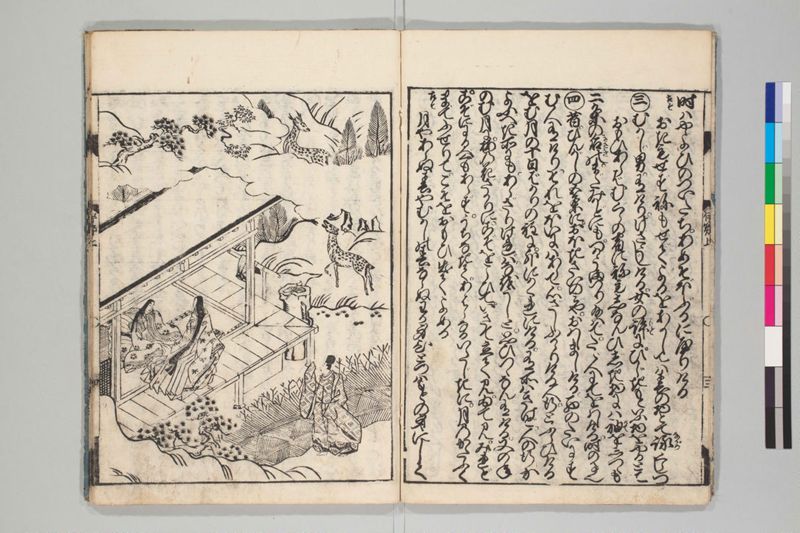
【挿絵】
現代語訳
【右丁】
(第二段・続き)
時は弥生(三月)の一日、雨がしとしと降る中に(歌を)送った。
《送り仮名:古今》
起きもせず 寝もせで 夜を明かしては
春のものとて 眺め暮らしつ
---
**㊂(第三段)**
昔、男がいた。求愛していた女のもとへ、ひじきもの(海藻の一種)という物を送るとて、
思ひあらば むぐらの宿に 寝もしなん
ひじき物には 袖をしつゝも
(これは)二条の后が、まだ帝にもお仕え申し上げておらず、ただの(身分の高い)一般人でいらっしゃった頃のことである。
---
**㊃(第四段)**
昔、東の五条に、大后(太皇太后)の宮がおいでになった。その(邸の)西の対に住む人がいた。その人を、(男は)本意(正式な結婚)ではなく、ただ深く心を寄せて、訪ね通っていた。ところが、(睦月・一月の)十日ほどの頃に、(女は)よそへ隠れてしまった。居場所は聞いていたが、人が行き来できるような所でもなかったので、(男は)やはりつらいと思いながら過ごしていた。翌年の睦月に、梅の花の盛りの頃、去年(の女のこと)を恋しく思って、(かつての邸に)行って、立って見、座って見、見ていたけれど、去年と同じように(感じる)ことも(全く)できない(ほど様子が変わっていた)。(男は)声を上げて泣いて、荒れ果てた板敷きに、月が傾くまで横たわって、去年のことを思い出して詠んだ(歌)。
《送り仮名:古今》
月やあらぬ 春や昔の 春ならぬ
わが身ひとつは もとの身にして
【左丁】
【挿絵(場面の絵)】
英語訳
**[Right page]**
**(Episode 2, continued)**
The time was the first day of the Third Month (Yayoi/March), and he sent the poem while a gentle rain was falling.
*(Headnote: Kokinshū)*
*Neither rising nor sleeping,*
*I passed the night awake,*
*and now, as is the way of spring,*
*I spend the day lost in longing reverie.*
---
**㊂ Episode Three**
Long ago, there was a man. Intending to send to the woman he was courting something called *hijiki-mono* (a type of seaweed / gift of seaweed), he composed:
*If you have feeling for me,*
*come, let us sleep together*
*in this weed-overgrown dwelling—*
*using these sleeves, wet with tears,*
*in place of a bed of hijiki.*
This was the time when the Nijō Consort had not yet entered into imperial service and was living as a private person (of high rank).
---
**㊃ Episode Four**
Long ago, at the eastern Gojō avenue, the Palace of the Grand Empress Dowager stood. In the western wing of that residence there lived a woman. The man, though not with the intention of a proper marriage, had harbored deep feelings for her and had been going to visit her. But around the tenth day of the First Month (Mutsuki), she had gone into hiding elsewhere. He heard where she was, but it was not a place where a man could go back and forth freely, and so he lived on, feeling the anguish of it all. The following year, in the First Month, at the height of the plum blossoms, longing for the previous year, he went to the old residence and stood looking, and sat looking — yet no matter how he looked, he could not feel it as it had been the year before. He wept aloud and lay prostrate on the bare floorboards of the desolate house until the moon tilted in the sky, and thinking back on the previous year, he composed this poem:
*(Headnote: Kokinshū)*
*Is the moon not the same moon?*
*Is this spring not the spring of old?*
*Only this body of mine*
*remains just as it always was.*
**[Left page]**
**[Illustration]**