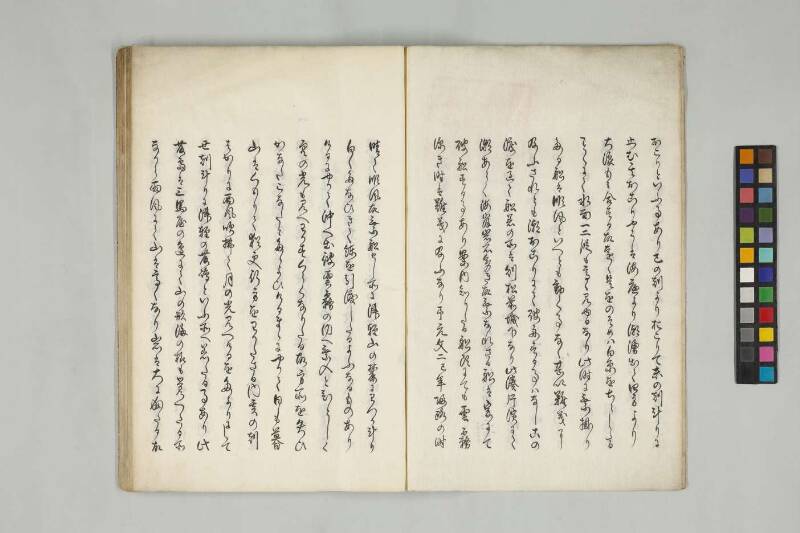
翻刻
【右丁】
おこりといふ事あり巳の刻よりおこりて未の刻計りに
止む其おこりやうは海底より潮湧出て四方より
大浪もみ合する故遠く是をのそめは白糸をちらしたる
ことくにて水面一二段も高く見ゆるなり此時に乗掛り
たる船は順風といへとも動く事なく甚以難義に
及ふされとも潮おこりにて破舟する事はなしこの
渡を過て船着の所は則松前城下なり此湊片浜にて
潮あらく海岸岩石多き故乗なれさる船は爰にて
破船する事あり案内知りたる船頭にても雲霧
深き時は難義に及ふなり予元文二巳年帰路の時
【左丁】
晴て順風故乗船せし所に津軽山の麓にわつか計り
白くたなひきて練#1を引渡したるよふなるものあり
けるにやかて沖へ出波雲霧の内へ乗入とひとしく
空の光も見へわかすくらくなりたる故方所を失ひ
かなたこなたとたゝよひけるまゝにやかて日も暮
山はくもりて猶更行方をわかたさる内亥の刻
はかりに西風吹払て月の光見へけるをたよりにして
丑刻計りに津軽の藤島といふ所へ着たる事あり此
藤島は三馬屋#2の辺にて山の形海の様も覚へたる所
なから雨風にて山は高くなり岩は大に成たる故
現代語訳
【右丁】
「おこり」という現象がある。巳の刻(午前10時頃)から起こって未の刻(午後2時頃)に止む。その起こり方は、海底から潮が湧き出て四方から大波がもみ合うため、遠くからこれを眺めると白い糸を散らしたようで、水面が一、二段も高く見えるのである。この時に乗り合わせた船は、順風であっても動くことができず、非常に困難な状況に陥る。しかし、潮のおこりで破船することはない。この海峡を過ぎて船が着く所は松前城下である。この港は片浜で潮が荒く、海岸に岩石が多いため、乗り慣れない船はここで破船することがある。案内をよく知る船頭でも、雲霧が深い時は困難に陥るのである。私が元文2年(1737年)の帰路の時、
【左丁】
晴れて順風だったので乗船したところ、津軽山の麓にわずかに白くたなびいて、練り絹を引き渡したようなものがあった。やがて沖へ出て雲霧の中へ入ると同時に、空の光も見分けがつかず暗くなったため方向を失い、あちらこちらとさまよった。やがて日も暮れ、山は曇ってますます行き先が分からない中、亥の刻(午後10時頃)に西風が吹き払って月の光が見えたのを頼りにして、丑の刻(午前2時頃)に津軽の藤島という所へ着いたことがある。この藤島は三馬屋の辺りで、山の形や海の様子も見覚えのある所だったが、雨風で山は高くなり、岩は大きくなったように見えたため、
英語訳
【Right page】
There is a phenomenon called "okori" (uprising). It begins around the hour of the Snake (around 10 AM) and stops around the hour of the Sheep (around 2 PM). The way it occurs is that tide surges up from the sea bottom and large waves clash from all directions, so when viewed from afar, it looks like scattered white threads, and the water surface appears one or two levels higher. Ships caught in this phenomenon cannot move even with favorable winds and face great difficulty. However, ships do not break apart due to this tidal uprising. After crossing this strait, ships arrive at Matsumae castle town. This harbor has a single beach with rough tides and many rocks along the coast, so unfamiliar ships sometimes wreck here. Even experienced captains who know the route face difficulties when fog is thick. When I was returning in the 2nd year of Genbun era (1737),
【Left page】
it was clear with favorable winds, so I boarded a ship. At the foot of Tsugaru mountain, there was something barely visible, white and streaming like stretched silk. Soon we went offshore and entered the fog, and at the same time it became so dark that we couldn't distinguish the light of the sky, so we lost our direction and drifted here and there. Eventually the day ended, the mountains became cloudy, and we couldn't tell our direction even more. Around the hour of the Boar (around 10 PM), the west wind blew the fog away and we could see moonlight, which we relied on to arrive at a place called Fujishima in Tsugaru around the hour of the Ox (around 2 AM). This Fujishima was near Sanmaya, and though the shape of the mountains and appearance of the sea seemed familiar, due to the rain and wind, the mountains appeared higher and the rocks seemed larger, so