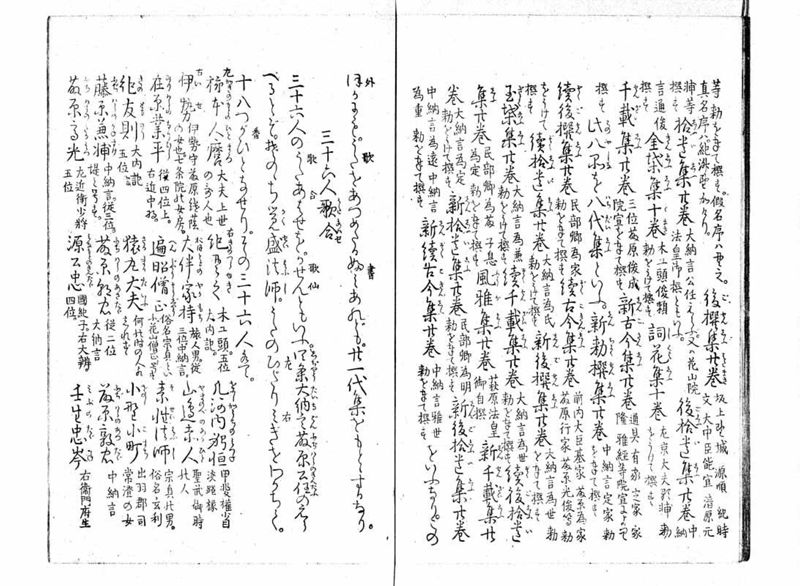
翻刻
【右丁】
《割書:等 勅を奉て撰す。仮名序は貫之。|真名序は。紀淑望かけり。》後撰集(ごせんしふ)廿巻(はたまき)《割書:坂上望城 源順 紀時|文 大中臣能宣 清原元》
《割書:輔等|撰す》拾遺集(しふいしふ)廿巻《割書:大納言公任えらぶ。又は花山院|法皇御撰ともいふ。》後拾遺集(ごしふいしふ)廿巻《割書:中|納》
《割書:言通俊|撰す》金葉集(きんえふしふ)十巻(とまき)《割書:木工頭俊頼|勅をうけて撰す》詞花集(しくはしふ)十巻《割書:左京大夫顕輔 勅|をうけて撰す》
千載集(せんざいしふ)廿巻《割書:三位藤原俊成|院宣を奉て撰す》新古今集(しんこきんしふ)廿巻《割書:通具 有家 定家 家|隆 雅経 等院宣によつて》
《割書:撰す》此(この)八品(やしな)を八代集(はちだいしふ)といふ。新勅撰集(しんちよくせんしふ)廿巻《割書:中納言定家 勅|を奉て撰す》
続後撰集(ぞくごせんしふ)廿巻《割書:民部卿為家|勅を奉て撰す》続古今集(ぞくこきんしふ)廿巻《割書:前内大臣基家 藤原為家|藤原行家 藤原光俊等 勅》
《割書:をうけて|撰す》続拾遺集(ぞくしふいしふ)廿巻《割書:大納言為氏|勅をうけて撰す》新後撰集(しんごせんしふ)廿巻《割書:大納言為世 勅|を奉て撰す》
玉葉集(ぎよくえふしふ)廿巻《割書:大納言為兼|勅をうけて撰す》続千載集(そくせんざいしふ)廿巻《割書:大納言為世|勅を奉て撰す》続後拾遺(ぞくごしふい)
集(しふ)廿巻《割書:民部卿為藤 子息|為定 勅を奉て撰す》風雅集(ふうがしふ)廿巻《割書:萩原法皇|御自撰》新千載集(しんせんざいしふ)廿
巻《割書:大納言為定|勅をうけて撰す》新拾遺集(しんしふいしふ)廿巻《割書:民部卿為明|勅を奉て撰す》新後拾遺集(しんごしふいしふ)廿巻
《割書:中納言為遠 中納言|為重 勅を奉て撰す》新続古今集(しんぞくこきんしふ)廿巻《割書:中納言雅世|勅を奉て撰す》をいふなり。この
【左丁】
ほか(外)にも。うた(歌)をあつめたる ふみ(書)あれども。廿一代集をもとゝするなり。
三十六人 歌合(うたあはせ)
三十六人の うた(歌)あは(合)せを。かせん(歌仙)ともいふ。四条大納言(しぢやうたいなごん)藤原公任(ふぢはらのきんたふ)のえら
べるとぞ。そのゝち覚盛法師(かくせいはふし)。うたの ひだり(左)みぎ(右)をわかちて。
十八つがひ(番)となせり。その三十六人は。
柿本人麿(左かきのもとのひとまろ)《割書:大夫 上世|の哥人也》紀貫之(右きのつらゆき)《割書:木工頭。五位|大内記。》凡河内躬恒(をふしかうちのみつね)《割書:甲斐権少目|淡路掾》
伊勢(右いせ)《割書:伊勢守藤原継蔭|の女也。七条院の女房。》大伴家持(おほとものやかもち)《割書:旅人男。従|三位。中納言。》山辺赤人(やまのべのあかひと)《割書:聖武御時|の人》
在原業平(ありわらのなりひら)《割書:従四位上。|右近中将。》 遍昭僧正(へんじやうそうじやう)《割書:俗名宗貞とい|ふ。花山僧正と号す》素性法師(そせいはふし)《割書:宗貞の男。|俗名玄利》
紀友則(きのとものり)《割書:大内記|五位□》 猿丸大夫(さるまるたいふ)《割書:何の時の人か|しれず》小野小町(をのゝこまち)《割書:出羽郡司|常澄の女》
藤原兼輔(ふぢはらのかねすけ)《割書:中納言。従三位。|堤と号す。》藤原朝忠(ふぢはらのあさたゞ)《割書:従二位|大納言》 藤原敦忠(ふぢはらのあつたゞ)《割書:中納言》
藤原高光(ふぢはらのたかみつ)《割書:左近衛少将|五位》源公忠(みなもとのきんたゞ)《割書:国紀子。右大弁|四位。》 壬生忠岑(みぶのたゞみね)《割書:右衛門府生》
現代語訳
【右丁】
《割書:等が勅命を受けて撰んだ。仮名序は貫之、真名序は紀淑望が書いた。》『後撰集』二十巻《割書:坂上望城、源順、紀時文、大中臣能宣、清原元輔等が撰んだ》『拾遺集』二十巻《割書:大納言公任が選んだ。また花山院法皇の御撰とも言う。》『後拾遺集』二十巻《割書:中納言通俊が撰んだ》『金葉集』十巻《割書:木工頭俊頼が勅命を受けて撰んだ》『詞花集』十巻《割書:左京大夫顕輔が勅命を受けて撰んだ》『千載集』二十巻《割書:三位藤原俊成が院宣を受けて撰んだ》『新古今集』二十巻《割書:通具、有家、定家、家隆、雅経等が院宣によって撰んだ》この八つを八代集という。『新勅撰集』二十巻《割書:中納言定家が勅命を受けて撰んだ》『続後撰集』二十巻《割書:民部卿為家が勅命を受けて撰んだ》『続古今集』二十巻《割書:前内大臣基家、藤原為家、藤原行家、藤原光俊等が勅命を受けて撰んだ》『続拾遺集』二十巻《割書:大納言為氏が勅命を受けて撰んだ》『新後撰集』二十巻《割書:大納言為世が勅命を受けて撰んだ》『玉葉集』二十巻《割書:大納言為兼が勅命を受けて撰んだ》『続千載集』二十巻《割書:大納言為世が勅命を受けて撰んだ》『続後拾遺集』二十巻《割書:民部卿為藤、子息為定が勅命を受けて撰んだ》『風雅集』二十巻《割書:花園法皇の御自撰》『新千載集』二十巻《割書:大納言為定が勅命を受けて撰んだ》『新拾遺集』二十巻《割書:民部卿為明が勅命を受けて撰んだ》『新後拾遺集』二十巻《割書:中納言為遠、中納言為重が勅命を受けて撰んだ》『新続古今集』二十巻《割書:中納言雅世が勅命を受けて撰んだ》を言うのである。この
【左丁】
ほかにも歌を集めた書物はあるけれども、二十一代集を基本とするのである。
三十六人歌合
三十六人の歌合わせを、歌仙とも言う。四条大納言藤原公任が選んだということである。その後覚盛法師が、歌の左右に分かちて十八番とした。その三十六人は、
柿本人麿(左)《割書:大夫、上世の歌人である》紀貫之(右)《割書:木工頭、五位、大内記》凡河内躬恒《割書:甲斐権少目、淡路掾》
伊勢(右)《割書:伊勢守藤原継蔭の女である。七条院の女房。》大伴家持《割書:旅人の男、従三位、中納言》山辺赤人《割書:聖武御時の人》
在原業平《割書:従四位上、右近中将》遍昭僧正《割書:俗名を宗貞という。花山僧正と号す》素性法師《割書:宗貞の男、俗名玄利》
紀友則《割書:大内記、五位□》猿丸大夫《割書:何の時の人か分からない》小野小町《割書:出羽郡司常澄の女》
藤原兼輔《割書:中納言、従三位、堤と号す》藤原朝忠《割書:従二位、大納言》藤原敦忠《割書:中納言》
藤原高光《割書:左近衛少将、五位》源公忠《割書:国紀子、右大弁、四位》壬生忠岑《割書:右衛門府生》
英語訳
【Right page】
《marginal note: and others received imperial command to compile. The kana preface was by Tsurayuki, and the mana (Chinese character) preface was written by Ki no Yoshimochi.》"Gosen-shū" (Later Collection) in twenty volumes 《marginal note: compiled by Sakanoue no Mochiki, Minamoto no Shitago, Ki no Tokibumi, Ōnakatomi no Yoshinobu, Kiyohara no Motosuke and others》"Shūi-shū" (Collection of Gleanings) in twenty volumes 《marginal note: selected by Daijō-daijin Kintō, or said to be personally compiled by Cloistered Emperor Kazan》"Goshūi-shū" (Later Collection of Gleanings) in twenty volumes 《marginal note: compiled by Chūnagon Michitoshi》"Kin'yō-shū" (Golden Leaves Collection) in ten volumes 《marginal note: Mokku-no-kami Shunrai received imperial command to compile》"Shika-shū" (Collection of Verbal Flowers) in ten volumes 《marginal note: Sakyō-daibu Akisuke received imperial command to compile》"Senzai-shū" (Collection of a Thousand Years) in twenty volumes 《marginal note: Sanmi Fujiwara no Shunzei received imperial command to compile》"Shin-kokin-shū" (New Collection of Ancient and Modern Poems) in twenty volumes 《marginal note: Michitomo, Arie, Teika, Ietaka, Masatsune and others compiled by imperial command》These eight are called the Eight Imperial Anthologies. "Shin-chokusen-shū" (New Imperial Collection) in twenty volumes 《marginal note: Chūnagon Teika received imperial command to compile》"Zoku-gosen-shū" (Continued Later Collection) in twenty volumes 《marginal note: Minbu-kyō Iee received imperial command to compile》"Zoku-kokin-shū" (Continued Collection of Ancient and Modern Poems) in twenty volumes 《marginal note: former Naidaijin Motoie, Fujiwara no Iee, Fujiwara no Yukiie, Fujiwara no Mitsutoshi and others received imperial command to compile》"Zoku-shūi-shū" (Continued Collection of Gleanings) in twenty volumes 《marginal note: Dainagon Tameji received imperial command to compile》"Shin-gosen-shū" (New Later Collection) in twenty volumes 《marginal note: Dainagon Tameyo received imperial command to compile》"Gyokuyō-shū" (Collection of Jeweled Leaves) in twenty volumes 《marginal note: Dainagon Tamekane received imperial command to compile》"Zoku-senzai-shū" (Continued Collection of a Thousand Years) in twenty volumes 《marginal note: Dainagon Tameyo received imperial command to compile》"Zoku-goshūi-shū" (Continued Later Collection of Gleanings) in twenty volumes 《marginal note: Minbu-kyō Tameto and his son Tamesada received imperial command to compile》"Fūga-shū" (Collection of Elegance) in twenty volumes 《marginal note: personally compiled by Cloistered Emperor Hanazono》"Shin-senzai-shū" (New Collection of a Thousand Years) in twenty volumes 《marginal note: Dainagon Tamesada received imperial command to compile》"Shin-shūi-shū" (New Collection of Gleanings) in twenty volumes 《marginal note: Minbu-kyō Tameaki received imperial command to compile》"Shin-goshūi-shū" (New Later Collection of Gleanings) in twenty volumes 《marginal note: Chūnagon Tametō and Chūnagon Tameshige received imperial command to compile》"Shin-zoku-kokin-shū" (New Continued Collection of Ancient and Modern Poems) in twenty volumes 《marginal note: Chūnagon Masayo received imperial command to compile》are what this refers to. These
【Left page】
In addition to these, there are other books that collect poems, but the Twenty-One Imperial Anthologies form the foundation.
The Thirty-Six Poetic Immortals Poetry Contest
The poetry contest of the thirty-six poets is also called Kasen (Poetic Immortals). It was selected by Shijō-dainagon Fujiwara no Kintō. Later, the monk Kakusei divided the poems into left and right sides, making eighteen pairs. Those thirty-six poets are:
Kakinomoto no Hitomaro (Left) 《marginal note: Taifu, a poet of ancient times》Ki no Tsurayuki (Right) 《marginal note: Mokku-no-kami, Fifth Rank, Ōnaiki》Ōshikōchi no Mitsune 《marginal note: Kai-gon-shōmoku, Awaji-jō》
Ise (Right) 《marginal note: Daughter of Ise-no-kami Fujiwara no Tsugikage. Court lady of Shichijō-in》Ōtomo no Yakamochi 《marginal note: Son of Tabito, Junior Third Rank, Chūnagon》Yamabe no Akahito 《marginal note: Person from Emperor Shōmu's time》
Ariwara no Narihira 《marginal note: Junior Fourth Rank Upper Grade, Ukon-no-chūjō》Henjō Sōjō 《marginal note: Lay name was Munesada. Called Kazan Sōjō》Sosei Hōshi 《marginal note: Son of Munesada, lay name Gentoshi》
Ki no Tomonori 《marginal note: Ōnaiki, Fifth Rank □》Sarumaru-dayū 《marginal note: Unknown from which period》Ono no Komachi 《marginal note: Daughter of Dewa-no-gunji Tsunezumi》
Fujiwara no Kanesuke 《marginal note: Chūnagon, Junior Third Rank, called Tsutsumi》Fujiwara no Asatada 《marginal note: Junior Second Rank, Dainagon》Fujiwara no Atsutada 《marginal note: Chūnagon》
Fujiwara no Takamitsu 《marginal note: Sakonoe-no-shōshō, Fifth Rank》Minamoto no Kintada 《marginal note: Son of Kunitsune, Udaiben, Fourth Rank》Mibu no Tadamine 《marginal note: Uemon-fu-shō》