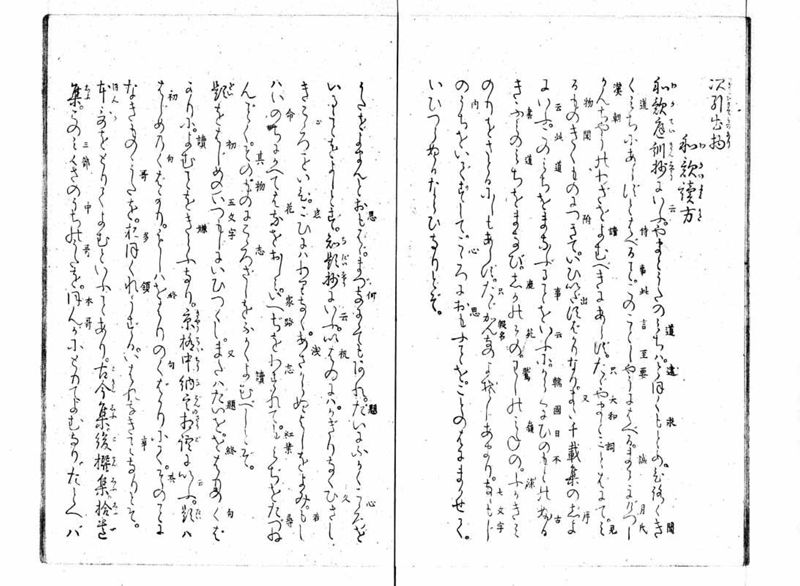
翻刻
【右丁】
次(つぎに)引出物(ひきでものあり)
和歌読方(わかのよみかた)
和歌庭訓抄(わかていきんしやう)に いふ(云)。やまとうたの みち(道)は。とほ(遠)くもと(求)め。ひろく き(聞)
く みち(道)にあらずと はべる(侍)こと(事)。この(此)こと(事)しやう(至要)にはべる。まこと(誠)に げつし(月氏)
かんち(漢朝)やうのわざを よむ(読)べきにあらず。たゞ(只)やまと(大和)ことば(詞)にて。み(見)
る もの(物)きく(聞)ものに つき(付)て。いひ いだ(出)すばかりなり。また(又)千載集の じよ(序)
に いふ(云)。この(此)みち(道)をまなぶる こと(事)を いふ(云)に。からくに(韓国)ひのもと(日本)の ふる(古)
き ふみ(書)の みち(道)をまなび。しか(鹿)の その(苑)。わし(鷲)の みね(嶺)の。ふか(深)きみ
のりをさとるにしもあらず。たゞ(只)かんな(仮名)のよそじあまり。なゝもじ(七文字)
の うち(内)をいでずして。こゝろ(心)に おも(思)ふことを。ことのはにまかせて。
いひつらぬるならひなりとぞ。
【左丁】
うたをよまんと おも(思)はゞ。まづ なに(何)ゝてもあれ。だい(題)にふかく こゝろ(心)を
いるゝことをよしとす。知題抄(ちだいしやう)に いふ(云)。いはゐ(祝)には。かぎりなく ひさ(久)し
き こゝろ(心)をいひ。こひ(恋)にはわりなく。あさ(浅)からぬよしをよみ。もし(若)
は いのち(命)にかへて はな(花)をおしみ。いへぢ(家路)をわす(忘)れて。もみぢ(紅葉)を たづ(尋)ね
んごとく。その(其)もの(物)に こゝろざし(志)をふかく よむ(読)べしとぞ。
題(だい)を はじめ(初)の いつもじ(五文字)にいひつくし。また(又)は たい(題)を。をはり(終)の く(句)ば
かりに。よむ(読)ことを きらふ(嫌)なり。京極中納言相語(きやうこくちうなごんのさうご)に い(云)ふ。題(たい)は
はじめ(初)の く(句)ばかり。もしは をはり(終)の く(句)ばかりにて。その(其)ことに
なきものゝ うた(哥)を。おほく(多)れう(領)ずる。いはれなき こと(事)なりとそ。
本哥(ほんか)をとりてよむといふことあり。古今集(こきんしふ)。後撰集(ごせんしふ)。拾遺(しふい)
集(しふ)。この みくさ(三部)の うち(中)の うた(哥)を。ほんか(本哥)にとりてよむなり。たとへば
現代語訳
【右丁】
次に引出物がある。
和歌の読み方
『和歌庭訓抄』に言う。「大和歌の道は、遠く求め、広く聞く道ではない」ということ。この事は極めて重要である。確かに天竺や中国のような技法を読むべきではない。ただ大和言葉にて、見るもの聞くものに付いて、言い出すだけである。また『千載集』の序に言う。「この道を学ぶことを言うに、韓国・日本の古い書物の道を学び、鹿苑・鷲嶺の深い仏法を悟るのでもない。ただ仮名の四十余り、七文字の内を出ずして、心に思うことを、言葉に任せて、言い連ねる習いである」と。
【左丁】
歌を詠もうと思うならば、まず何であれ、題に深く心を入れることを良しとする。『知題抄』に言う。「祝いには、限りなく久しい心を言い、恋には堪らなく、浅からない様を詠み、若しくは命に代えて花を惜しみ、家路を忘れて紅葉を尋ねるごとく、その物に志を深く詠むべし」と。
題を初めの五文字に言い尽くし、また題を、終わりの句ばかりに詠むことを嫌う。『京極中納言相語』に言う。「題は初めの句ばかり、もしくは終わりの句ばかりにて、その事になきものの歌を、多く領ずる。理由なきことなり」と。
本歌を取って詠むということがある。『古今集』『後撰集』『拾遺集』、この三部の中の歌を、本歌に取って詠む。例えば
英語訳
[Right page]
Next, there are parting gifts.
How to Read Waka Poetry
In the "Waka Teikinsho" (Guide to Waka Instruction), it states: "The way of Yamato poetry is not a path that should be sought from afar or learned extensively." This matter is of utmost importance. Indeed, one should not read techniques from India or China. One should simply express what one sees and hears using Yamato words. Also, in the preface to the "Senzaishu," it states: "Regarding learning this way, it is not about studying the ways of ancient books from Korea and Japan, or comprehending the profound Buddhist teachings of Deer Park and Eagle Peak. It is simply the practice of expressing one's thoughts in words, not going beyond the forty-some kana characters and seven-syllable verses."
[Left page]
If one wishes to compose poetry, first and foremost, whatever the case may be, it is good to put one's heart deeply into the theme. In the "Chidaisho" (Treatise on Understanding Themes), it states: "In celebratory poems, express an endlessly lasting heart; in love poems, compose verses showing unbearably deep feelings; or like cherishing flowers in place of one's life, or seeking autumn leaves while forgetting the way home, one should compose with deep devotion to that subject."
One should avoid expressing the theme only in the first five syllables or only in the final verse. In "Kyogoku Chunagon Sogo" it states: "It is unreasonable to frequently compose poems that have the theme only in the first verse or only in the final verse, when the subject matter is absent from the rest of the poem."
There is a practice called composing by taking honka (foundational poems). One takes poems from the "Kokin-shu," "Gosen-shu," and "Shui-shu" - from within these three collections - as honka for composition. For example,