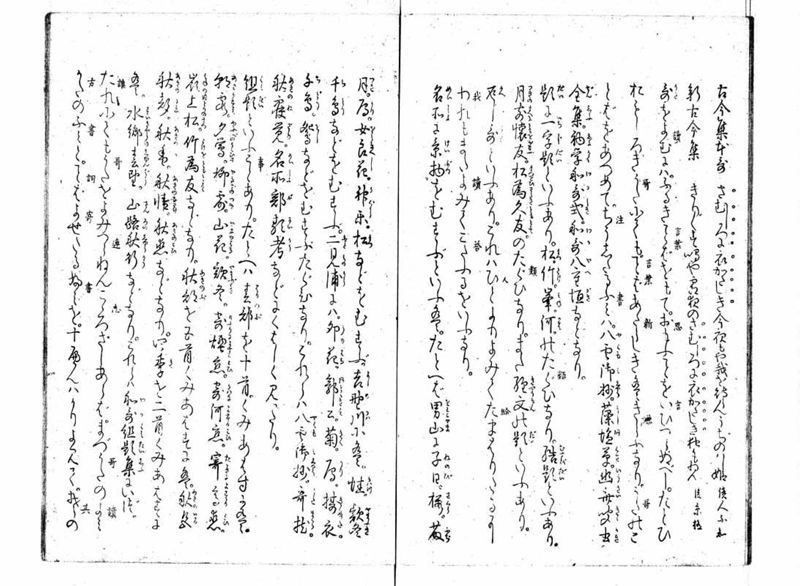
翻刻
【右丁】
古今集本哥 さむしろに(◦◦◦◦◦)衣(◦)かたしき(◦◦◦◦)今夜もや我を待らんうぢのはし姫《割書:読人不知》
新古今集 きり〴〵す鳴や霜夜の さむしろに(◦◦◦◦◦)衣(◦)かたしき(◦◦◦◦)独かもねん《割書:後京極》
哥(うた)を よむ(読)には。ふるき ことば(言葉)をもて。おも(思)ふことを いひ(言)つらぬべし。たとひ
おもしろき うた(哥)にても。ことば(言葉)あたら(新)しきは きら(嫌)ふなり。うた(哥)のこ
とばをあつめて。ちう(注)したる ふみ(書)は。八雲御抄(やくもみしやう)。藻塩草(もしほくさ)。幽斎聞書(いうさいきゝかき)
全集(ぜんしふ)。初学和哥式(しよかくわかしき)。和哥八重垣(わかやへがき)などなり。
題(だい)に一字題(いちじだい)といふあり。松(まつ)。竹(たけ)。峯(みね)。河(かは)。のたぐひ(類)なり。結題(むすびだい)といふあり。
月前懐友(つきのまへにともをおもふ)。松為久友(まつとひさしきともとす)。の たぐひ(類)なり。また経文(きやうもん)の題(だい)といふあり。
返(かへ)し哥といふあり。これは ひと(人)よりよみて たまは(給)りたるに
われもまた よみ(読)て こた(答)ふるをいふなり。
名所(めいしよ)に景物(けいぶつ)をむすぶといふは。たとへば男山(をとこやま)に子日(ねのび)。桜(さくら)。藤(ふぢ)
【左丁】
月(つき)。鳫(かり)。女郎花(をみなへし)。神楽(かぐら)。松(まつ)などをむすぶ。吉野川(よしのかは)には。蛙(かはつ)。款冬(やまふき)【欵は俗字】
千鳥(ちとり)などをむすぶ。二見浦(ふたみのうら)には。卯花(うのはな)。郭公(ほとゝきす)。菊(きく)。鳫(かり)。擣衣(きぬた)。
千鳥(ちどり)。鴛(をし)などをむすぶたぐひなり。これらは八雲御抄(やくもみしやう)。哥枕(うたまくら)。
秋寐覚(あきのねざめ)。名所部類考(めいしよぶるいかう)などにくはしく見えたり。
組題(くみだい)といふ こと(事)あり。たとへは春部(はるのぶ)を十首。くみあはすには。
朝霞(あさかすみ)。夕鴬(ゆふべのうくひす)。柳露(やなぎのつゆ)。山花(やまのはな)。款冬(やまふき)。【欵は俗字】寄煙恋(けふりによするこひ)。寄河恋(かはによするこひ)。寄高恋(たかきによするこひ)。
嶺上松(みねのほとりのまつ)。竹為友(たけをともとする)などなり。秋部(あきのぶ)を五首くみあはすには。秋色(あきのいろ)
秋声(あきのこゑ)。秋香(あきのか)。秋情(あきのなさけ)。秋恋(あきのこひ)などなり。四 季(き)を二首くみあはすに
は。水郷春望(すいきやうのしゆんばう)。山路秋行(さんろのしゆうかう)などなり。これらは和哥組題集(わかくみたいしふ)にいず。
たれ(誰)にても うた(哥)をよみ つら(連)ねん こゝろ(志)ざしあらば。まづ うた(哥)の よみ(読)
かた(方)の ふみ(書)と。ことば(詞)よせ(寄)たる ふみ(書)を。十へんはかりよみて。その(其)
現代語訳
【右丁】
古今集本歌 さむしろに衣かたしき今夜もや我を待らんうぢのはし姫《割書:読人不知》
新古今集 きり〴〵す鳴や霜夜の さむしろに衣かたしき独かもねん《割書:後京極》
歌を詠むには、古い言葉を用いて、思うことを言い連ねるべきである。たとえ面白い歌であっても、言葉が新しいのは嫌われる。歌の言葉を集めて注釈した書物は、『八雲御抄』『藻塩草』『幽斎聞書』『全集』『初学和歌式』『和歌八重垣』などである。
題に一字題というものがある。松・竹・峯・河の類である。結題というものがある。「月前懐友(月の前に友を思う)」「松為久友(松と久しき友とす)」の類である。また経文の題というものがある。
返し歌というものがある。これは人から詠んでもらったものに、自分もまた詠んで答えることを言う。
名所に景物を結ぶというのは、例えば男山に子日・桜・藤
【左丁】
月・雁・女郎花・神楽・松などを結ぶ。吉野川には、蛙・山吹・千鳥などを結ぶ。二見浦には、卯花・郭公・菊・雁・砧・千鳥・鴛などを結ぶ類である。これらは『八雲御抄』『歌枕』『秋の寝覚』『名所部類考』などに詳しく載っている。
組題ということがある。例えば春部を十首組み合わせるには、朝霞・夕鴬・柳露・山花・山吹・寄煙恋・寄河恋・寄高恋・嶺上松・竹為友などである。秋部を五首組み合わせるには、秋色・秋声・秋香・秋情・秋恋などである。四季を二首組み合わせるには、水郷春望・山路秋行などである。これらは『和歌組題集』に出ている。
誰であっても歌を詠み連ねる志があるならば、まず歌の詠み方の書物と、言葉寄せした書物を、十遍ばかり読んで、その
英語訳
[Right page]
Kokin-shu honka: "On the cold straw mat, with robes spread as bedding, will you wait for me tonight too, maiden of Uji Bridge" 《Note: Anonymous poet》
Shin-Kokin-shu: "Crickets cry on this frosty night, on the cold straw mat with robes spread as bedding, shall I sleep alone?" 《Note: Go-Kyogoku》
When composing poetry, one should use ancient words to express one's thoughts in sequence. Even if a poem is interesting, new words are disliked. Books that collect and annotate poetic vocabulary include "Yakumo Misho," "Moshiogusa," "Yusai Kikigaki," "Zenshu," "Shogaku Wakashiki," and "Waka Yaegaki."
There are themes called "single-character themes" - pine, bamboo, peak, river, and such. There are "compound themes" such as "longing for a friend before the moon" and "making the pine a lasting friend." There are also themes from Buddhist scriptures.
There are "reply poems." These refer to composing a poem in response to one received from another person.
"Linking famous places with seasonal objects" means, for example, linking Otokoyama with the rat day, cherry blossoms, wisteria,
[Left page]
moon, wild geese, maiden flowers, kagura, pine, and so forth. With Yoshino River, one links frogs, mountain roses, plovers, and such. With Futami Bay, one links deutzia flowers, cuckoos, chrysanthemums, wild geese, fulling blocks, plovers, mandarin ducks, and such. These are detailed in works like "Yakumo Misho," "Uta-makura," "Aki no Nezame," and "Meisho Buruiko."
There is something called "grouped themes." For example, when combining ten spring poems: morning mist, evening warbler, willow dew, mountain flowers, mountain roses, love compared to smoke, love compared to rivers, love compared to heights, pines on peaks, making bamboo a friend, and so forth. When combining five autumn poems: autumn colors, autumn sounds, autumn fragrances, autumn emotions, autumn love, and such. When combining two poems of the four seasons: spring view of waterside villages, autumn journey on mountain paths, and such. These appear in the "Waka Kumidai-shu."
If anyone has the aspiration to compose poetry in sequence, they should first read books on how to compose poetry and books with vocabulary collections about ten times, and then