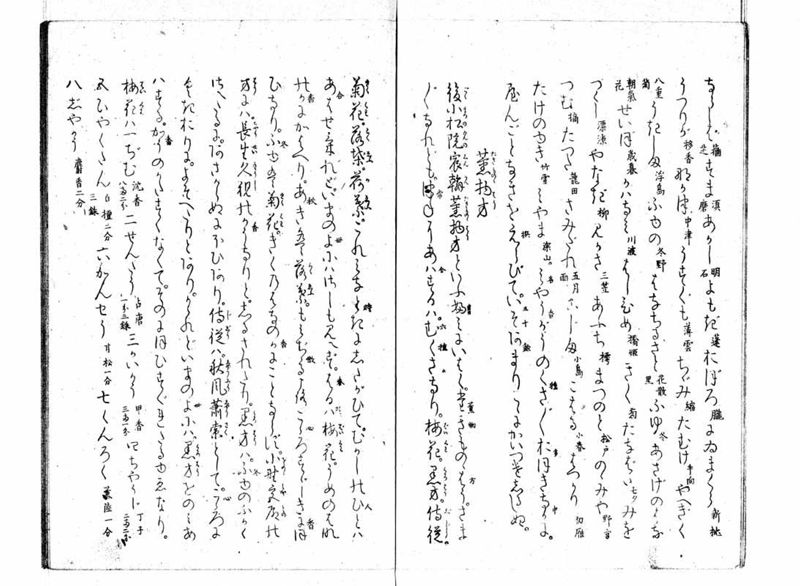
翻刻
【右丁】
ならしば《割書:楢|芝》【蕕は誤】すま《割書:須|磨》あかし《割書:明|石》よもぎ《割書:蓬》おぼろ《割書:朧》にゐまくら《割書:新枕》
うつりが《割書:移香》なかつ《割書:中津》うすぐも《割書:薄雲》ちゞみ《割書:縮》たむけ《割書:手向》やへぎく
《割書:八重|菊》うきしま《割書:浮島》ふゆの《割書:冬野》はなちるさと《割書:花散|里》ふゆ《割書:冬》あさげのはな
《割書:朝気|花》せいぼ《割書:歳暮》かはなみ《割書:川波》はしひめ《割書:橋姫》きく《割書:菊》たなばた《割書:七夕》みを
つくし《割書:漂潦》やなぎ《割書:柳》みかさ《割書:三笠》あふち《割書:樗》まつのと《割書:松戸》のゝみや《割書:野宮》
つむ《割書:摘》たつた《割書:龍田》さみだれ《割書:五月|雨》こじま《割書:小島》こはる《割書:小春》はつかり《割書:初雁》
たけのゆき《割書:竹雪》みやま《割書:深山》。みやうがう(名香)の くさ(種)〴〵 おほ(多)きなか(中)に。
やんごとなきを えらび(撰)て。いそ(五十)あまり(余)こゝにかいつけしるしぬ。
薫物方(たきものはう)
後小松院(ごゝまつのゐんの)宸翰(しんかん)薫物方(たきものはう)といふ ふみ(書)にいはく。たきもの(薫物)ゝ はう(方)。さま
〴〵なれども。つね(常)に あは(合)するは。むくさ(六種)なり。梅花(ばいくわ)。黒方(くろはう)。侍従(じじう)。
【左丁】
菊花(きくくわ)。落葉(らくえふ)。荷葉(かえふ)。これみな とき(時)にしたがひて。むかしの ひと(人)は
あは(合)せけれど。いまの よ(世)にはさしも見えず。はる(春)は梅花(ばいくわ)。うめのはな
の か(香)にかよへり。あき(秋)は落葉(らくえふ)。もみぢ ゝる(散)ころこゝろ(心)すゞしき にほ(香)
ひなり。ふゆ(冬)は菊花(きくくわ)。きくのはなの か(香)にことならず。小野宮(をのゝみや)殿(との)の
方(はう)には。長生久視(ちやうせいきうし)の かう(香)なりと。しるされたり。黒方(くろはう)は。ふゆ(冬)のふかく
さへたるに。あさからぬにほひあり。侍従(じじう)は。秋風(しゆうふう)蕭索(しやうさく)として。こゝろ(心)に
くきおりに。よそへたりとあり。かゝれどいまの よ(世)には。黒方(くろはう)をのみあ
はする。かう(香)のかたすくなくて。そのにほひすぐれたるゆゑなり。
梅花(はいくわ)は一ぢむ《割書:沈香|八両二分》二せんたう《割書:占唐|一分三銖》三かいかう《割書:甲香|三両一分》四ちやうじ《割書:丁子|二両二分》
五ひやくたん《割書:白檀二分|三銖》六かんせう《割書:甘松一分》七くんろく《割書:薫陸一分》
八じやかう《割書:麝香二分》
現代語訳
【右丁】
楢芝、須磨、明石、蓬、朧、新枕、移香、中津、薄雲、縮、手向、八重菊、浮島、冬野、花散里、冬、朝顔花、歳暮、川波、橋姫、菊、七夕、澪標、柳、三笠、樗、松戸、野宮、摘、龍田、五月雨、小島、小春、初雁、竹雪、深山。
名香の種類は多い中で、特に優れたものを選んで、五十余りをここに書き記した。
薫物方
後小松院の宸翰「薫物方」という書物によれば、薫物の調合方法は様々であるが、常に調合するのは六種類である。梅花、黒方、侍従、
【左丁】
菊花、落葉、荷葉。これらは皆季節に従って、昔の人は調合していたが、今の世にはそれほど見られない。春は梅花で、梅の花の香りに通じている。秋は落葉で、紅葉が散る頃の心涼しき香りである。冬は菊花で、菊の花の香りと異ならない。小野宮殿の調合方法には、長生久視の香りであると記されている。黒方は、冬の深く冷えた時に、浅からぬ香りがある。侍従は、秋風が蕭索として、心憂き折に例えられるとある。しかしながら今の世には、黒方のみを調合する。香の材料が少なくて、その香りが優れているためである。
梅花は、一、沈香八両二分。二、占唐一分三銖。三、甲香三両一分。四、丁子二両二分。五、白檀二分三銖。六、甘松一分。七、薫陸一分。八、麝香二分。
英語訳
【Right page】
Narashiba (Oak Grass), Suma, Akashi, Mugwort, Hazy, New Pillow, Shifting Fragrance, Nakatsu, Thin Clouds, Wrinkled, Offering, Double Chrysanthemum, Floating Island, Winter Field, Flower-Scattering Village, Winter, Morning Glory Flower, Year's End, River Waves, Bridge Princess, Chrysanthemum, Tanabata (Star Festival), Channel Marker, Willow, Mikasa, Chinese Mahogany, Matsudo, Field Shrine, Plucking, Tatsuta, May Rain, Small Island, Indian Summer, First Wild Goose, Bamboo Snow, Deep Mountain.
Among the many varieties of famous incenses, I have selected the particularly excellent ones and recorded over fifty of them here.
Incense Blending Methods
According to the book "Incense Blending Methods" written in the calligraphy of Emperor Go-Komatsu, there are various methods for blending incense, but six types are commonly blended: Plum Blossom, Black Method, Chamberlain,
【Left page】
Chrysanthemum Flower, Fallen Leaves, and Lotus Leaf. People of old blended all of these according to the seasons, but this is not much seen in today's world. In spring there is Plum Blossom, which corresponds to the fragrance of plum blossoms. In autumn there is Fallen Leaves, which has the refreshingly cool fragrance of the time when autumn leaves scatter. In winter there is Chrysanthemum Flower, which is no different from the fragrance of chrysanthemum flowers. In Lord Ono-no-miya's blending method, it is recorded as the fragrance of longevity and long life. Black Method has a deep fragrance during the depths of winter's cold. Chamberlain is likened to times when the autumn wind is desolate and the heart is melancholy. However, in today's world, only Black Method is blended, because the incense ingredients are few and the fragrance is superior.
Plum Blossom consists of: First, aloeswood eight ryō two bu. Second, zhan tang one bu three shu. Third, shell incense three ryō one bu. Fourth, cloves two ryō two bu. Fifth, sandalwood two bu three shu. Sixth, sweet pine one bu. Seventh, frankincense one bu. Eighth, musk two bu.