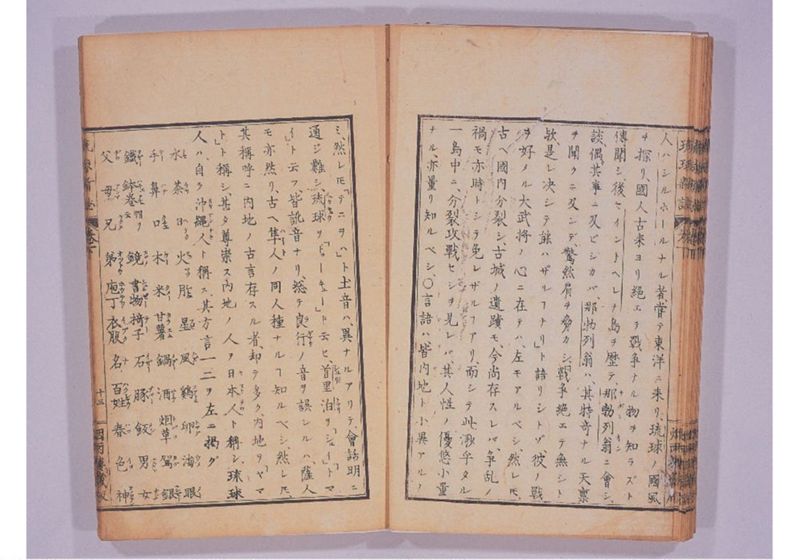
翻刻
人ハシルホールナル者、嘗テ東洋ニ来リ、琉球ノ国風
ヲ探リ、国人古来ヨリ絶エテ戦争ナル物ヲ知ラズト
伝聞シ、後セイントヘレナ島ヲ歴テ、那勃列翁(ナポレオン)ニ会シ、
談、偶々其事ニ及ビシカバ、那勃列翁ハ、其特奇ナル天稟
ヲ聞クニ及ンデ、驚然肩ヲ脅カシ、「戦争絶エテ無シト
歟、是レ決シテ能ハザルヿナリ」ト語リシトゾ、彼ノ戦
ヲ好メル大武将ノ心ニ在テハ、左モアルベシ、然レトモ、
古ヘ国内分裂シ、古城ノ遺蹟モ、今尚存スレバ、争乱ノ
禍モ亦時トシテ免レザルヿアリ、而シテ此渺乎タル
一島中ニ、分裂攻戦セシヲ見レバ、其人性ノ優悠小量
ナル、亦量リ知ルベシ、○言語ハ、皆内地ト小異アルノ
ミ、然レトモ「テニヲハ」ト土音ハ、異ナルアリテ、会話明ニ
通ジ難シ、琉球(リユウキユウ)ヲ「ドューキュー」ト云ヒ、首里(シユリ)泊(トマリ)ヲ「シュイ」「トマ
イ」ト云フ、皆訛音ナリ、総テ良行(ラギヤウ)ノ音ヲ誤レルハ、薩人
モ亦然リ、古ヘ隼人(ハイト)ノ同人種ナルヿ知ルベシ、然レトモ、
其称呼ニ内地ノ古言存スル者、却テ多ク、内地ヲ「ヤマ
ト」ト称シ、甚タ尊崇ス内地ノ人ヲ日本人(ヤマトチウ)ト称シ、琉球
人ハ、自ラ沖縄人(オキナンチウ)ト称ス、其方言一二ヲ左ニ揚グ
水(ミセ) 茶(チヤ) 日(ヘ) ̄テタ 火(ヒヨ) ̄マツ 月(シチエ) 星(フゼ) 風(ハゼ) 鶏(ヌアトエ) 卵(トマグ) 海(ウメ) 眼(メー)
手(テー) 鼻(ハナ) 口(クチエ) 木(ケー) 米(クメー) 甘薯(カラエム) 鍋(メデー) 酒(サケ) 煙草(トバコ) 駕(カグ) 銀(ナンゼー)
鉄(テゼー) 鉢巻(ハチエマチエ)《割書:帽ヲ|云》 鏡(カヾメ) 書物(シユムゼー) 椅子(テー) 石(イザー) 豚(ブバー) 飯(メシ) 男(エングワ) 女(オンナ)
父(ヂウ) 母(アンマ) 兄(ヤクメ) 弟(オツトウ) 庖丁(ホウテウ) 衣服(イブク) 名(ナ) 百姓(ハクシヤウ) 春(ハロ) 色(イロ) 神(カメカナシ)
現代語訳
人でバジル・ホールという者が、かつて東洋に来て、琉球の国風を調査し、国民は古来より全く戦争というものを知らないと伝え聞いた。後にセント・ヘレナ島を経て、ナポレオンに会い、談話がたまたまその事に及んだところ、ナポレオンは、その特異な天性を聞いて、驚いて肩をすくめ、「戦争が全くないというのか、それは決してあり得ないことだ」と語ったという。彼のような戦争を好む大武将の心においては、そうであろう。しかしながら、古くは国内が分裂し、古城の遺跡も、今なお存在するので、争乱の禍もまた時として免れないことがある。そしてこの遥か小さな一島の中で、分裂し攻め戦ったのを見れば、その人性の優雅で小心なことも、また推し量ることができる。○言語は、皆本土と少し異なるのみである。しかしながら「てにをは」と土地の音は、異なるところがあって、会話を明確に理解するのは困難である。琉球(リュウキュウ)を「ドューキュー」と言い、首里(シュリ)・泊(トマリ)を「シュイ」「トマイ」と言う。皆訛音である。すべてラ行の音を誤るのは、薩摩の人もまた同様で、古く隼人の同人種であることが知られる。しかしながら、その呼び名に本土の古語が残存するものが、かえって多く、本土を「ヤマト」と称し、甚だ尊崇している。本土の人を日本人(ヤマトチュー)と称し、琉球人は、自ら沖縄人(オキナンチュー)と称する。その方言の一、二を左に挙げる。
水(ミセ) 茶(チャ) 日(ヘー) 火(ヒョー) 月(シチェ) 星(フゼ) 風(ハゼ) 鶏(ヌアトエ) 卵(トマグ) 海(ウメ) 眼(メー)
手(テー) 鼻(ハナ) 口(クチエ) 木(ケー) 米(クメー) 甘藷(カラエム) 鍋(メデー) 酒(サケ) 煙草(トバコ) 駕(カグ) 銀(ナンゼー)
鉄(テゼー) 鉢巻(ハチエマチエ)《帽のこと》 鏡(カガメ) 書物(シュムゼー) 椅子(テー) 石(イザー) 豚(ブバー) 飯(メシ) 男(エングワ) 女(オンナ)
父(ジュー) 母(アンマ) 兄(ヤクメ) 弟(オットウ) 庖丁(ホウテウ) 衣服(イブク) 名(ナ) 百姓(ハクシャウ) 春(ハロ) 色(イロ) 神(カメカナシ)
英語訳
A man named Basil Hall once came to the East to investigate the customs of Ryukyu, and heard it said that the people had never known such a thing as war since ancient times. Later, he passed through St. Helena Island and met Napoleon, and when their conversation happened to touch upon this matter, Napoleon, upon hearing of this peculiar natural disposition, was surprised and shrugged his shoulders, saying, "No war at all? That is absolutely impossible." For such a great general who loved war, this would naturally be his response. However, in ancient times the country was divided internally, and since ruins of old castles still exist today, the calamities of conflict could not always be avoided. Seeing how they fought and attacked each other within this tiny remote island, one can also infer the gentle and timid nature of their character. ○As for language, it differs only slightly from the mainland. However, the particles "te-ni-wo-ha" and local pronunciation have differences, making conversation difficult to understand clearly. They call Ryukyu (Ryūkyū) "Dūkyū," and Shuri and Tomari "Shui" and "Tomai." These are all dialectal pronunciations. The fact that they mispronounce all "ra-gyō" sounds is also true of Satsuma people, showing they are of the same race as the ancient Hayato people. However, many of their appellations preserve ancient mainland words, and they call the mainland "Yamato" with great reverence. They call mainland people "Yamato-chū" (Japanese people), while Ryukyu people call themselves "Okinan-chū" (Okinawan people). Some examples of their dialect are listed below:
Water (mise), tea (cha), day (hē), fire (hyō), moon (shiche), star (fuze), wind (haze), chicken (nuatoe), egg (tomagu), sea (ume), eye (mē)
Hand (tē), nose (hana), mouth (kuchie), tree (kē), rice (kumē), sweet potato (karaemu), pot (medē), sake (sake), tobacco (tobako), palanquin (kagu), silver (nanzē)
Iron (tezē), headband (hachiemachie) [meaning hat], mirror (kagame), book (shumuzē), chair (tē), stone (izā), pig (bubā), rice/meal (meshi), man (enguwa), woman (onna)
Father (jū), mother (anma), elder brother (yakume), younger brother (ottō), kitchen knife (hōteu), clothing (ibuku), name (na), farmer (hakushau), spring (haro), color (iro), god (kamekanaishi)